
Why LiftUp FlexStep Is Ideal for Modern Homes
The Evolution of Accessibility in Home Design
Modern homes are designed differently than they were decades ago. Homeowners today want spaces that feel open, comfortable, beautiful, and adaptable. Every square foot serves a purpose, and every design decision is expected to balance functionality with aesthetics. As accessibility becomes an increasingly important consideration, many homeowners are looking for solutions that support independence without disrupting the overall look and feel of their living spaces.
For years, accessibility modifications often felt separate from the home's original design. Ramps could require significant space. Traditional lifts sometimes appeared industrial. Larger mobility solutions occasionally altered the flow of a home's layout in ways that felt noticeable.
Today, homeowners are seeking a different approach.
They want accessibility solutions that feel like a natural part of the home rather than an addition made out of necessity. They want systems that support mobility while preserving the character, style, and functionality of the space.
The LiftUp FlexStep has emerged as one of the most innovative solutions in this area because it addresses both accessibility and design in a way that few products can. By combining a staircase and a platform lift into one system, it offers a practical solution that aligns remarkably well with the needs of modern homes.
A New Way to Think About Accessibility
Many accessibility solutions ask homeowners to make a choice.
Do you install stairs or a lift?
Do you preserve floor space or improve accessibility?
Do you focus on functionality or appearance?
The FlexStep challenges the idea that these decisions must be mutually exclusive.
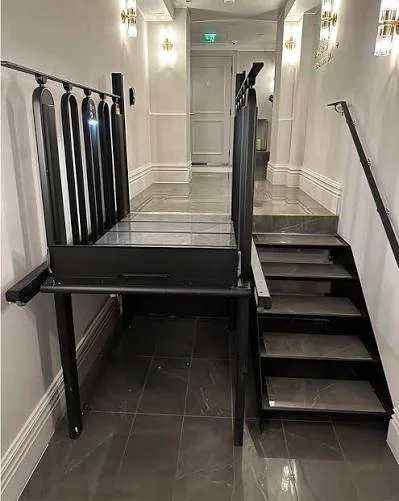
Instead of replacing a staircase or requiring a separate lift installation, the system combines both functions into a single footprint. During everyday use, it operates as a standard staircase. When accessibility is needed, it transforms into a platform lift capable of moving a wheelchair user safely between levels.
This dual functionality allows homeowners to maintain the practical benefits of stairs while providing an accessible solution whenever required.
For modern homes where flexibility is increasingly valued, this concept is particularly appealing.
Maximizing Space Without Sacrificing Accessibility
Space is one of the most valuable resources in any home.
Even larger homes benefit from efficient layouts that maximize functionality. In smaller homes, every available area becomes even more important.
Traditional accessibility solutions can sometimes require significant space. Long ramps may occupy portions of a yard, driveway, or interior floor plan. Separate platform lifts often require dedicated installation areas.
The FlexStep approaches the challenge differently.
Because the staircase itself becomes the lift, no additional accessibility footprint is required beyond the space already allocated for the stairs.
Imagine a homeowner planning an accessible entrance. Rather than deciding between a staircase and a lift, both functions exist within the same area.
This efficient use of space is one of the reasons the FlexStep aligns so well with modern architectural priorities.
Supporting Contemporary Home Aesthetics
Homeowners invest significant time and energy into creating spaces that reflect their personal style.
Whether the design leans toward contemporary minimalism, traditional comfort, modern farmhouse aesthetics, or something entirely unique, visual harmony matters.
Accessibility solutions should complement these environments rather than compete with them.
One of the most distinctive features of the FlexStep is its ability to blend into the home's architecture.
When functioning as a staircase, it appears much like any other stairway. Visitors may not immediately recognize it as an accessibility solution.
This subtle integration allows homeowners to preserve the visual appeal of their property while still benefiting from advanced accessibility features.
For many families, this balance between form and function is highly desirable.
Creating Inclusive Living Spaces
Modern homes are increasingly designed with inclusivity in mind.
Families often include individuals with different mobility needs, and many homeowners want their spaces to be welcoming and usable for everyone.
Accessibility is not just about addressing challenges. It is about creating environments where people can participate fully in everyday life.
The FlexStep helps support this goal by allowing people with varying mobility levels to use the same entrance or transition point.
Someone may use the stairs while another person uses the lift function. Both individuals access the same area through the same system.
This shared experience helps promote inclusion while reducing the need for separate accommodations.
An Excellent Solution for Aging in Place
Many homeowners are planning for the future.
They want homes that can adapt to changing needs without requiring major renovations later. This forward-thinking approach often includes accessibility considerations even before mobility challenges arise.
The FlexStep can play an important role in these plans.
Because it functions as both a staircase and a lift, it provides flexibility that can support evolving mobility needs over time.
A homeowner may use the stairs comfortably today while appreciating the knowledge that lift functionality is available if circumstances change in the future.
This adaptability aligns closely with the growing trend of designing homes that support long-term independence.
Ideal for Split-Level Homes
Split-level homes are a common architectural style that often presents unique accessibility challenges.
A few steps may separate important living spaces such as kitchens, family rooms, entryways, or bedrooms.
For some individuals, these elevation changes can become difficult to navigate safely.
Traditional accessibility solutions may not always fit naturally into these layouts.
The FlexStep is particularly well suited for addressing smaller elevation changes because it combines stair and lift functionality within a compact footprint.
This makes it an attractive option for homeowners who want to improve accessibility while preserving the character and flow of their split-level homes.
Enhancing Entryways Without Compromising Curb Appeal
The entrance to a home often sets the tone for the entire property.
Homeowners want entryways that are welcoming, functional, and visually appealing.
At the same time, front steps can create accessibility barriers that affect daily life.
The FlexStep provides a way to improve accessibility without dramatically altering the appearance of the entrance.
Rather than replacing stairs with a large ramp or installing a separate lift nearby, the system allows the staircase itself to serve both purposes.
This approach can help maintain curb appeal while creating a safer and more accessible pathway into the home.
Supporting Independence and Confidence
The ability to move freely within and around one's home has a significant impact on quality of life.
Accessibility solutions should empower individuals rather than simply address physical barriers.
The FlexStep supports independence by providing a reliable method of accessing different elevations without requiring assistance from others.
Wheelchair users can remain in their mobility device throughout the lifting process. Family members and visitors can continue using the stairs as usual.
This flexibility allows everyone to interact with the home in a way that feels natural and comfortable.
The result is often greater confidence and a stronger sense of control over daily activities.
Reducing the Need for Extensive Renovations
Major home renovations can be expensive, disruptive, and time-consuming.
Many homeowners prefer solutions that improve accessibility without requiring large-scale structural modifications.
Because the FlexStep combines multiple functions into a single system, it can often reduce the need for additional construction compared to some alternative accessibility approaches.
This does not mean every installation is simple, but it does mean that accessibility improvements can often be achieved more efficiently.
For homeowners seeking practical solutions with minimal disruption, this can be a significant advantage.
Supporting Multi-Generational Living
Modern households increasingly include multiple generations living under one roof.
These arrangements often require homes to accommodate a wide range of mobility needs and lifestyle preferences.
The FlexStep helps support this flexibility.
Children, adults, guests, and individuals with mobility challenges can all interact with the same space in ways that suit their needs.
The staircase remains available for everyday pedestrian use, while the lift function provides accessibility when required.
This versatility helps create homes that are more adaptable and welcoming for everyone who lives there or visits.
A Long-Term Investment in Accessibility
Accessibility solutions are most valuable when they continue meeting needs over time.
The FlexStep's dual-purpose design offers long-term flexibility that many homeowners find appealing.
Rather than serving only one function, the system adapts to changing circumstances and varying user needs.
This ability to evolve alongside the household can make it a worthwhile investment in both accessibility and property functionality.
When homeowners think about the future, solutions that combine adaptability, efficiency, and design often stand out.
The Importance of Professional Guidance
Every home is different.
The ideal accessibility solution depends on factors such as available space, elevation changes, mobility requirements, design goals, and future plans.
Professional assessments help determine whether a FlexStep system is the right fit for a particular property.
Accessibility specialists evaluate both the physical environment and the needs of the people who will use the system.
This personalized approach helps ensure that the chosen solution delivers meaningful benefits while integrating naturally into the home.
Conclusion
The LiftUp FlexStep is ideal for modern homes because it combines accessibility, space efficiency, flexibility, and thoughtful design in a single solution. By functioning as both a staircase and a platform lift, it allows homeowners to improve accessibility without sacrificing valuable space or compromising the appearance of their property. Its ability to support changing mobility needs while maintaining everyday functionality makes it particularly well suited for contemporary living environments.
At KGC, accessibility solutions are designed around people, homes, and lifestyles. Every family has unique goals, and every property presents different opportunities. That is why KGC focuses on personalized recommendations that balance safety, independence, comfort, and design. Whether you are exploring a FlexStep system or another accessibility solution, the goal is always to create a home that supports confident and comfortable living.
If you are interested in learning more about accessibility options for your home, visit the KGC Contact Page to connect with a KGC specialist and discover solutions tailored to your needs.
