
Space-Saving Accessibility Solutions Explained
Why Space Matters in Accessibility Planning
Space is one of the most valuable elements in any home or building. It influences how people move, how rooms are used, and how comfortable a space feels in everyday life. When accessibility needs arise, space becomes even more important because solutions must improve mobility without disrupting the flow, function, or design of the environment.
Many families begin their accessibility journey with a concern that improving mobility will require major changes to their home. They imagine large ramps extending into yards, bulky equipment taking over hallways, or structural renovations that alter the character of the space. While these concerns are understandable, modern accessibility design has evolved significantly.
Today, there are solutions specifically designed to provide safe and reliable mobility while preserving as much usable space as possible. These space-saving systems are helping homeowners and businesses create environments that are both accessible and efficient.
The goal is no longer simply to add accessibility. The goal is to integrate it seamlessly.
What Are Space-Saving Accessibility Solutions?
Space-saving accessibility solutions are mobility systems designed to improve access between different levels or areas while minimizing the physical footprint required for installation and use.
Instead of relying on large structural changes, these systems are engineered to fit within existing layouts or replace multiple functions with a single compact design.
They are commonly used in homes, commercial buildings, healthcare environments, and public spaces where space limitations make traditional accessibility options challenging.
These solutions may include vertical platform lifts, stairlifts, hybrid systems, and compact elevator alternatives. Each serves a different purpose, but all share a common goal of improving accessibility without overwhelming the space they occupy.
The Shift Toward Smarter Accessibility Design
Traditional accessibility solutions often required significant space.
Ramps needed long, gradual inclines. Elevators required shafts and mechanical rooms. Even some early lift systems took up more space than many properties could comfortably accommodate.
As architecture has evolved, so too has accessibility design.
Modern systems now prioritize efficiency and integration. Instead of asking buildings to adapt around the equipment, the equipment is designed to adapt to the building.
This shift has made it possible to introduce accessibility in places where it may have once seemed impractical.
The result is a new generation of solutions that feel less like additions and more like natural extensions of the space.
Vertical Platform Lifts and Their Space Efficiency
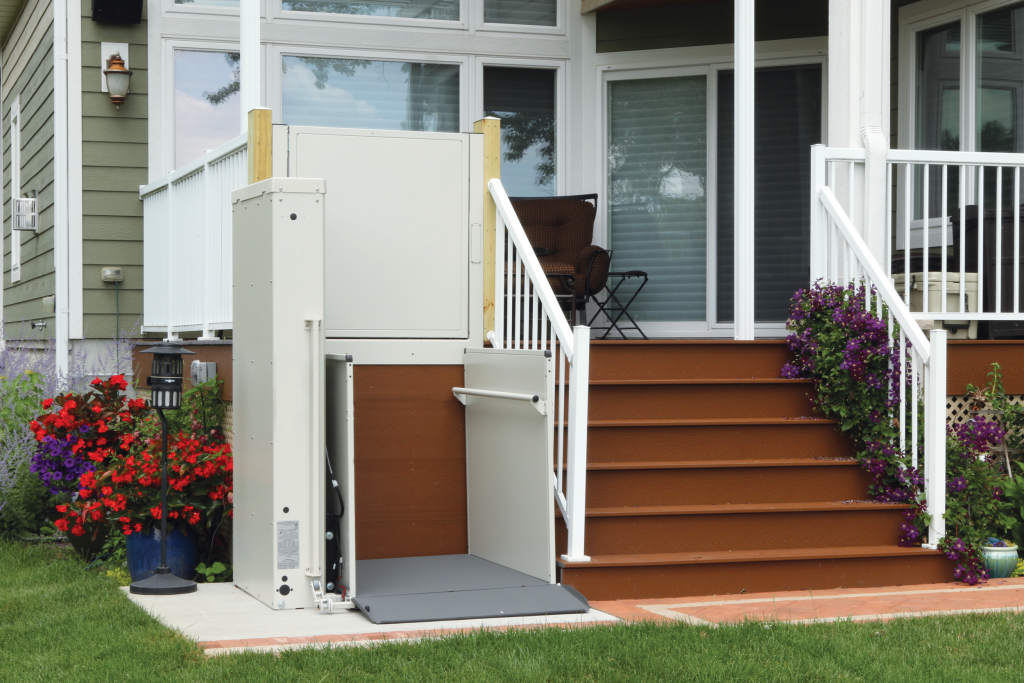
One of the most widely used space-saving accessibility solutions is the vertical platform lift.
These systems move users vertically between levels on a stable platform, allowing individuals to remain in wheelchairs or mobility devices during travel.
Unlike ramps, which require extended horizontal space, vertical platform lifts operate within a compact footprint.
They are often installed at entrances, split-level transitions, garages, patios, and interior floor changes.
Because they move straight up and down, they eliminate the need for long ramps or large structural modifications.
This makes them particularly useful in homes or buildings where space is limited but accessibility is essential.
Stairlifts as a Compact Mobility Option
Stairlifts are another common space-efficient solution.
Instead of changing the structure of the home, a stairlift attaches directly to the staircase. A motorized chair travels along a rail, allowing users to move between floors without walking the stairs.
Because stairlifts utilize existing staircases, they do not require additional floor space in other areas of the home.
They are often chosen in residential settings where individuals can comfortably transfer into a seated position and where staircases are the primary accessibility challenge.
While they do occupy part of the staircase itself, they avoid the need for larger construction projects or external additions.
Hybrid Systems That Combine Function and Efficiency
In recent years, hybrid accessibility systems have become increasingly popular.
These solutions combine multiple functions into a single design, reducing the need for separate equipment.
Instead of installing a staircase and a lift as two separate structures, hybrid systems integrate both into one unified solution.
This approach helps maximize available space while still maintaining full accessibility.
These systems are especially useful in modern homes and commercial buildings where design continuity and efficient use of space are top priorities.
How Space-Saving Solutions Improve Everyday Living
The impact of space-saving accessibility solutions goes beyond physical dimensions.
They influence how people experience their homes and buildings every day.
When accessibility is integrated efficiently, movement becomes more natural. Rooms remain open and usable. Entryways feel welcoming rather than obstructed. Outdoor spaces remain functional for social gatherings and daily activities.
Perhaps most importantly, individuals using these systems often feel less restricted by their environment.
Instead of navigating around barriers, they can move more freely through the spaces they already know and enjoy.
This sense of ease can significantly improve quality of life.
Balancing Accessibility With Design and Aesthetics
Modern homeowners and architects often place a strong emphasis on design.
They want spaces that are visually appealing, cohesive, and reflective of personal style.
One of the challenges of traditional accessibility solutions is that they can sometimes feel visually dominant or separate from the surrounding environment.
Space-saving systems help address this challenge by blending more naturally into existing layouts.
Because they require less structural expansion, they can often be integrated in ways that preserve the original character of a home or building.
This allows accessibility to become part of the design rather than something added on top of it.
Why Smaller Footprints Create Bigger Possibilities
Reducing the physical footprint of accessibility systems opens up new possibilities for property owners.
Spaces that once seemed unsuitable for accessibility upgrades can now accommodate effective solutions.
A narrow entryway may support a vertical platform lift. A standard staircase may accommodate a stairlift. A compact design may allow for hybrid solutions that serve multiple functions.
This flexibility is especially valuable in urban environments, older buildings, and homes with limited exterior or interior space.
By minimizing spatial requirements, accessibility becomes more achievable across a wider range of properties.
Space Efficiency in Multi-Use Environments
Many buildings serve multiple purposes.
A home may also function as a workspace. A commercial building may host both employees and visitors with different accessibility needs. Community spaces often accommodate a wide range of users throughout the day.
In these environments, space efficiency is particularly important.
Accessibility solutions must support mobility without interfering with other uses of the space.
Compact systems help ensure that accessibility does not come at the expense of functionality.
Instead, both can coexist within the same environment.
Planning for Long-Term Accessibility Needs
When choosing accessibility solutions, it is important to consider not only current needs but also future changes.
Mobility requirements can evolve over time, and space-saving systems that offer flexibility may help accommodate those changes more easily.
A solution that works well today should also continue to serve its purpose in the years ahead.
By selecting systems that maximize efficiency, homeowners and businesses can create environments that are better prepared for future needs.
This forward-thinking approach helps reduce the likelihood of requiring major modifications later.
The Role of Professional Assessment
While space-saving accessibility solutions are designed for efficiency, proper planning is still essential.
Every property has unique dimensions, layouts, and structural considerations.
Professionals evaluate these factors to determine which solution will provide the best balance of accessibility, safety, and space efficiency.
This process helps ensure that the selected system fits naturally into the environment and performs reliably over time.
It also helps avoid unnecessary adjustments or limitations that could impact usability.
Creating More Inclusive Spaces Through Smart Design
At its core, accessibility is about inclusion.
It is about ensuring that people can move through spaces safely, independently, and comfortably.
Space-saving accessibility solutions support this goal by making it easier to introduce mobility features into a wider range of environments.
When accessibility systems are designed thoughtfully, they do not take away from a space. They enhance it.
They allow more people to participate fully in daily life, whether at home, at work, or in public settings.
Conclusion
Space-saving accessibility solutions such as vertical platform lifts, stairlifts, and hybrid systems are transforming how homes and buildings approach mobility. By reducing the physical footprint required for accessibility, these systems make it possible to improve access without sacrificing valuable space or disrupting design. They help create environments that are more functional, inclusive, and adaptable to changing needs.
At KGC, every accessibility solution is designed with both people and spaces in mind. The focus is on creating thoughtful, practical systems that support independence, safety, and comfort while preserving the integrity of the environment. Whether for a home or a commercial property, KGC provides personalized guidance to help you find the right solution for your space and lifestyle.
If you are exploring space-efficient accessibility options, visit the KGC Contact Page to connect with a specialist and discover solutions tailored to your needs.
