
What Is the LiftUp FlexStep System and How Does It Work?
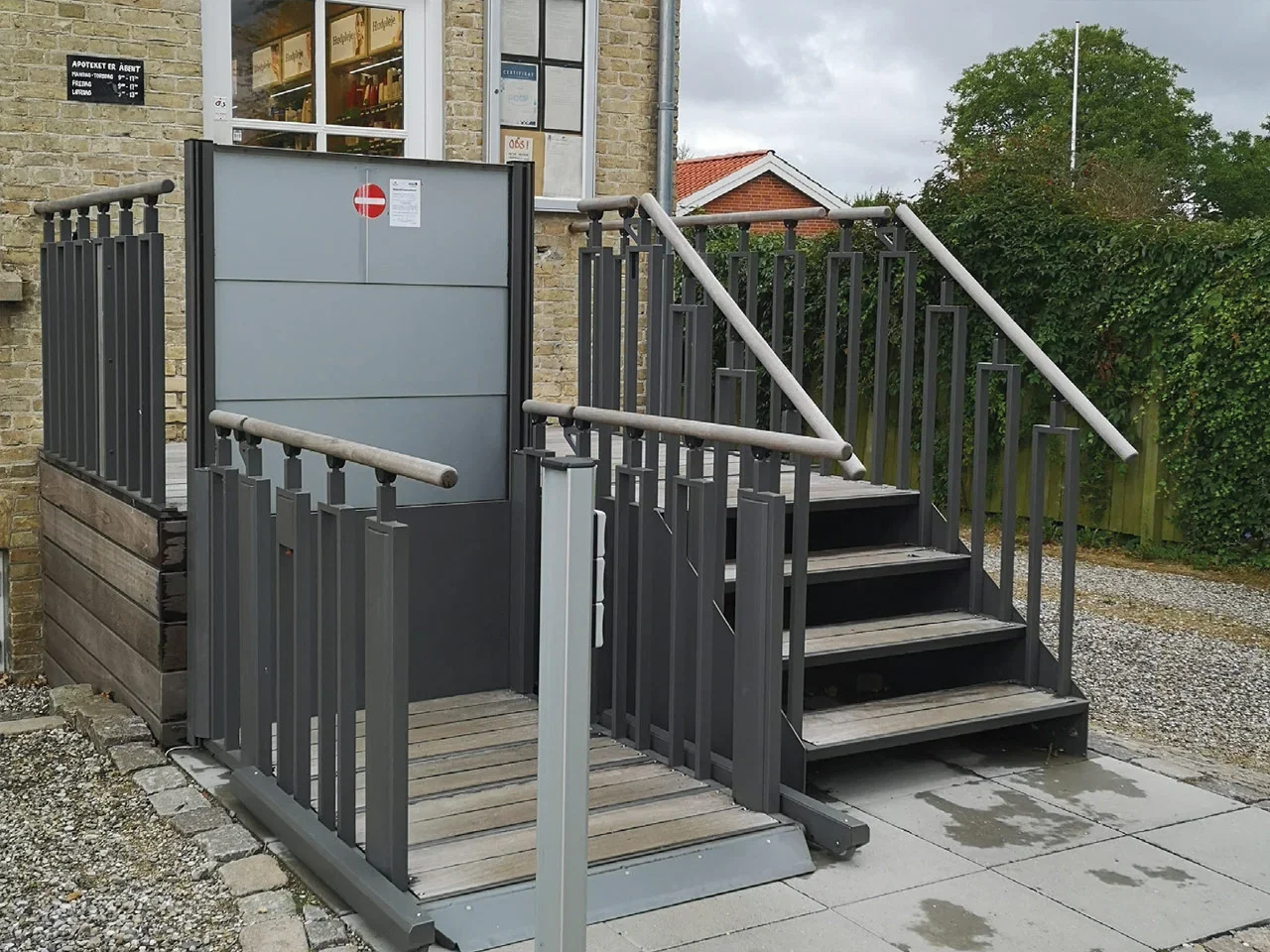
Rethinking Accessibility in Modern Spaces
Accessibility solutions have evolved significantly over the years. What once required large ramps, extensive renovations, or dedicated elevator systems can now often be achieved with more compact and innovative designs. As homes and commercial buildings continue to prioritize both accessibility and aesthetics, the demand for solutions that blend functionality with thoughtful design has grown.
One challenge many property owners face is finding a way to improve accessibility without sacrificing valuable space. Traditional ramps can require substantial room, while elevators may not be practical for smaller buildings or areas with limited square footage. In many cases, stairs remain necessary for everyday use by visitors, employees, family members, or customers.
This is where the LiftUp FlexStep system offers a unique solution.
Rather than forcing property owners to choose between stairs and a lift, the FlexStep combines both functions into a single system. It provides everyday staircase access while transforming into a platform lift when needed. The result is an accessibility solution that supports mobility, preserves space, and integrates naturally into the surrounding environment.
For many homeowners and businesses, the FlexStep represents a new way of thinking about accessibility—one that prioritizes inclusion without compromising design or functionality.
Understanding What the FlexStep System Is
At first glance, the FlexStep looks like a conventional staircase.
People can walk up and down the steps just as they would with any standard stairway. The system blends into its surroundings and performs the same function as traditional stairs during normal daily use.
What makes it different is what happens when accessibility is required.
With the push of a button, the staircase transforms into a vertical platform lift. The steps reposition to create a flat lifting platform, allowing a wheelchair user or individual with mobility limitations to travel safely between levels.
This dual-purpose functionality allows a single system to serve two distinct purposes. Instead of requiring separate stairs and a separate accessibility lift, the FlexStep combines both into one compact installation.
This innovative design makes it particularly valuable in situations where space is limited or where maintaining the appearance of a building is an important consideration.
Why Accessibility Challenges Often Begin With a Few Steps
Many accessibility barriers are surprisingly small in terms of physical height.
A porch with three steps. A raised entryway. A split-level floor plan. A short transition between one room and another.
To some people, these changes in elevation may seem minor. For individuals using wheelchairs, scooters, walkers, or other mobility devices, however, they can become significant obstacles.
Property owners often face a difficult choice when addressing these barriers. Traditional ramps may require more space than is available. Elevators may be impractical due to cost, complexity, or building limitations.
The FlexStep was designed specifically for these types of situations.
By combining stairs and lift functionality into one system, it creates accessibility without requiring extensive structural changes or large installation footprints.
How the Transformation Process Works
One of the most fascinating aspects of the FlexStep system is its ability to change functions.
When operating as a staircase, users walk up and down the steps normally. The system appears and functions much like any other stairway.
When lift access is needed, the transformation process begins.
The staircase automatically reconfigures itself into a flat platform. Once the platform is ready, it travels vertically between levels, carrying the user safely and smoothly to the destination.
After use, the system can return to staircase mode, allowing pedestrian traffic to continue as usual.
This seamless transition between functions is what makes the FlexStep so unique. Rather than dedicating space to separate accessibility equipment, the same footprint serves multiple purposes throughout the day.
A Solution Designed for Limited Space
One of the primary reasons people choose a FlexStep system is space efficiency.
Accessibility projects often involve balancing practical needs with physical limitations. In some homes and businesses, there simply is not enough room for a traditional ramp. In others, installing an elevator may not be feasible.
The FlexStep addresses this challenge by utilizing the same area that would already be occupied by a staircase.
Instead of adding another accessibility feature elsewhere, the lift becomes part of the staircase itself.
This approach can be especially beneficial in urban properties, compact homes, retail environments, and historic buildings where available space is limited.
For many property owners, the ability to improve accessibility without significantly changing the layout of the building is a major advantage.
Residential Applications for the FlexStep
Homeowners are increasingly seeking accessibility solutions that allow them to remain comfortable and independent within their homes.
The FlexStep can be used in a variety of residential settings.
Some homeowners install the system at front entrances where a few steps create a barrier to access. Others use it to navigate split-level floor plans or transitions between indoor and outdoor living spaces.
Imagine a family home with a raised front porch. The stairs are attractive and functional for most visitors, but they present a challenge for someone using a wheelchair.
Rather than replacing the entire entrance with a large ramp, the FlexStep allows the staircase to remain while providing an accessible option whenever needed.
The result is a solution that supports everyone who uses the home.
Commercial Uses and Public Accessibility
Commercial buildings often face similar challenges.
Restaurants, offices, retail stores, healthcare facilities, schools, and community centers frequently include small elevation changes that affect accessibility.
These spaces must accommodate diverse visitors while maintaining efficient layouts and attractive designs.
The FlexStep allows businesses to improve accessibility without sacrificing valuable floor space.
A retail store with a raised entrance can provide accessible access while preserving its storefront design. An office building can connect different levels without installing a larger elevator system. A restaurant can create a more inclusive dining environment without extensive renovations.
These applications demonstrate how accessibility and functionality can work together.
Supporting Independence and Inclusion
Accessibility is about more than overcoming physical barriers.
It is about creating environments where people can participate fully and independently.
When individuals can access a space without relying on assistance, they often experience greater confidence and comfort. They can enter buildings, attend events, visit friends, or conduct business without feeling limited by architectural obstacles.
The FlexStep supports this independence by providing a reliable method of access that integrates naturally into the environment.
Rather than creating separate routes or specialized entrances, it helps ensure that accessibility is part of the overall experience.
This sense of inclusion benefits not only users but also families, caregivers, employees, customers, and communities.
Safety Features That Promote Confidence
Safety is a critical consideration for any accessibility solution.
The FlexStep incorporates various features designed to help protect users during operation.
Safety barriers help secure the platform while it is in motion. Sensors monitor for obstacles that could interfere with movement. Emergency controls provide additional reassurance during operation.
The system is engineered to provide smooth travel, reducing sudden movements and creating a more comfortable experience.
For users, these safety features help create confidence.
For families and caregivers, they provide peace of mind knowing that accessibility is supported by carefully designed systems and safeguards.
Blending Accessibility With Design
Many property owners worry that accessibility equipment will negatively affect the appearance of their home or business.
The FlexStep was developed with aesthetics in mind.
Because it functions as a staircase during normal use, it often integrates more naturally into architectural designs than traditional accessibility equipment.
Its appearance can complement a variety of building styles, helping preserve the character of both residential and commercial environments.
This balance between functionality and design is one of the reasons the system has attracted attention from architects, designers, and property owners alike.
Accessibility does not have to feel separate from the overall design of a space. It can become part of the architecture itself.
Planning for Future Accessibility Needs
Many people begin exploring accessibility solutions in response to an immediate challenge.
However, mobility needs can change over time.
A solution that addresses today's concerns should also provide value in the future. This is why flexibility is such an important consideration when evaluating accessibility options.
The FlexStep allows properties to maintain traditional stair access while also providing a lift solution when needed. This versatility can help accommodate changing mobility requirements without requiring additional modifications later.
Planning ahead often results in greater long-term satisfaction and a more adaptable environment.
Working With Accessibility Professionals
Choosing the right accessibility solution involves more than selecting a product.
Every property presents unique challenges and opportunities. Factors such as space availability, elevation changes, building layout, user needs, and long-term goals all influence the decision-making process.
Accessibility professionals can help evaluate these factors and determine whether a FlexStep system is an appropriate solution.
Their expertise ensures that the chosen system supports both functionality and user experience while meeting safety and accessibility requirements.
Conclusion
The LiftUp FlexStep system offers a unique approach to accessibility by combining a staircase and a vertical platform lift into one innovative solution. By transforming from stairs into a lift when needed, it helps property owners improve accessibility while preserving valuable space and maintaining the appearance of their homes or businesses. Its ability to support both everyday pedestrian use and wheelchair access makes it a versatile option for a wide range of residential and commercial applications.
At KGC, accessibility is never about finding a one-size-fits-all solution. Every home, business, and individual has unique needs, which is why KGC focuses on personalized recommendations that balance safety, functionality, comfort, and design. Whether you are exploring a FlexStep system or another accessibility solution, the goal is always to create spaces that support independence, confidence, and inclusion.
If you are interested in learning more about accessibility solutions for your property, visit the KGC Contact Page to connect with a specialist and discover options tailored to your specific needs.
