
What to Expect During a Professional Stairlift Installation
Introduction
The first time I ever watched someone prepare for a stairlift installation in their home, I was surprised by how emotional the entire experience felt. Not in a heavy or overwhelming way, but in a quiet, meaningful way that reminded me how deeply our homes become part of us. Someone I care about had reached a point where the stairs were no longer as comfortable as they once were. It had been happening slowly, almost invisibly. A little more caution on the steps. A slightly tighter grip on the railing. A subtle hesitation at the bottom of the staircase before beginning the climb.
I noticed these changes long before they acknowledged them. That is often how it goes. People adapt. They work around challenges. They find ways to move through discomfort because admitting that something has changed feels like giving something up. But one day, after nearly slipping on a step that had become familiar for decades, they finally sighed and said the words that marked the beginning of a new chapter. I think it might be time to look into a stairlift.
There was no fear in their voice. No embarrassment. Just honesty. And beneath that honesty, a sense of hope. A hope for comfort. A hope for safety. A hope for continuing to live freely in the home they loved without feeling restricted by the stairs that once felt effortless.
That was the moment we contacted a professional installer. I remember wondering what would happen next. Would the process be complicated? Would there be construction? Would the home feel different afterward? How long would the installation take? Would it be noisy? Would the equipment feel overwhelming?
What unfolded was nothing like the stressful experience I had imagined. It was gentle, calm, and surprisingly quick. It was filled with explanations, reassurance, and careful attention to detail. And it ended with a sense of relief that was visible on the face of the person I cared about.
This guide shares that journey with you so that you know exactly what to expect during a professional stairlift installation. From the first consultation to the moment the lift glides up the stairs for the very first time, this narrative will walk you through every stage in a warm, human way that reflects how the process truly feels.
The First Step: The Professional Consultation
Before any installation happens, a certified stairlift professional visits the home for a consultation. This visit is not rushed or technical. It is thoughtful and conversational. The purpose is not only to measure the staircase but to understand the person who will use the stairlift. Their routines. Their mobility needs. Their preferences. Their home layout. Their comfort level.
During the consultation, the installer walks through the home with the individual and their family. They explain how stairlifts work and listen closely to concerns. The consultation is the moment when families often realize that stairlifts are not as imposing as they expected. The rail rests on the stairs, not the walls. The seat folds neatly. The lift moves quietly. And the system blends with the home without overtaking the space.
Measurements are taken with precision. Every inch matters because the stairlift must fit the staircase perfectly. The installer examines the shape of the stairs, the width, the angle, and any landings or turns. If the staircase is straight, the process is simpler. If it curves, the installer evaluates how the rail will be custom built. The individual is asked about seating comfort, preferred side of installation, and any physical considerations that may affect the design.
The consultation ends with a clear explanation of next steps. Families often feel calmer after this visit. What once felt unknown becomes understandable. What once felt intimidating becomes manageable.
Preparing for the Installation Day
Once the stairlift is ordered, the installation is scheduled. Leading up to that day, most families expect there will be preparation, rearranging, or temporary disruptions. Yet in most cases, preparation is minimal. Stairlifts are designed to fit into the home’s existing layout without requiring construction. That means walls are not removed. Stairs are not modified. Flooring does not need to be replaced. The home remains intact.
The only preparation the family may choose to do is clearing small personal items from stair edges or removing decorative pieces that might be too close to the staircase. This is not mandatory but can make installation smoother. Some families choose to lightly clean the stairs or give the installer easy access to the staircase, but this is more about comfort than necessity.
The morning of installation feels much like any ordinary day. There is no feeling of chaos or noise. There are no large trucks or teams carrying heavy equipment. Just a quiet, respectful arrival of the installer who is ready to transform the staircase into a safe and accessible pathway.
The Arrival of the Installer
When the installer arrives on installation day, they begin with a gentle walkthrough of the home. Their presence is calm and professional. They understand that they are not simply installing equipment. They are entering a personal space, a space filled with memories, routines, and sentimental meaning. They treat the home with respect.
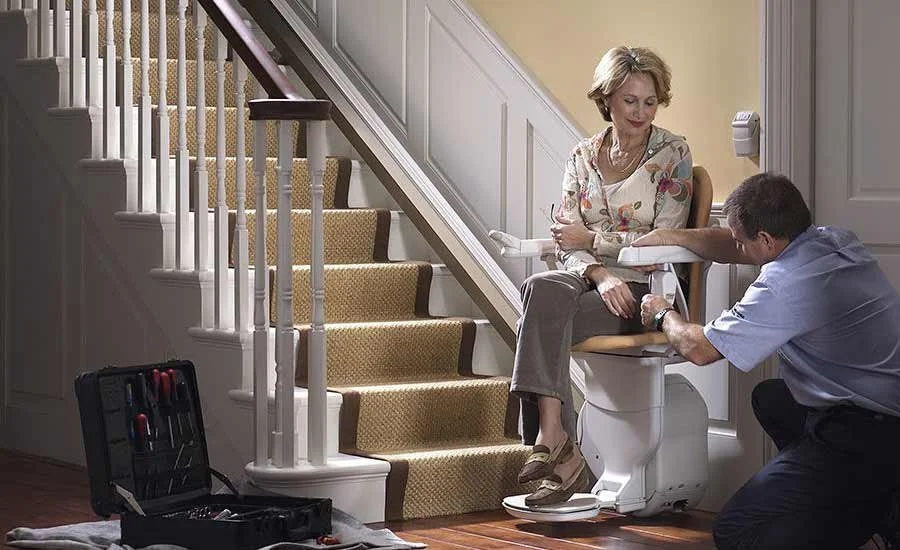
They bring the rail, the seat unit, and all the components in organized pieces that are easy to maneuver indoors. The parts are clean, unobtrusive, and designed to be assembled with minimal impact. The installer brings their tools and protective coverings to ensure floors and surfaces are not disturbed.
The individual who will be using the stairlift is invited to observe as much or as little as they choose. Some enjoy watching the process unfold. Others prefer to step away and only return to see the finished result. The installer adapts to whatever feels most comfortable.
Installing the Rail: The Foundation of the Stairlift
The rail is the heart of the stairlift system. It is what carries the seat safely up and down the stairs. Installing the rail is the first major step. Many people are surprised to learn that the rail attaches directly to the stairs rather than the walls. This means that the home’s structure remains untouched. The rail is anchored to the stair treads through discreet brackets that do not affect the flooring or walls.
If the staircase is straight, the rail installation is straightforward. If the staircase is curved, the rail is custom built to follow every curve and landing. This is one reason stairlift consultations are so precise. The rail must match the shape of the staircase perfectly.
The installer places the rail along the staircase, secures it carefully, and checks every anchor point. Precision matters. The rail must be level, stable, and ready to support the lift for years. The installer uses tools that keep the process quiet and contained. There is no loud drilling or construction noise. Everything is done with intention and care.
Families watching this process often feel a growing sense of reassurance. The rail begins to paint a picture of the lift’s final form. The home does not feel disrupted. Instead, it begins to feel transformed.
Installing the Seat Unit
Once the rail is secured, the installer brings in the seat unit. This is the part of the stairlift that the individual will sit in during each ride. The seat is designed for comfort, stability, and ease of use. It usually includes armrests, a footrest, a swivel function, and intuitive controls.
The installer attaches the seat to the rail and secures all connections. They test the mechanical alignment, ensuring that the unit glides smoothly along the rail. The seat is then checked for comfort and reliability. The installer adjusts height, angles, and cushioning based on the user’s needs.
Families often appreciate this moment because it is the first time the stairlift begins to look complete. The seat is where the human experience meets the mechanical support. Seeing it in place brings relief, excitement, and sometimes even a sense of renewed possibility.
Wiring and Connecting the Power Source
Stairlifts do not require complex electrical changes. They operate on low voltage and are powered through a simple connection to an existing outlet. The installer discreetly connects the stairlift to the home’s power source and ensures that the wires are hidden or neatly secured.
Many stairlifts also use batteries that charge automatically when the lift is parked at the top or bottom of the staircase. This ensures smooth and reliable movement even if the home temporarily loses power. The installer checks that the charging system is functioning and explains how it works.
Families are often relieved to learn how simple and safe the electrical setup is. There is no need for rewiring the home or calling additional contractors. The stairlift integrates with the existing electrical layout effortlessly.
Safety Testing: The Most Important Part of the Installation
Before anyone uses the stairlift, the installer conducts a full safety test. This is one of the most thorough parts of the process and often the moment when families feel the deepest reassurance. Every safety feature is checked.
The glide motion is tested from bottom to top and back again.
The start and stop functions are examined for smoothness.
The seat swivel is tested for secure rotation.
The armrests and footrest are checked for stability.
The obstruction sensors are activated to ensure the lift stops if something is touched on the rail or stairs.
The emergency stop function is verified.
The battery charging system is monitored.
The weight capacity is confirmed.
This safety testing is not rushed. The installer takes their time because they understand that this equipment will support someone’s life and wellbeing every day. When the stairlift passes all safety checks, the installer prepares to teach the user how to operate it.
The Personal Orientation and Training
One of the most touching parts of the installation process is the orientation. The installer shows the individual how to use the stairlift with complete clarity, patience, and calm. They explain the controls, the locking mechanisms, the swivel function, the remote call buttons, and the safe way to sit and stand.
They demonstrate how the stairlift folds when not in use. They show how to park it. They answer every question without rushing. For many individuals, this is the moment when uncertainty turns into confidence.
The first ride often happens with the installer standing close by, offering reassurance. It is a meaningful ride. The individual begins to understand the freedom the lift will bring. The caregiver begins to feel the relief of no longer needing to physically support every step. The room fills with a sense of possibility.
How the Home Feels After Installation
Families are often surprised by how little the home changes visually and how much it changes emotionally. The stairlift blends quietly into the staircase. It does not dominate the space. It does not feel like medical equipment. It becomes part of the home’s natural rhythm.
But the emotional atmosphere shifts significantly. There is a sense of safety. A sense of independence. A sense of returning to routines that once felt risky. The home begins to feel more supportive, more accessible, and more welcoming.
The person using the lift feels empowered. The caregiver feels relieved. The family feels reassured.
Ongoing Maintenance and Support
Once the stairlift is installed, the installer explains how to care for it. Maintenance is simple. Stairlifts require occasional cleaning and periodic professional checkups. Most systems are designed to last for many years with minimal upkeep.
Families often appreciate the ongoing support offered by reputable installation companies. They know they can call with questions, schedule maintenance easily, and rely on experts who are familiar with their home.
The Long Term Impact on Daily Life
Over time, the stairlift becomes part of the home’s everyday story. It supports morning routines, evening transitions, and everything in between. It allows someone to keep using their upstairs bedroom. It prevents accidents. It eliminates fear. It supports independence in a way no renovation ever could.
For many individuals, the stairlift becomes more than a tool. It becomes a quiet reminder that life can adapt gracefully. That the home can evolve to meet their needs. That aging in place is not only possible, but comfortable.
Conclusion
A professional stairlift installation is not merely a technical process. It is a moment of transformation. It turns the staircase from a source of worry into a pathway of safety. It preserves the comfort of home without requiring major renovation. It supports independence, protects dignity, and brings relief to families who want their loved ones to age in place with confidence.
At KGC, we understand that installing a stairlift is a personal decision rooted in care, hope, and respect. Our team approaches each installation with compassion, precision, and a commitment to making the home feel safer from the very first ride.
If you are considering a stairlift and want guidance through the process, we are here to help every step of the way.
You can reach our team through the KGC Contact Page.
