
How Stairlifts Support Aging in Place Without Renovating the Entire Home
Introduction
There is a moment many families remember, even if they never say it out loud. It usually arrives quietly, often wrapped inside an otherwise ordinary day. I remember one afternoon with someone I love that began like any other. The weather was calm. The house felt familiar and soft. They were holding a basket of folded clothes and walking toward the staircase with that steady, purposeful way they always had. The stairs had never been a problem before. The movement up and down had always been part of the flow of everyday living. But on that afternoon, something shifted.
They paused at the first step. It was not dramatic. It was not alarming. It was simply a small moment of stillness that felt different from every moment before it. Their eyes followed the length of the staircase in a way that made it clear that each step meant something new now. Perhaps a little more calculation. Perhaps a little more effort. Perhaps a little more concern than they wanted to admit.
That pause touched me deeply. It lingered with me through the rest of the day. It made me think about the quiet ways mobility can change long before someone openly talks about it. It made me wonder how many people continue climbing the stairs even when those stairs begin to ask too much of them. It made me realize that aging in place is not simply about staying in the home you love. It is about making sure the home stays safe, comfortable, and supportive as life evolves.
Many families reach this same turning point. They begin to notice subtle changes. Slower steps. Extra time on the railing. Rearranged routines to avoid climbing. Increased concern from family members. But they hesitate to make changes because they believe the only option is renovating the entire home. They imagine widening doorways, changing layouts, adding lifts that require major construction, or redesigning upper floors. These assumptions often delay helpful decisions because the idea of home renovation feels overwhelming and expensive.
But aging in place does not require rebuilding the house. It does not require tearing down walls or transforming the structure of the home. In many cases, the most powerful and practical solution is simple. A stairlift.
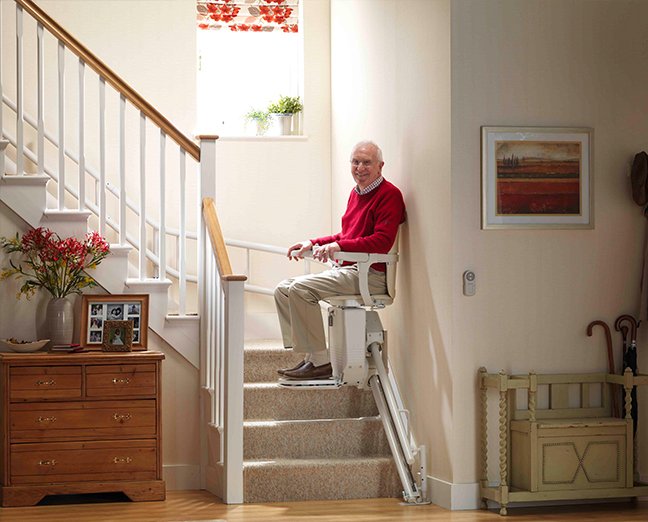
Stairlifts allow individuals to stay in their homes safely without needing large-scale construction. They blend into the home. They protect independence. They eliminate the biggest barrier in most houses. The stairs. And they do all of this quietly, efficiently, and without changing the home’s character.
This guide explores how stairlifts support aging in place with warmth, clarity, and a narrative approach that helps families understand that safety and comfort do not require giving up the home they love or undergoing major renovation.
Why Stairs Become the Largest Barrier to Aging in Place
Every home has its unique quirks. Some have narrow hallways. Some have uneven flooring. Some have smaller bathrooms or steep porches. But among all these features, the staircase is the one that has the greatest impact on whether someone can age comfortably in the home.
Stairs require coordination, strength, balance, and confidence. They ask the body to shift weight repeatedly while controlling motion and securing each step. As the years pass, even small shifts in mobility, balance, or endurance can make the stairs feel more demanding. The changes are often subtle at first. A slower pace. A tighter grip on the railing. A tendency to carry things upstairs less frequently. A growing awareness that certain movements require more caution.
Most individuals do not want to admit that the stairs are becoming a challenge. They want to continue using them as they always have. And families feel torn between respecting independence and fearing what could happen if one misstep occurs.
This is why stairlifts matter so deeply. They address the single biggest barrier in the home without touching the rest of the layout. They keep the individual connected to every part of their home. They allow the upstairs bedroom to remain a bedroom instead of becoming storage. They allow bathrooms, closets, and hobby spaces to remain accessible. And they do this while preserving dignity and emotional comfort.
How Stairlifts Eliminate the Need for Major Renovation
When families first consider home accessibility, they often imagine costly and invasive renovations. They picture adding ramps throughout the home, widening doorways, building new bathrooms, or relocating bedrooms entirely. While these changes can sometimes help, they are not always necessary.
A stairlift provides access to the entire home with a single installation. It does not require changing the walls, floors, or layout. It does not require altering the foundation or moving essential rooms. It does not demand long construction timelines or planning permits.
The stairlift simply attaches to the existing staircase and uses a rail system to carry the user safely between floors. It allows the home to remain structurally the same while becoming significantly more accessible.
Families who once thought they needed to remodel discover that the stairlift solves the problem without disruption. No dust. No demolition. No weeks of workers in the home. Just a quiet, effective solution installed in a short time.
The Emotional Importance of Remaining in One’s Home
A home is never only a building. It is a place filled with memories, objects that hold meaning, familiar routines, and private comforts. Staying in the home often contributes to emotional wellbeing. It supports identity, independence, and the feeling of belonging. Many people do not want to leave behind the place where they raised their families, celebrated milestones, or built their life.
Stairlifts make it possible to remain in that place. They help individuals keep control over their routines instead of feeling confined to the first floor. They let people sleep in their own bedroom. They let them continue enjoying the rooms that hold sentimental value. They allow the home to remain a place of comfort instead of a place filled with fear of the stairs.
Aging in place is not just practical. It is deeply emotional. Stairlifts honor that.
How Stairlifts Support Independence
Independence means more than being able to move around without help. It means having choice. It means being able to follow daily routines without depending on others. It means preserving roles, identities, and personal preferences.
Without a stairlift, individuals may need assistance climbing up or down the stairs. They may feel obligated to ask for help. They may hesitate to go upstairs when they want to. They may feel limited. Stairlifts restore independence by allowing someone to move freely between floors at their own pace.
Someone can decide to retrieve something from upstairs at any moment without waiting for help. They can get ready for bed at the time they prefer. They can move through their home on their terms. The stairlift gives back not just the ability to reach different floors, but the freedom to live fully within the home.
Stairlifts and Safety Without Structural Change
Most falls occur on stairs. And stair falls can be among the most serious. They happen quickly and without warning. Even someone who appears steady can lose balance. Even someone who normally climbs easily can be affected by fatigue or distraction.
Installing a stairlift removes this risk entirely. It eliminates the need to navigate each step. It eliminates the chance of slipping or misjudging distance. It eliminates the danger of carrying items while climbing.
Instead, the individual sits safely and travels smoothly between floors. The safety features built into modern stairlifts are designed to protect users without demanding renovations. These features include gentle start and stop movement, secure seating, obstruction sensors, reliable speed, easy to use controls, and stable rail systems.
Safety becomes part of the home without the need to modify it.
How Stairlifts Preserve Comfort for Caregivers
Aging in place does not affect only the individual. It also affects the people who support them. Caregivers often shoulder the responsibility of assisting with stairs, repositioning, or guiding someone carefully up or down. This can become physically demanding. It can place stress on the caregiver’s back, arms, and shoulders. It can create emotional anxiety about the possibility of a fall.
A stairlift reduces this burden. It prevents caregivers from needing to lift, brace, or guide. It removes the moments of worry when someone loses footing. It helps caregivers remain supportive without risking injury.
Caregivers often feel a profound sense of relief when the stairlift is installed. They finally feel that their loved one is protected. They finally feel that they can support aging in place without compromising their own wellbeing. This shift strengthens relationships and restores calm to daily life.
Stairlifts and the Preservation of Familiar Routines
Home routines matter. They anchor the day. They give structure and comfort. But when stairs become difficult, these routines begin to change. Someone may stop visiting rooms they used to enjoy. They may begin to sleep on the first floor. They may withdraw from hobbies that require upstairs access. Each small change chips away at the comfort of living at home.
Installing a stairlift restores those routines. It puts rooms back within reach. It returns the upstairs bathroom to daily use. It allows someone to sit in their favorite chair in the upstairs den. It preserves their nightly routine. It supports their morning ritual.
The simple act of restoring everyday movement brings relief, stability, and joy. It reminds the individual that their home still belongs to them.
Stairlifts Offer Aging in Place at Any Stage
Many people mistakenly believe that stairlifts are only needed when mobility becomes extremely limited. But stairlifts can support aging in place long before challenges become severe. They can be installed proactively. They can be used occasionally at first. They can prevent injuries that could restrict mobility further.
A stairlift is not a sign of dependence. It is a tool of foresight. It prepares the home to remain livable for years to come.
Families who install stairlifts early often discover that it reduces stress for everyone. The individual feels prepared rather than reactive. The home feels welcoming rather than risky. The transition into aging in place feels smooth rather than rushed.
Stairlifts Protect the Value of the Home
A major renovation can dramatically change the home’s layout. Removing walls, widening hallways, or turning dining rooms into bedrooms may alter the home permanently. Stairlifts preserve the structure of the home without altering it. They allow families to maintain the layout exactly as they love it.
This is especially meaningful for homes with emotional significance. Stairlifts keep the home intact. If the time comes to sell, a stairlift can be removed easily and inexpensively, leaving the home structurally unchanged and market ready.
Straight Staircases and Curved Staircases Can Both Support Stairlifts
Families sometimes assume their staircase cannot accommodate a stairlift. They believe a curved staircase or one with a landing requires renovation. But stairlifts can be custom designed to fit nearly any staircase.
Straight stairlifts follow a simple path up a continuous staircase.
Curved stairlifts follow turns, landings, and sweeping curves.
Both types attach to the stairs, not the walls.
Both types preserve the home as it is.
Both types eliminate the need to redesign the space.
Even the most unique staircases can support a stairlift that fits and functions beautifully.
Installation is Fast, Clean, and Nonintrusive
Renovations are disruptive. They bring noise, dust, and extended timelines. They may require permits, delays, and multiple contractors. Stairlift installation is simple by comparison. Professionals take precise measurements and install the lift in a short window of time with minimal impact on the home.
There is no demolition. No structural change. No interruption to living space. The lift becomes part of the home almost instantly. Families often describe the installation as surprisingly easy, especially compared to what they originally feared.
Stairlifts Bring Back Confidence
Perhaps the most profound effect a stairlift brings is confidence. Confidence for the person using it. Confidence for the caregiver. Confidence for the family who wants their loved one to be safe.
When someone rides a stairlift for the first time, there is often a moment of visible relief. Their shoulders relax. Their face softens. Their body settles into the quiet support of the seat. They no longer have to calculate each step. They no longer feel the fear of losing balance. They realize they can move through their home with ease again.
This renewed confidence affects every part of life. It encourages independence. It strengthens emotional wellbeing. It makes aging in place not just possible but comfortable.
Stairlifts Support Staying Close to Family
For many people, aging in place means staying close to family. It means being available to watch grandchildren grow. It means living in the home where family gatherings happen. It means maintaining the relationships that often flourish best when living independently at home.
Stairlifts keep people in the environment where they feel loved, connected, and familiar with the world around them. They eliminate the need for assisted living facilities or drastic lifestyle changes unless the individual chooses them.
Stairlifts Provide Peace of Mind Without Compromising Pride
Accepting mobility support is not always easy. Some individuals worry that using equipment will make them feel dependent. Others worry about how it will look or what it might represent. But stairlifts have a way of blending into daily life naturally. They do not shout for attention. They do not intrude on the home. They simply offer quiet, consistent support.
Families are often surprised by how quickly the stairlift becomes part of the routine. It becomes a tool of empowerment rather than a symbol of limitation.
Conclusion
Aging in place is one of the most meaningful goals a person can have. A home holds memories, comfort, identity, and emotional grounding. Stairlifts make aging in place possible without requiring extensive renovation. They restore the safe use of the entire home. They protect independence. They reduce strain on caregivers. They eliminate the risk of stairs. They preserve the structure and beauty of the home while adding a layer of support that enhances daily life.
At KGC, we believe accessibility should be simple, respectful, and deeply personal. We help families explore stairlift options with clarity, compassion, and expertise. We take time to understand the home, the routines, and the individual’s goals so that the solution we recommend aligns with both comfort and dignity.
If you are ready to explore stairlifts or simply want guidance on aging in place safely, we are here to help.
You can reach us directly through the KGC Contact Page.
