
What to Expect During a Patient Lift Installation in Your Home
Introduction: The Day Preparation Meets Possibility
For many families, the decision to install a patient lift begins long before the installation team arrives.
It starts during an ordinary moment. A transfer that takes longer than usual. A caregiver feeling unexpected strain in their shoulders. A quiet conversation about making daily routines safer and more comfortable for everyone involved.
Once the decision is made, anticipation often follows. Families wonder what installation will look like. Will the home feel disrupted? Will rooms need to change? Will the equipment feel clinical or out of place?
These questions are natural. Inviting accessibility equipment into a home is not simply a renovation project. It is a transition toward safer caregiving, greater independence, and long-term peace of mind.
Understanding what happens during a patient lift installation helps replace uncertainty with confidence. The process is thoughtful, collaborative, and far more comfortable than most people expect.
The First Step: Listening Before Measuring
Long before tools appear, installation begins with conversation.
Accessibility specialists typically visit the home to understand daily routines rather than focusing solely on measurements. They observe how transfers currently happen, where assistance is needed most, and how caregivers and individuals move through the space together.
This stage feels less like an inspection and more like planning a personalized solution.
Professionals ask questions about comfort, mobility goals, and future needs. They may watch how someone transitions from bed to chair or how bathroom access works throughout the day. These observations guide design decisions that make the lift feel natural once installed.
Families often feel relieved during this stage. Instead of being handed a standard solution, they realize the system will be built around their lifestyle.
Designing a Lift That Fits Your Home
After assessment comes design.
Whether installing a ceiling-mounted lift or preparing space for another lift system, specialists map out where tracks, supports, or equipment will be placed. The goal is seamless integration.
Designers consider ceiling structure, room layout, furniture placement, and walking paths. They ensure caregivers have space to operate comfortably while maintaining the warmth and character of the home.
Many homeowners worry their living space will feel transformed into a medical environment. Modern accessibility design proves otherwise. Tracks can follow ceiling lines discreetly. Equipment finishes blend with interiors. Placement prioritizes both function and aesthetics.
The design phase often becomes the moment families begin to visualize how much easier daily life will feel.
Preparing for Installation Day
As installation approaches, preparation is usually simple.
Families may be asked to temporarily clear small areas beneath installation zones or reposition furniture slightly. Unlike large renovations, patient lift installations typically require minimal disruption.
Professional teams coordinate schedules carefully, recognizing that homes remain active living environments. Care routines continue, meals are prepared, and daily life moves forward.
Installers arrive with a clear plan developed during earlier consultations. This preparation allows the process to move efficiently and respectfully.
Many families are surprised by how calm installation day feels.
What Happens When the Team Arrives
Installation teams begin by protecting the home environment. Floors may be covered, tools organized neatly, and work areas defined to maintain cleanliness and safety.
The atmosphere resembles skilled craftsmanship rather than construction chaos.
Technicians confirm measurements, review plans with the homeowner, and explain each step before work begins. Transparency builds trust and ensures everyone feels comfortable throughout the process.
For ceiling-mounted systems, installers carefully secure mounting points to structural supports. Precision matters deeply. Every component must meet strict safety standards while maintaining smooth operation.
The work unfolds steadily. Drilling, mounting, and alignment happen methodically, guided by experience and attention to detail.
Families often remark on how professional and respectful installation teams are, working efficiently while remaining mindful that they are guests in someone’s home.
Structural Safety and Engineering Confidence
One of the most reassuring aspects of patient lift installation is the level of engineering behind it.
Ceiling-mounted lifts are anchored securely into structural framing designed to support significant weight safely. Installers use specialized mounting systems tested for long-term reliability.
Rather than simply attaching equipment to drywall or surface materials, professionals locate structural beams and reinforce connections where needed.
This process may sound complex, yet it happens with precision and minimal disruption. Once completed, the lift becomes a stable extension of the home itself.
Knowing the system is professionally engineered allows caregivers and individuals to use it confidently without hesitation.
Installation Timeline and What It Feels Like
Most patient lift installations are completed within a single day, though larger or multi-room track systems may take longer.
Time often seems to pass quickly because the process is organized and purposeful. There is movement and activity, yet it rarely feels overwhelming.
Families continue their routines while installation progresses. Conversations happen. Questions are answered. Gradually, the equipment takes shape overhead or within the designated space.
By the end of the installation, what once existed only as an idea becomes a functional mobility solution ready for use.
Training and Hands-On Learning
Installation does not end when the equipment is mounted.
Training is one of the most important parts of the process.
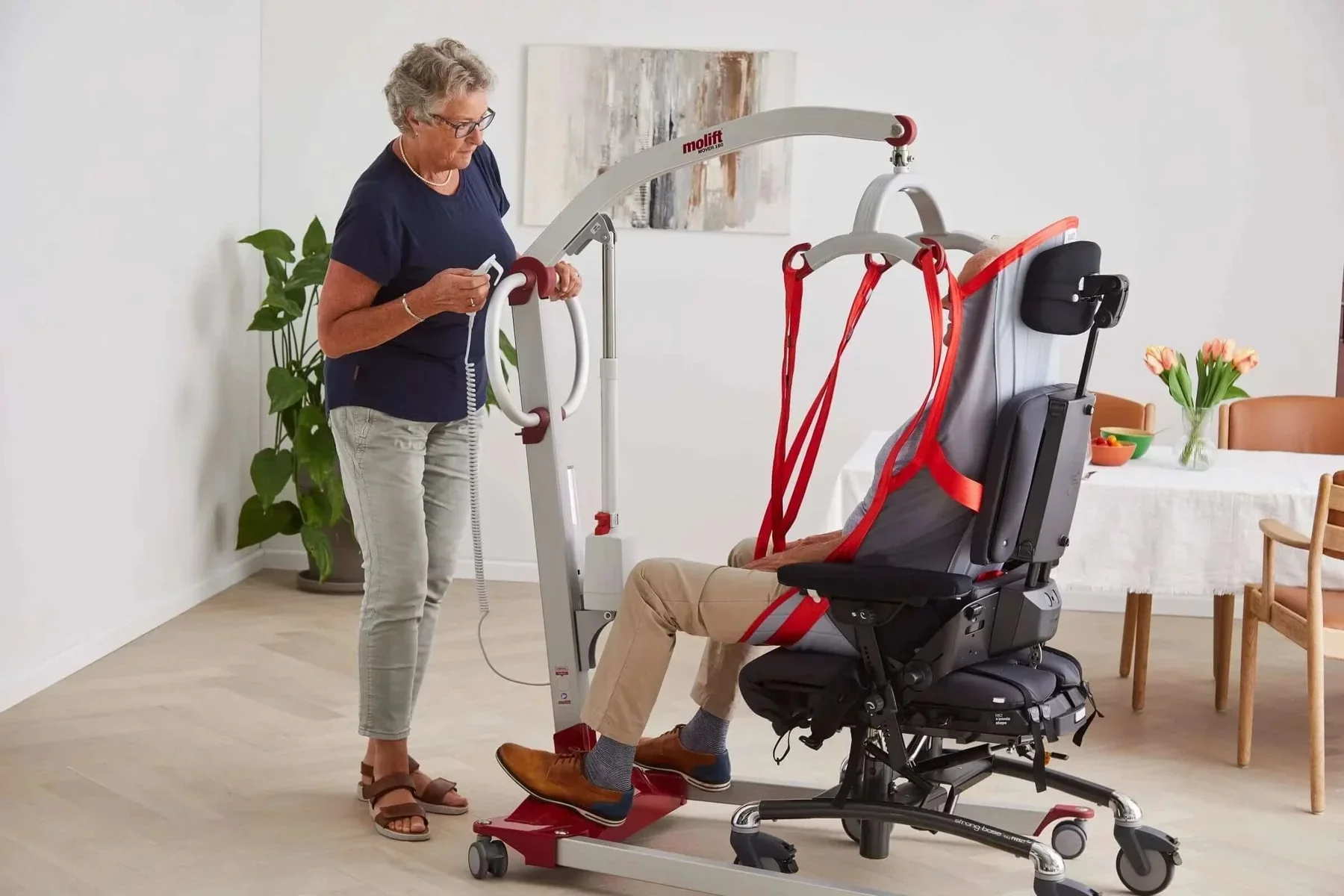
Professionals guide caregivers through real-life scenarios, demonstrating how to attach slings, operate controls, and perform transfers smoothly. They encourage hands-on practice until movements feel natural.
This learning experience often transforms initial nervousness into confidence.
Caregivers realize they no longer need to rely on physical strength alone. Individuals receiving assistance discover that transfers can feel secure and comfortable.
Training sessions unfold patiently, ensuring everyone feels empowered before installers leave.
The First Transfer Experience
The first transfer using a newly installed lift often becomes a memorable moment.
There is curiosity mixed with caution. Movements begin slowly. The lift rises gently, supporting weight evenly. Caregivers guide rather than lift. Individuals feel stable and secure.
What surprises many families is the emotional shift that happens almost immediately.
Tension disappears.
Instead of concentrating on avoiding strain or imbalance, both people can relax into the process. Transfers become smoother, calmer, and more predictable.
It is often the moment families realize the installation represents not just equipment, but relief.
Adjusting to Life With a Patient Lift
After installation, a short adjustment period follows.
Caregivers develop new routines. Individuals grow comfortable with sling positioning and lift movement. What initially feels new soon becomes familiar.
Within days, many families report that using the lift feels completely natural. The system blends into daily life, supporting morning routines, evening transitions, and everything in between.
The lift stops feeling like new equipment and starts feeling like part of the home.
Addressing Common Concerns
Some families worry about noise, visibility, or complexity.
Modern patient lifts operate quietly, producing only a gentle mechanical hum during movement. Tracks remain discreet, and equipment can be parked neatly when not in use.
Others wonder whether installation limits future flexibility. In reality, many systems can be expanded or adapted if needs change.
Professionals design installations with long-term usability in mind, allowing the system to grow alongside evolving care requirements.
Maintenance and Ongoing Support
After installation, ongoing support ensures continued safety and performance.
Routine maintenance checks confirm smooth operation and extend equipment lifespan. Technicians inspect motors, tracks, and safety mechanisms while addressing any questions that arise over time.
Knowing expert support remains available provides lasting reassurance.
Families are never left alone to manage complex equipment. The relationship with the accessibility provider continues long after installation day.
The Emotional Impact of a Safer Home
Perhaps the most meaningful change after installation is emotional rather than physical.
Caregivers experience reduced anxiety. Individuals feel more confident moving throughout their home. Daily routines become less exhausting and more enjoyable.
The home regains a sense of ease.
Instead of worrying about the next transfer, families focus on conversation, shared activities, and moments of connection that define home life.
Accessibility becomes invisible support rather than constant concern.
Conclusion: A Personalized Installation Experience With KGC
Installing a patient lift is not simply a technical project. It is a step toward safer caregiving, greater independence, and lasting comfort at home.
From initial consultation to final training, the process is designed to be respectful, collaborative, and tailored to each family’s needs. Every detail contributes to creating an environment where mobility support feels natural, dignified, and secure.
At KGC, patient lift installations begin with listening. The team works closely with families to understand daily routines, home layouts, and long-term goals before designing customized accessibility solutions that blend safety with style.
KGC’s experienced specialists manage every stage of installation with care and professionalism, ensuring equipment integrates seamlessly into the home while empowering caregivers and individuals alike.
If you are considering a patient lift and want expert guidance through every step of the journey, connect with KGC today.
Visit the KGC Contact Page to begin your consultation.
