
What to Expect During a Mobility Equipment Installation
Getting Started With a More Accessible Home
Deciding to install mobility equipment at home is usually a decision that comes after some careful thought. Maybe the stairs have become harder to manage. Perhaps getting in and out of the house with a wheelchair has become a daily challenge. In other situations, a caregiver may be struggling to safely help a loved one with transfers.
Whatever brings a family to this point, the goal is generally the same: make the home easier, safer, and more comfortable to use.
Mobility equipment can make a noticeable difference. A stairlift can make the stairs accessible again. A wheelchair ramp can create an easier entrance. A patient lift can take much of the physical strain out of transfers. A vertical platform lift can provide access where stairs or a ramp may not be practical.
But before any of these solutions become part of your daily routine, they need to be installed properly.
For homeowners who have never gone through an accessibility installation before, it is understandable to have questions. How does the process begin? Will the house need to be modified? How long will the work take? What happens if the space is complicated? And how will you know that everything is working correctly?
While every project is different, professional mobility equipment installation generally follows a straightforward process. The installation is planned around the home, the equipment, and most importantly, the person who will be using it.
The Process Usually Begins With a Home Assessment
Before installation starts, a professional will need to look at the space where the equipment will be used.
This is an important step because mobility equipment is not designed around a generic home. It needs to work with the actual dimensions and layout of your property.
During an assessment, the installer may take measurements, look at the surrounding area, and identify anything that could affect installation.
For a stairlift, the staircase will be examined from top to bottom. The installer may look at its length, width, shape, landings, and the amount of space available at either end.
For a patient lift, the focus may be on the bedroom, bathroom, or other areas where transfers take place. Ceiling construction, room dimensions, furniture placement, and the distance between transfer points can all matter.
If a ramp is being installed, the entrance, elevation, available space, surface, and path leading to the home will need to be considered.
This assessment gives the installation team a better understanding of what will work and what may need to be adjusted.
The Equipment Is Chosen Around Your Needs
Ideally, mobility equipment should be selected before the installation day, but the assessment can still play an important role in confirming that the chosen system is appropriate.
The right equipment depends on more than the person's mobility level.
The home itself matters.
For example, a straight stairlift may be suitable for a simple staircase, while a curved stairlift may be necessary for stairs with turns or intermediate landings.
A portable patient lift may make sense in one home, while a ceiling-mounted system may be more practical in another.
Similarly, a ramp may work well where there is sufficient outdoor space, while a vertical platform lift may be a better solution when space is limited or the elevation is significant.
The purpose of professional planning is to match the equipment to the actual situation.
Measurements Help Prevent Problems Later
Accurate measurements are one of the less noticeable but very important parts of an installation.
A few inches can make a meaningful difference when working with a narrow staircase, doorway, landing, or transfer area.
Installers need to know exactly how much room is available and where the equipment can safely be positioned.
This is particularly important when several parts of the home need to work together.
For example, a patient lift may need to move a person from a bed to a wheelchair. The lift needs to be positioned so that the transfer can happen without furniture or walls getting in the way.
Planning these details before installation helps reduce the chance of discovering a problem once the equipment is already in place.
Preparing the Area Before Installation
Once the plan is finalized, there may be some preparation required before the installation team arrives.
In many cases, this can be as simple as moving furniture or clearing items away from the work area.
If a patient lift is being installed in a bedroom, for example, the area around the bed may need to be accessible to the installers.
For an outdoor ramp or vertical platform lift, landscaping, outdoor furniture, or other items may need to be temporarily moved.
The installation company should explain any preparation that is needed ahead of time.
This gives homeowners an opportunity to get the space ready and helps the installation move along more efficiently.
Will the Home Need Major Changes?
This is one of the most common concerns homeowners have.
The answer depends on the equipment and the property.
Some accessibility products can be installed with relatively little disruption to the home. Others may require more extensive work because of structural or electrical requirements.
A stairlift, for example, is typically installed along the staircase without requiring major remodeling.
A ceiling-mounted patient lift requires appropriate structural support for the track system.
A vertical platform lift may require a suitable base and appropriate access around the platform.
A home elevator generally involves more significant planning and construction than smaller mobility products.
A professional assessment can provide a much clearer picture of what will be required before the work begins.
Structural Support Is an Important Consideration
Some mobility equipment carries significant weight, so the structure supporting it needs to be appropriate.
This is particularly important with overhead patient lifts.
A ceiling-mounted track needs to be attached to suitable structural support. It should not simply be mounted wherever it appears convenient.
Professionals evaluate the structure and determine how the equipment can be securely installed.
This type of planning is one of the main reasons professional installation is preferable to attempting a complex accessibility project without the necessary experience.
The equipment needs to be safe not only when it is first installed but also after repeated use over time.
Installing a Stairlift
The installation process for a stairlift will depend on whether the staircase is straight or curved.
With a straight stairlift, the rail is installed along the staircase and the lift is positioned on the rail.
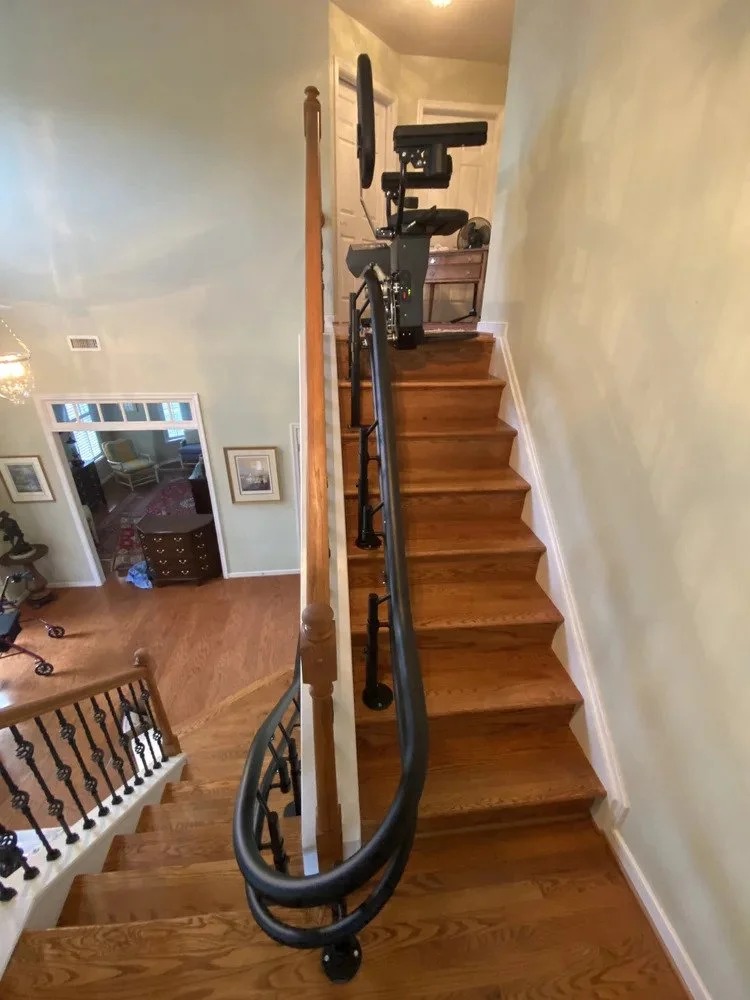
With a curved stairlift, the rail is designed specifically around the shape of the stairs. It may need to follow corners, bends, or multiple sections.
The installer also checks the areas where the user will get onto and off the stairlift.
This part of the process is just as important as the rail itself.
A user should have enough space to sit down comfortably at the bottom and exit safely at the top.
The final position needs to make sense within the way the household uses the stairs.
Installing a Patient Lift
Patient lifts require careful planning because transfers can involve significant physical support.
A portable floor lift typically needs to be assembled and adjusted so that it can move properly around the bed, wheelchair, or other transfer locations.
An overhead system requires a different approach.
The track needs to be installed securely, and its route should correspond with the areas where transfers are most often needed.
In some homes, a track may be installed over a bed. In others, the system may extend from the bedroom toward a bathroom or another frequently used area.
The objective is to make transfers easier without creating unnecessary obstacles in the room.
Installing a Wheelchair Ramp
A ramp may seem simple, but installation still requires careful planning.
The ramp needs to provide a practical route from one elevation to another while offering enough space for the person using a wheelchair or mobility device.
The entrance and landing areas are particularly important.
A person should have enough room to approach the ramp and reach the doorway without having to make an awkward turn.
Outdoor conditions also matter.
Rain, snow, drainage, landscaping, and surface conditions can all influence the design.
Professional installation helps ensure that the ramp is stable, practical, and appropriate for the location.
Installing a Vertical Platform Lift
Vertical platform lifts are often used where there is a difference in elevation that needs to be overcome without relying on stairs.
The installation requires careful attention to the platform location and the areas where the user will enter and exit.
The base needs to be properly supported, and the lift must have adequate clearance around it.
Depending on the location, the project may also involve preparing an appropriate landing or platform.
The installer needs to consider how the lift connects the two levels and how the user will approach it.
The goal is to create a smooth and practical transition rather than simply placing a lift next to a set of stairs.
Testing the Equipment Is a Critical Step
Once the equipment has been installed, the job is not finished.
Testing is an important part of the process.
The installer needs to make sure the equipment operates as intended and that all relevant controls and safety features are functioning properly.
With a stairlift, this can involve running the lift along the entire rail and checking its movement.
With a patient lift, the lifting, lowering, and track movement may be checked.
With a platform lift, the platform's movement, controls, gates, and safety features need to be evaluated.
Testing helps identify anything that needs to be adjusted before the homeowner begins using the equipment regularly.
The Installer Should Explain How Everything Works
A new piece of mobility equipment can take some getting used to.
Even when the controls are simple, homeowners and caregivers should have an opportunity to learn how the system works.
The installer can explain basic operation and demonstrate important features.
For a stairlift, the user may learn how to operate the controls, use the seat, and safely get on and off.
For a patient lift, caregivers need to understand how the sling and controls work and how to position the person correctly.
This instruction is valuable because confidence grows with familiarity.
The more comfortable the user and caregiver are with the equipment, the easier it becomes to incorporate it into the daily routine.
Safety Checks Before Regular Use
Before leaving the installation site, the installer should make sure the equipment is ready for normal use.
This means checking that the equipment is secure, operating correctly, and appropriately positioned.
The homeowner should also understand any basic safety precautions that apply to the specific system.
If there is something the family does not understand, this is the right time to ask.
It is much better to have questions answered during installation than to discover confusion later.
What If Something Needs to Be Adjusted?
Sometimes an installation does not look exactly as expected once the equipment is in place.
That does not necessarily mean there is a problem.
Small adjustments may be needed to improve positioning or accommodate the way the user interacts with the equipment.
For example, a stairlift seat may need to be adjusted for comfort.
A patient lift may need its position reviewed based on the actual transfer path.
A ramp may require attention to the landing area.
Professional installers are able to make appropriate adjustments and explain why they are necessary.
The goal is to leave the homeowner with a solution that works in practice, not just one that looks correct on paper.
Keeping the Home Comfortable During the Installation
Any work inside a home can cause some disruption.
The installation team may need access to hallways, bedrooms, staircases, entrances, or other areas.
Depending on the equipment, tools and materials may be present during the project.
A professional team should communicate with the homeowner about what to expect and work carefully within the home.
Keeping the work area organized and limiting unnecessary disruption can make the process much easier for everyone.
Accessibility Should Still Feel Like Home
Some homeowners hesitate to install mobility equipment because they worry about how it will change the appearance of their house.
That concern is understandable.
A home is a personal space, and people do not want it to suddenly feel clinical or unfamiliar.
Fortunately, many modern accessibility solutions are designed with residential environments in mind.
Stairlifts can be installed along existing staircases. Ramps can be planned around the home's exterior. Platform lifts can be positioned thoughtfully. Patient lift systems can sometimes be incorporated into rooms without taking up valuable floor space.
The right design can improve accessibility while allowing the home to retain its character.
Installation Is About More Than the Equipment
It is easy to think of installation as simply putting a product into place.
But a successful accessibility installation involves much more.
It requires understanding how the individual moves through the home, how caregivers provide assistance, and what challenges exist in the current environment.
The equipment needs to fit into that routine.
If it does, the difference can be significant.
A caregiver may no longer need to physically lift someone up the stairs. A wheelchair user may be able to enter the home without assistance. Someone who previously avoided a second floor may once again have access to it.
These are the real outcomes that make an accessibility project worthwhile.
Planning for the Future
When installing mobility equipment, it is worth thinking about more than today's needs.
Mobility can change over time.
A person who currently walks with a cane may eventually need a walker or wheelchair. Someone who needs occasional assistance with transfers may eventually require more consistent support.
That does not mean homeowners need to predict exactly what will happen.
It simply means that future flexibility is worth discussing.
A professional accessibility provider can help families consider whether a particular solution is likely to continue meeting their needs as circumstances change.
Good planning today can make future adjustments easier.
Maintenance After Installation
Once the installation is complete, the equipment becomes part of the home's regular routine.
Like any mechanical or electrical system, mobility equipment needs appropriate care.
The manufacturer's maintenance recommendations should be followed.
Homeowners should also pay attention to changes in how the equipment operates.
Unusual noises, changes in movement, worn components, or other concerns should be addressed promptly.
Regular professional service may also be recommended depending on the equipment.
Taking care of the system helps maintain reliable performance and can extend its useful life.
Choosing the Right Installation Professional
The company installing the equipment matters just as much as the equipment itself.
Homeowners should look for an accessibility provider with experience working with the type of equipment being installed.
A knowledgeable team should be willing to answer questions and explain the installation process clearly.
They should also take the time to understand the individual's needs rather than treating every home as the same.
A good installation experience should leave the homeowner feeling confident, informed, and comfortable with the new equipment.
The Goal Is a Safer, Easier Home
At the end of the day, mobility equipment should solve a problem.
It should make something easier.
It may make it possible to use the stairs again. It may reduce the physical effort involved in caregiving. It may provide a safer way to enter the home or move between different levels.
The installation is what helps turn that equipment into a practical solution.
When the equipment is properly planned, installed, tested, and explained, it becomes something the household can rely on rather than something they have to think about constantly.
Conclusion
Knowing what to expect during a mobility equipment installation can make the process much less stressful. From the initial home assessment and measurements to preparation, professional installation, testing, and user training, each step has a purpose.
The most important thing is that the equipment should be installed around the needs of the person using it and the way the home is actually used. A properly installed stairlift, patient lift, ramp, vertical platform lift, or other accessibility solution can make everyday movement safer while giving caregivers and families greater peace of mind.
At KGC, the focus is on creating accessibility solutions that make sense for each individual home. Every project has its own requirements, which is why careful planning and professional installation are important. Whether a family needs easier access between floors, a safer way to complete transfers, or a more accessible entrance, the right solution can make a meaningful difference in everyday life.
If you're considering mobility equipment for your home, KGC Contact Page can help you understand your options and plan a solution around your space, mobility needs, and long-term goals.
