
What Makes a VPL a Better Choice Than a Home Elevator in Certain Cases
Introduction
The question was asked softly, almost cautiously, while standing in the middle of a home that had clearly been loved for a long time. Someone I care about gestured toward the stairs and then toward the ceiling above.
We thought about an elevator, they said. But it feels like… a lot.
That pause said everything. The idea of a home elevator carries weight. Not just financially, but emotionally. It feels big. Permanent. Disruptive. For many families, it brings up images of major construction, months of upheaval, and a home that no longer feels familiar during the process.
Vertical platform lifts often enter the conversation quietly, almost as an alternative people discover later. Yet in many homes and many life situations, a VPL is not a compromise. It is the better choice.
This article explores what makes a vertical platform lift a better option than a home elevator in certain cases. It is not about ranking one as superior in all situations, but about understanding when a VPL aligns more naturally with real homes, real lives, and real needs.
Understanding the Difference at a Fundamental Level
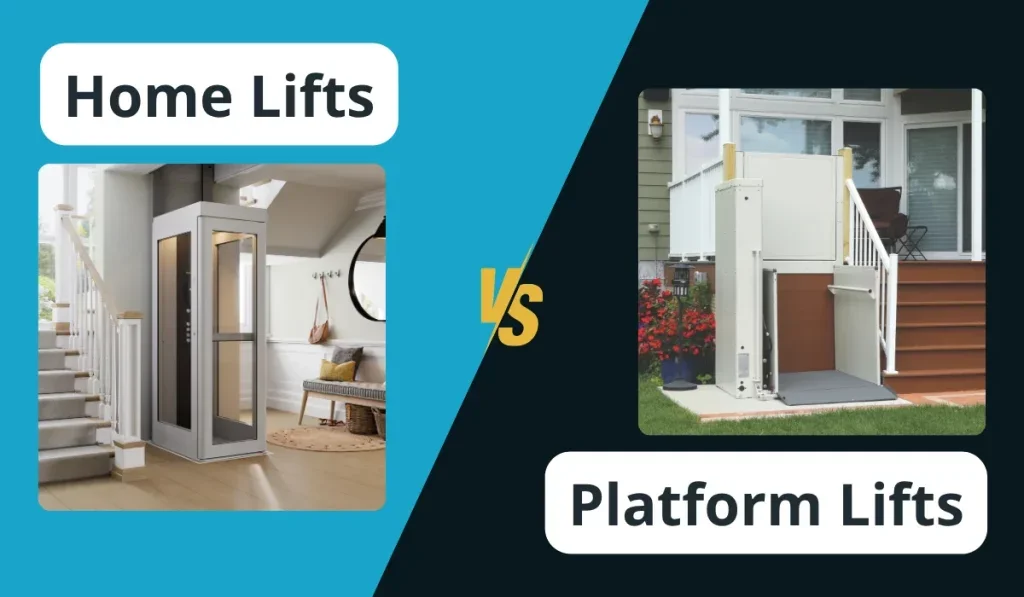
At their core, home elevators and vertical platform lifts solve the same problem. They move people between levels. How they do that, and what they require in order to do it, is where the differences become meaningful.
Home elevators are built into a shaft. They require structural framing, overhead clearance, pit depth, and significant modification to the home. They are designed for vertical travel across multiple floors and often become architectural features.
Vertical platform lifts are surface mounted systems. They travel vertically without the need for a full shaft or deep structural changes. They are designed to overcome short to moderate elevation changes efficiently.
That difference shapes everything that follows.
When the Home Is Already Built and Loved
Many homes were never designed with elevators in mind. Retrofitting an elevator into an existing home often means sacrificing closets, reconfiguring rooms, or cutting through multiple floors.
For homeowners who love their layout and want to preserve it, this level of disruption can feel overwhelming.
Vertical platform lifts work with existing spaces rather than reshaping them. They can be installed adjacent to stairs, along walls, or at entry points without reimagining the home’s structure.
When preservation matters, VPLs often fit more gracefully.
Construction Impact and Daily Life
Installing a home elevator is a major construction project. Walls are opened. Floors are modified. Noise, dust, and restricted access become part of daily life for an extended period.
For individuals already navigating mobility challenges, this disruption can be more than inconvenient. It can be exhausting.
Vertical platform lifts typically involve far less construction. Installation timelines are shorter. Disruption is minimized. Homes remain livable during the process.
In situations where maintaining routine and stability is important, this difference matters deeply.
Space Requirements and Footprint
Elevators require a dedicated shaft. Even compact residential models take up significant space across multiple levels.
In smaller homes or homes with limited floor area, finding space for an elevator can mean difficult compromises.
Vertical platform lifts use a much smaller footprint. They rely on vertical travel without the surrounding infrastructure of an elevator shaft.
When space is limited, a VPL often makes access possible where an elevator simply would not fit.
Height and Travel Needs
Home elevators are designed for full floor to floor travel, often across multiple stories. When that level of vertical movement is required, an elevator may be appropriate.
However, many homes do not need that range. Split level homes, raised living areas, sunken rooms, porches, and garages often involve elevation changes of just a few feet.
In these cases, a vertical platform lift addresses the need precisely without adding complexity designed for greater distances.
Choosing a solution that matches the actual need avoids overbuilding.
Cost Considerations Beyond the Price Tag
Home elevators are significant investments. Beyond the equipment itself, costs include structural modifications, permits, inspections, and extended labor.
Vertical platform lifts generally involve lower overall costs because they require less construction and fewer structural changes.
But the real cost difference is not just financial. It includes time, stress, disruption, and the emotional toll of a major renovation.
In many cases, families find that a VPL delivers the access they need without the full weight of an elevator project.
Permitting and Regulatory Complexity
Elevators often fall under stricter regulatory oversight. They may require specialized permits, inspections, and ongoing compliance.
Vertical platform lifts are typically governed by accessibility equipment standards rather than full elevator codes, depending on jurisdiction.
This can simplify approval processes and reduce administrative burden.
Less complexity often means faster implementation.
Maintenance and Long Term Care
Home elevators are complex systems with multiple mechanical components, doors, and control systems. Maintenance is essential and often specialized.
Vertical platform lifts are simpler by design. They still require regular maintenance, but systems are more accessible and service needs are often less intensive.
For homeowners who want reliable support without extensive long term service demands, this simplicity can be appealing.
Energy Use and Efficiency
Because elevators are designed for longer travel and larger capacities, they often use more energy.
Vertical platform lifts are built for efficiency. They move shorter distances and often rely on battery supported systems.
For homeowners conscious of energy use or operating costs, this difference can factor into decision making.
Accessibility Without Excess Complexity
Elevators can feel intimidating to some users. Enclosed spaces, door systems, and controls may introduce anxiety for individuals with certain sensory or cognitive considerations.
Vertical platform lifts are open, visible, and straightforward. Users can see their surroundings during travel.
This transparency often feels more comfortable and less isolating.
Supporting Wheelchair Users Directly
Vertical platform lifts are specifically designed to accommodate wheelchairs without transfers. Users roll on and off with ease.
While elevators also support wheelchairs, the VPL’s simplicity and direct access often feel more intuitive for daily use in homes with limited vertical travel.
This ease supports independence without complication.
Outdoor Access and Entry Points
Home elevators are interior systems. They do not solve outdoor access challenges on their own.
Vertical platform lifts can be installed outdoors, providing direct access at entry points. This makes them especially valuable for homes where the primary barrier is getting in and out.
In these cases, a VPL addresses the most immediate need more effectively.
Emotional Comfort and Perception
For many people, installing an elevator feels like a drastic step. It may symbolize a level of change they are not emotionally ready to embrace.
Vertical platform lifts often feel less overwhelming. They are seen as supportive tools rather than transformative renovations.
That emotional comfort plays a role in acceptance and long term satisfaction.
Flexibility for Changing Needs
Vertical platform lifts offer flexibility. They can often be relocated, modified, or adapted if needs change or if the home is sold.
Elevators are permanent fixtures integrated into the structure.
For families thinking ahead but unsure of long term plans, flexibility matters.
When a Home Elevator Makes Sense
It is important to acknowledge that home elevators have their place. Large homes with multiple stories, long term plans for extensive vertical travel, or design goals that incorporate an elevator from the start may benefit from that option.
The point is not that VPLs replace elevators, but that they often fit better in specific, common scenarios.
Real Life Reflections From Homeowners
I once spoke with a homeowner who initially planned for an elevator. After learning what it would involve, they reconsidered. The vertical platform lift met their needs perfectly and preserved their home’s layout.
Another family chose a VPL for a split level home and later said they were grateful they did not overbuild for a problem that was smaller than they first imagined.
Right sizing the solution made all the difference.
Choosing What Fits, Not What Sounds Impressive
Accessibility solutions should not be chosen based on prestige or perception. They should be chosen based on fit.
A vertical platform lift is not a lesser choice. In many homes, it is the smarter one.
Matching the solution to the real problem preserves both independence and peace of mind.
Conclusion
In certain cases, a vertical platform lift is a better choice than a home elevator. When space is limited, construction disruption must be minimized, elevation changes are modest, or emotional comfort matters, VPLs offer efficient, reliable access without unnecessary complexity.
At KGC, we believe accessibility solutions should be thoughtfully matched to the home and the life being lived within it. Our approach helps families understand when a vertical platform lift makes more sense than an elevator, and when other options may be more appropriate. If you are weighing these choices and want clear, honest guidance, our team is here to help you decide with confidence.
You can reach our team through the KGC Contact Page.
