
How Quiet Are Vertical Platform Lifts? What to Expect
Introduction
The question came up unexpectedly during a home visit that was otherwise focused on measurements and logistics. We were standing near the living room, close enough to hear the refrigerator hum and the faint ticking of a wall clock. Someone I care about looked at the spot where a vertical platform lift might go and asked, almost as an afterthought, Will it be loud?
It was a fair question. Noise has a way of shaping how comfortable a space feels. A home is meant to be calm, familiar, and predictable. The idea of adding a mechanical system can bring worries about constant buzzing, clanking, or something that announces itself every time it moves.
Concerns about noise are common, especially when a lift will be used daily or installed near shared living spaces. Understanding how quiet vertical platform lifts really are helps families feel confident that accessibility will support daily life rather than disrupt it.
This article explores what to expect when it comes to the sound of vertical platform lifts. It looks at how they operate, what influences noise levels, and how modern design prioritizes quiet, dignified movement that blends naturally into the rhythm of a home.
Why Noise Matters More Than People Expect
Noise is not just about volume. It is about interruption. A sound that startles, lingers, or repeats too often can affect comfort and peace of mind.
For individuals using mobility equipment, excessive noise can draw unwanted attention or create anxiety. For others in the household, it can disrupt conversation, rest, or concentration.
Quiet operation supports dignity. It allows movement to happen without fanfare or disruption.
How Vertical Platform Lifts Operate
Vertical platform lifts move using electric or hydraulic systems designed for smooth, controlled vertical travel. Unlike industrial lifts or commercial elevators, residential VPLs are engineered specifically for homes and low rise environments.
They move at moderate speeds and use motors designed to minimize vibration and noise. The motion is deliberate rather than rushed, which reduces mechanical strain and sound.
Understanding this design intention helps explain why modern VPLs are quieter than many people expect.
Comparing VPL Noise to Everyday Household Sounds
One of the most helpful ways to think about lift noise is by comparison. Most homeowners describe the sound of a vertical platform lift as similar to a dishwasher running in another room or a quiet washing machine cycle.
It is present but not intrusive. Noticeable if you listen for it, but easy to tune out during normal activity.
For many people, the sound quickly fades into the background of daily life.
Indoor Versus Outdoor Noise Differences
Indoor and outdoor VPLs can sound slightly different due to their environment. Indoor lifts benefit from controlled conditions and surrounding walls that absorb sound.
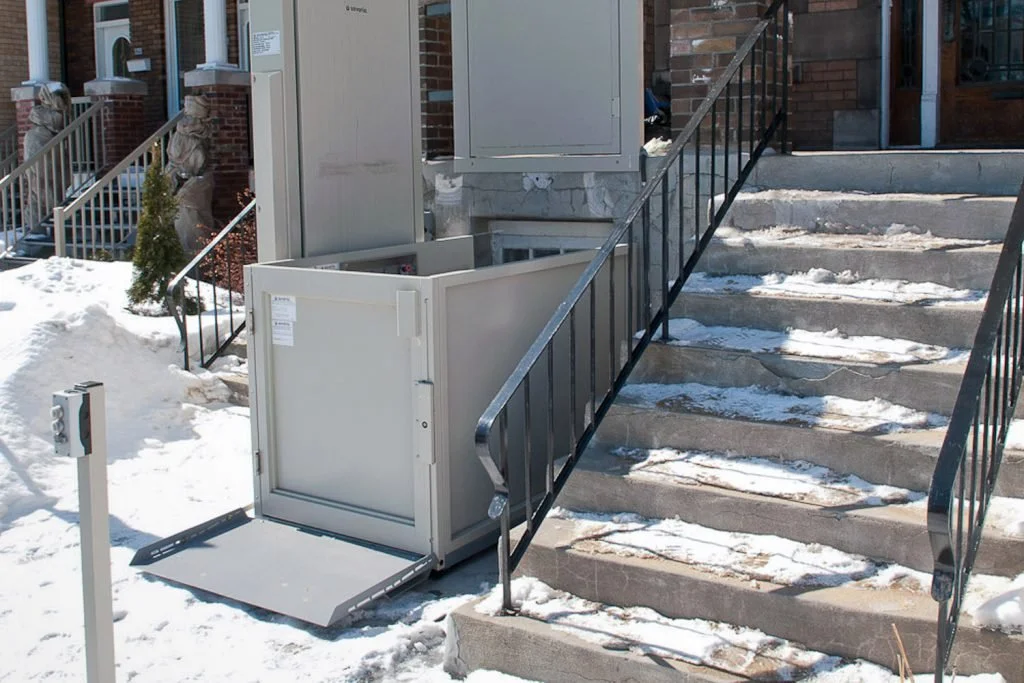
Outdoor lifts operate in open air, where sound can carry differently. Wind, ambient outdoor noise, and surface materials all influence perception.
Even outdoors, modern VPLs are designed to operate quietly enough that they do not disrupt neighbors or household members.
Smooth Motion Reduces Sound
One of the key reasons vertical platform lifts remain quiet is their smooth start and stop motion. Sudden movement creates vibration, and vibration creates noise.
Modern VPLs accelerate and decelerate gradually. This controlled movement reduces mechanical stress and keeps sound levels low.
Smooth motion also improves comfort, creating a calmer experience overall.
Track and Guide System Design
The guide system that keeps the platform aligned plays a role in noise levels. Precision engineering ensures that the platform moves straight and evenly.
When alignment is correct, there is minimal friction or rattling. This precision contributes to quiet operation.
Professional installation is essential to achieving this smooth, quiet movement.
Motor Technology and Sound Dampening
Advances in motor technology have significantly reduced noise in mobility equipment. Modern VPL motors are designed with sound dampening features that limit vibration.
Housing materials and internal insulation further reduce sound transmission. These design choices reflect a focus on residential comfort rather than industrial performance.
Quiet motors support everyday use without drawing attention.
The Role of Maintenance in Noise Control
Noise levels are closely tied to maintenance. A well maintained lift operates more quietly than one with worn components or misalignment.
Regular servicing ensures that moving parts remain lubricated and properly adjusted. Addressing small issues early prevents noise from developing over time.
Maintenance preserves both performance and peace.
How Installation Location Affects Sound
Where the lift is installed can influence how sound is perceived. A lift near a living room may be more noticeable than one near a hallway or entryway.
Professionals consider placement carefully, balancing accessibility needs with household dynamics. Strategic placement minimizes disruption while maintaining usability.
Thoughtful planning enhances comfort.
Psychological Perception of Noise
It is worth noting that perception matters. Sounds associated with safety and control are often experienced as less disruptive than unexpected noises.
When users trust their lift and understand its operation, the sound becomes familiar rather than alarming. Over time, it often fades into the background entirely.
Familiarity reduces sensitivity.
Noise During Entry and Exit
Most noise occurs during movement, not during entry or exit. Platforms, gates, and controls are designed to operate quietly.
Secure gates close smoothly without slamming. Controls respond without loud clicks. These details support a calm experience.
Quiet transitions matter as much as quiet travel.
Outdoor Environmental Sounds Mask Lift Noise
For outdoor VPLs, environmental sounds often mask lift noise. Wind, traffic, birds, and neighborhood activity naturally blend with the sound of the lift.
As a result, outdoor lifts often feel even quieter in context than they might in isolation.
Context shapes perception.
Concerns About Nighttime Use
Many families worry about nighttime use disturbing others. Modern VPLs are designed to operate quietly enough for evening or early morning use.
With proper installation and maintenance, nighttime operation rarely disrupts sleep or household routines.
This reliability supports independence around the clock.
Comparing VPLs to Home Elevators
Home elevators often involve larger motors, doors, and enclosed shafts, which can amplify sound.
Vertical platform lifts, by contrast, use simpler mechanisms and open designs that reduce noise.
For homeowners sensitive to sound, this difference can be significant.
Real Life Reflections From Homeowners
I once spoke with a homeowner who admitted they delayed installation because they feared constant noise. After installation, they laughed and said they barely noticed it after the first week.
Another shared that the quiet operation made the lift feel like part of the house rather than a machine added to it.
These reflections highlight how expectation often differs from reality.
Supporting Dignity Through Quiet Design
Quiet operation is not just a technical feature. It is a dignity feature.
When movement happens quietly, it does not announce limitation or draw attention. It allows individuals to move freely without feeling observed.
This subtlety supports confidence and comfort.
Questions to Ask When Evaluating Noise
When exploring VPL options, asking about noise levels, motor type, and maintenance requirements can provide clarity.
Reputable providers are transparent about what to expect and how to keep operation quiet over time.
Information empowers comfort.
Long Term Quiet Performance
A well chosen and well maintained VPL remains quiet for years. Investing in quality equipment and professional installation pays off in daily experience.
Quiet reliability becomes the norm.
Conclusion
Vertical platform lifts are much quieter than many people expect. Designed for residential environments, they operate with smooth motion, sound dampened motors, and thoughtful engineering that prioritizes comfort. Whether installed indoors or outdoors, modern VPLs blend into daily life without disrupting the calm of the home.
At KGC, we believe accessibility solutions should support independence without introducing new stressors. Our approach to vertical platform lifts focuses on quiet, reliable operation that respects the home environment and the people who live in it. If you have concerns about noise or want to experience what a modern VPL is really like, our team is here to help.
You can reach our team through the KGC Contact Page.
