
What Is a Vertical Platform Lift and Who Needs One?
When Stairs Become More Than an Inconvenience
For many people, stairs are simply part of everyday life. They connect rooms, entrances, and outdoor spaces without much thought. Yet there comes a point in some households when stairs begin to feel less like architecture and more like an obstacle standing between someone and the life they want to continue living.
Sometimes it starts with avoiding certain entrances because the steps feel exhausting. In other homes, a wheelchair user must rely entirely on others for access between levels. Families often try temporary solutions at first, carefully assisting with transfers or rearranging routines around physical limitations. Over time, however, the emotional weight of these adjustments becomes impossible to ignore.
People want independence. They want to enter their homes safely, move between levels confidently, and participate fully in daily routines without feeling restricted by stairs.
This is where vertical platform lifts quietly transform lives.
Understanding What a Vertical Platform Lift Is
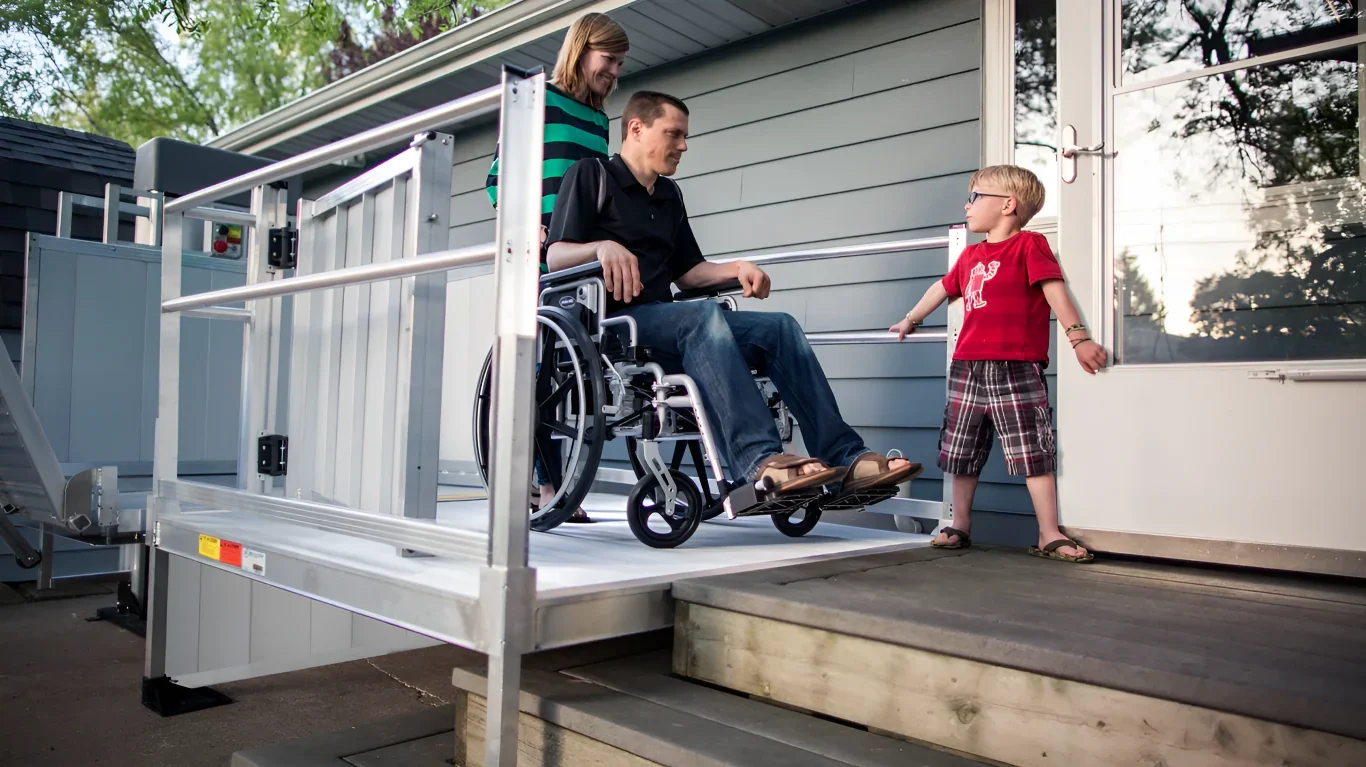
A vertical platform lift, often called a VPL, is a mobility solution designed to transport individuals safely between different elevations while remaining seated in a wheelchair, scooter, or standing position if preferred.
Unlike stairlifts, which use a chair traveling along the staircase, vertical platform lifts move straight upward and downward on a guided platform. The movement resembles a small residential elevator but is specifically designed for accessibility rather than general passenger transport.
The platform itself is spacious enough to accommodate mobility devices comfortably, allowing users to remain securely positioned during travel. Safety gates, non-slip surfaces, and smooth controls create an experience that feels stable and predictable.
For many families, the first time they see a vertical platform lift in operation is surprisingly emotional. What once required assistance suddenly becomes manageable independently.
Why Vertical Platform Lifts Matter
Mobility is deeply connected to dignity. Being able to move through one’s home without relying constantly on physical assistance affects confidence, emotional wellbeing, and quality of life.
Vertical platform lifts remove one of the most difficult barriers in many homes: changes in elevation.
Unlike portable ramps that may require long distances to accommodate height changes safely, a vertical platform lift moves directly upward in a compact footprint. This makes it especially valuable in homes where space is limited or where steep ramps would feel impractical.
The lift becomes more than transportation. It becomes access to front doors, patios, garages, porches, or different floors that might otherwise feel unreachable.
Who Benefits Most From a Vertical Platform Lift
Vertical platform lifts support a wide range of mobility needs. Wheelchair users are among the most common beneficiaries because the platform allows safe transport without requiring transfers into another seat.
For individuals using power chairs or scooters, remaining in the mobility device throughout the ride reduces strain and eliminates complicated positioning.
People with limited balance or reduced strength may also benefit significantly. Some individuals can walk short distances but find stairs unsafe or exhausting. A vertical platform lift provides stable movement without the physical demands of climbing.
Families caring for loved ones often discover that VPLs reduce caregiver strain as well. Assisting someone manually over stairs or entry steps can be physically demanding and emotionally stressful. The lift creates a safer experience for everyone involved.
Indoor and Outdoor Applications
One of the reasons vertical platform lifts are so versatile is their ability to function both indoors and outdoors.
Outdoor installations are common near entryways with multiple steps leading to the front door. Instead of navigating weather-exposed stairs, individuals can travel smoothly from ground level to the entrance platform.
Indoor VPLs are often installed in split-level homes or spaces where elevators would require extensive renovation. Because the lift travels vertically within a compact area, installation can often occur without major structural changes.
Families frequently appreciate how adaptable these systems are. Rather than redesigning the home completely, the lift works within the existing environment.
How Vertical Platform Lifts Differ From Stairlifts
People sometimes confuse stairlifts and vertical platform lifts because both improve accessibility, yet they serve very different needs.
A stairlift carries a seated individual along the staircase itself. The user typically transfers from a wheelchair or standing position into the stairlift chair before travel.
A vertical platform lift, by contrast, allows the individual to remain in their wheelchair or scooter throughout the journey. This distinction is important because transfers can be physically difficult or unsafe for some people.
The experience also feels different. Stairlifts follow the angle of the staircase, while vertical platform lifts move straight upward like a small elevator.
Choosing between the two depends largely on mobility level, transfer ability, and home layout.
The Emotional Impact of Restored Access
Accessibility solutions often focus heavily on technical details, but the emotional impact matters just as much.
Imagine someone who has not used the front entrance independently in months suddenly rolling up to the door without assistance. Or a family gathering where everyone can move freely between spaces without planning around stairs.
These moments restore more than convenience. They restore participation.
Many individuals describe a sense of relief after installing a vertical platform lift because the home begins to feel welcoming again rather than restrictive.
Caregivers often feel emotional relief as well. The physical demands of lifting, supporting, or maneuvering someone over stairs diminish dramatically.
Safety Features That Create Confidence
Modern vertical platform lifts are designed with safety as a priority from the very beginning.
Platform gates remain securely locked during operation, preventing accidental movement while the lift is in transit. Non-slip flooring helps maintain stability in both indoor and outdoor environments. Emergency stop controls allow immediate response if needed, while battery backup systems often ensure operation during power outages.
Smooth start and stop technology prevents sudden jerks that could feel unsettling, especially for wheelchair users.
These systems work quietly in the background, allowing users to focus on movement itself rather than worrying about safety.
Space Considerations and Home Design
Families often assume accessibility equipment requires major home alterations. In reality, vertical platform lifts are designed to integrate into residential environments with minimal disruption.
Their compact footprint makes them practical for many homes where traditional elevators would not fit. Outdoor models can often be installed near existing staircases without dramatically changing the appearance of the property.
Modern lifts also prioritize visual design. Clean lines, neutral finishes, and thoughtful engineering allow the system to blend naturally into the home rather than dominating it visually.
Accessibility and aesthetics no longer need to compete with each other.
Long-Term Accessibility Planning
Vertical platform lifts are often chosen as part of a broader plan for long-term living at home.
Families increasingly recognize the importance of creating environments that adapt alongside changing mobility needs. Instead of waiting for stairs to become impossible, many homeowners install accessibility solutions proactively.
This forward-thinking approach allows people to remain in familiar surroundings longer while maintaining independence and reducing risk.
A vertical platform lift becomes an investment not only in safety but in continuity of life at home.
Professional Installation Matters
Because vertical platform lifts involve elevation changes, proper installation is essential for safety and long-term performance.
Professional installers evaluate structural support, electrical requirements, travel height, and accessibility clearances before installation begins. Careful planning ensures the lift operates smoothly and integrates naturally into the home environment.
The installation process itself is often less disruptive than families expect. Many homeowners are surprised by how quickly the system becomes part of everyday life.
Maintenance and Reliability
Routine maintenance helps ensure consistent operation over time. Technicians inspect moving components, safety systems, and electrical connections regularly to maintain performance and reliability.
Like any important mobility equipment, ongoing care protects both safety and peace of mind.
Most users quickly reach a point where they stop thinking about the lift mechanically. It simply becomes part of the home’s natural rhythm.
Conclusion
A vertical platform lift is more than a mobility device. It is a practical, empowering solution that helps individuals navigate elevation changes safely while preserving independence and dignity. Whether supporting wheelchair access, reducing caregiver strain, or helping families remain comfortably at home, vertical platform lifts create freedom where stairs once created barriers.
At KGC, accessibility solutions are designed around real lives and real homes. Every installation begins with understanding how people move through their space, what challenges they face, and what independence means to them personally. The result is a customized approach that balances safety, comfort, and seamless integration into the home environment.
If you are considering a vertical platform lift or exploring ways to make your home more accessible, connect with the team at KGC Mobility Solutions through the KGC Contact Page.
