
How Stairlifts Help Prevent Falls at Home
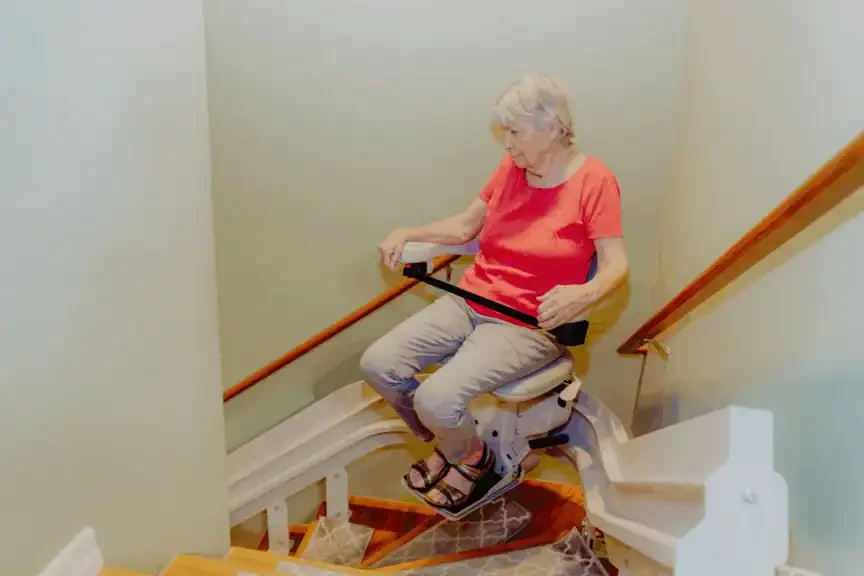
When the Stairs Start to Feel Different
There is often a quiet moment when families begin to notice a change. The stairs are still the same, yet something about using them no longer feels effortless. Someone pauses a little longer before climbing. A hand grips the railing more tightly than before. Trips upstairs become slower, more deliberate, sometimes avoided altogether.
These changes rarely happen all at once. They build gradually, often so subtly that they go unspoken for a long time. Yet beneath those small adjustments is a growing concern that many families share. The fear of falling at home, especially on the stairs, becomes a constant background thought.
Stairlifts enter the conversation at exactly this point. Not as a sign of limitation, but as a way to restore confidence in a space that should feel safe and familiar.
Understanding how stairlifts prevent falls begins with understanding why falls happen in the first place.
Why Stairs Are One of the Highest Risk Areas in the Home
Stairs require coordination, balance, and strength all at the same time. Each step involves shifting weight, maintaining posture, and judging distance accurately. Even for individuals with only mild mobility changes, this combination can become challenging.
Fatigue plays a major role as well. A simple trip upstairs at the end of the day can feel very different from the same trip in the morning. Lighting conditions, distractions, and carrying objects add additional layers of risk.
Most falls on stairs occur not because someone is careless, but because the body is momentarily outpaced by the environment. A missed step, a slight loss of balance, or a moment of hesitation can be enough.
This is where stairlifts change the experience entirely. Instead of relying on physical effort and balance, movement between floors becomes supported, controlled, and consistent.
Removing the Physical Strain of Climbing
One of the most direct ways stairlifts prevent falls is by eliminating the physical demands of climbing.
Every stair step requires muscle engagement, joint stability, and balance adjustments. When strength or coordination changes, even slightly, this repetitive effort increases the likelihood of missteps.
A stairlift removes that strain completely. The user sits securely while the system handles movement along the staircase. There is no need to lift legs repeatedly, no pressure on knees or hips, and no need to maintain balance during ascent or descent.
This shift is significant because fatigue is one of the most common contributors to falls. When the body is no longer working against gravity on the stairs, the risk of losing stability drops dramatically.
Creating a Controlled and Predictable Movement Path
Stairs are inherently variable. Each step requires adjustment, and even familiar staircases can feel different depending on lighting or energy levels.
A stairlift introduces consistency.
The motion is smooth, steady, and predictable. There are no surprises, no uneven surfaces, and no changes in step height. The user experiences the same controlled movement every time.
This predictability reduces hesitation, and hesitation is often what leads to instability. When people feel uncertain on stairs, they may rush or pause awkwardly, both of which can increase risk.
With a stairlift, movement becomes automatic and reliable, allowing the user to focus on comfort rather than balance.
Supporting Safe Transfers at the Top and Bottom of the Stairs
Falls do not only happen during movement. They often occur during transitions, such as stepping onto or off stairs.
Modern stairlifts address this through carefully designed entry and exit points. Swivel seats allow the chair to turn toward the landing rather than the staircase, so the user can stand on flat ground instead of facing steps.
This simple change significantly reduces risk. Instead of stepping directly into a staircase environment, the user transitions onto a stable surface with support.
Armrests, seatbelts, and stable seating further assist during these moments, ensuring that standing up and sitting down feel secure and controlled.
Reducing the Need to Carry Objects on the Stairs
Another common cause of falls involves carrying items while climbing stairs. Laundry baskets, household items, or personal belongings can shift balance and reduce visibility of steps.
Stairlifts eliminate this challenge entirely. Items can be transported separately, and the user remains seated with both hands free during travel.
By removing the need to multitask on the stairs, stairlifts significantly reduce one of the most overlooked risk factors in home falls.
Preventing Overexertion and Sudden Fatigue
Physical exertion plays a major role in stair-related falls. Even individuals who feel confident at the beginning of a climb may experience fatigue midway, especially in multi-level homes.
When muscles become tired, reaction time slows and balance becomes less stable.
A stairlift removes this gradual decline in physical capacity during stair use. Instead of exerting energy, the user remains supported from start to finish. This ensures that fatigue never becomes a factor during movement between floors.
Enhancing Confidence and Reducing Hesitation
Confidence has a direct impact on physical safety.
When someone feels unsure about using the stairs, their movement often becomes cautious or uneven. Small hesitations can disrupt rhythm, increasing the chance of missteps.
Stairlifts restore confidence by removing uncertainty. The user knows exactly what to expect every time. This emotional reassurance translates into physical stability because movement no longer involves doubt or fear.
Caregivers also experience reduced anxiety, knowing that stair travel no longer carries the same level of risk.
Built-In Safety Systems That Respond Instantly
Modern stairlifts include multiple safety mechanisms designed specifically to prevent accidents.
Sensors detect obstacles on the stairs and stop the lift immediately if anything blocks the path. Smooth start and stop technology prevents sudden movements that could startle the user. Seatbelts provide additional stability during travel.
These systems work together continuously, creating a protective environment that actively reduces risk rather than simply reacting to it.
The result is a layer of safety that operates quietly in the background during every use.
Supporting Independence Without Compromising Safety
One of the most important benefits of stairlifts is that they allow individuals to remain independent while still reducing risk.
Without a stairlift, some people may avoid stairs entirely or rely heavily on assistance. Both options can impact confidence and daily routine.
A stairlift restores the ability to move freely between floors without assistance, while maintaining a high level of safety. This balance between independence and protection is what makes stairlifts so impactful in fall prevention.
Creating Safer Homes for Everyone
While stairlifts are designed for a primary user, their impact extends to the entire household.
Caregivers no longer need to assist physically on the stairs, reducing the risk of injury for both individuals. Families also benefit from reduced worry and improved peace of mind.
The staircase becomes a shared space again, used safely and comfortably by everyone in the home.
Professional Installation and Long-Term Safety
Proper installation plays a critical role in fall prevention. A stairlift must be precisely aligned to ensure smooth movement and safe stopping points.
Professional installers assess stair width, angle, and landing space to ensure the system fits the home correctly. This careful setup prevents issues that could affect safety later.
Regular maintenance further ensures that sensors, motors, and safety features continue to function as intended over time.
A Safer Way to Stay at Home
Falls often lead to major life changes, including hospital visits, rehabilitation, or even relocation. Stairlifts help reduce this risk by addressing one of the most common sources of injury in the home.
By making stairs safer and more manageable, they support the ability to remain at home longer, with greater confidence and independence.
Conclusion
Stairlifts help prevent falls at home by removing physical strain, creating predictable movement, supporting safe transitions, and reducing common risk factors such as fatigue and carrying objects. Beyond technology, they restore confidence and allow individuals to move freely between floors without fear or hesitation.
At KGC, safety and independence are always the foundation of every mobility solution. Each stairlift installation is designed with careful attention to the home environment, ensuring that every detail supports comfort, dignity, and long-term security.
If you are exploring ways to make your home safer or reduce fall risk for a loved one, connect with the team at KGC Mobility Solutions through the KGC Contact Page. A simple conversation can be the first step toward a safer and more confident home.
