
Vertical Platform Lifts vs Stairlifts: Key Differences
Choosing the Right Path to Independence
The decision to improve accessibility at home often begins with a simple goal: making everyday movement safer and easier. Yet once families begin exploring options, they quickly discover that there is more than one way to overcome stairs and elevation changes.
For many homeowners, the choice comes down to two popular solutions: a stairlift or a vertical platform lift. At first glance, both seem to accomplish the same task. They help people move between levels safely and comfortably. However, the experience of using them, the people they serve, and the environments they fit can be very different.
Understanding these differences helps families make confident decisions that support not only current mobility needs but future independence as well.
Understanding the Purpose of Each Solution
Imagine two homes with identical staircases. In one home, an individual walks independently but finds climbing stairs increasingly difficult and tiring. In the other, a wheelchair user needs access to the front entrance and upper level without leaving their mobility device.
Both households need accessibility, but they require different solutions.
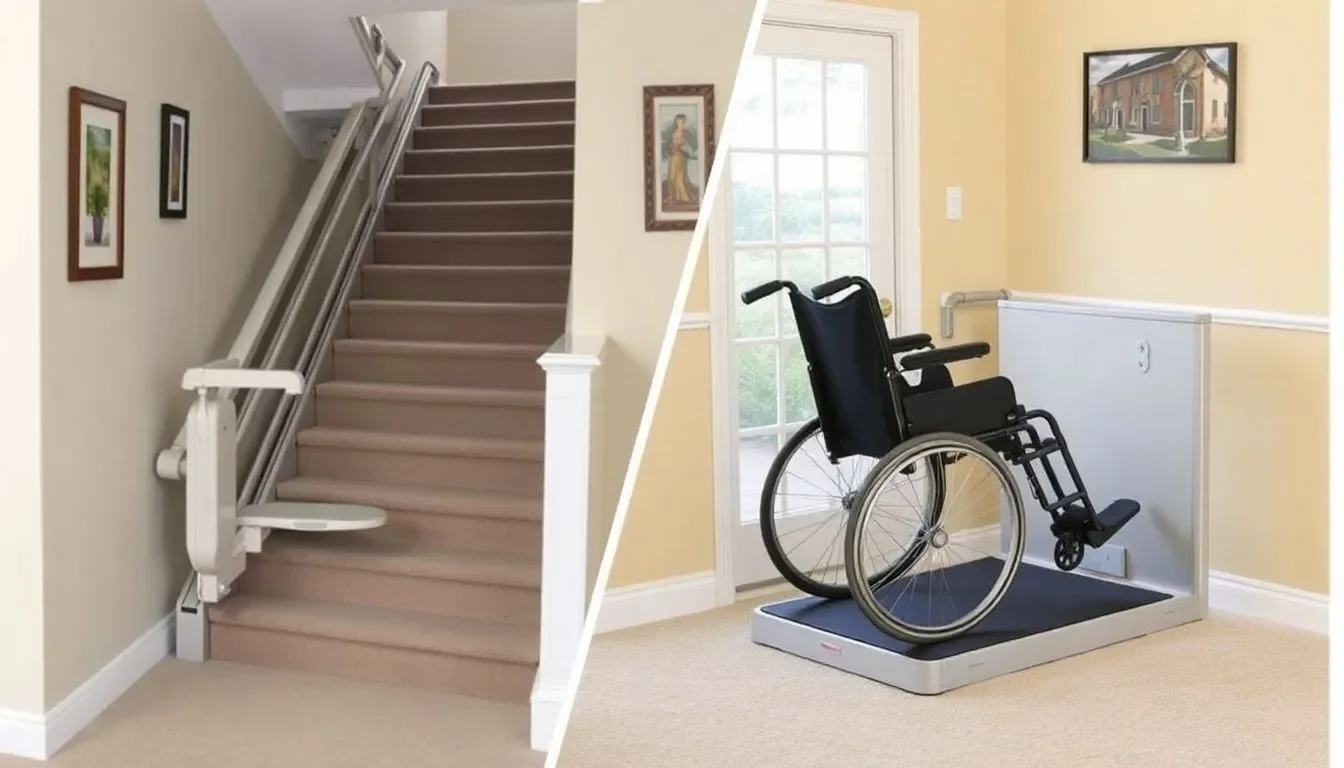
A stairlift is designed for individuals who can safely transfer into a seat. The lift carries the user along the staircase while seated, following the path of the stairs from one level to another.
A vertical platform lift, often called a VPL, works more like a small residential elevator. It moves straight up and down and allows users to remain in a wheelchair, scooter, or standing position throughout the journey.
The distinction may seem small at first, but it significantly affects how each solution fits into daily life.
How Stairlifts Work
A stairlift consists of a motorized chair attached to a rail mounted directly to the staircase. The user sits in the chair, fastens a seatbelt, and rides along the rail to the desired level.
Modern stairlifts are designed to blend into the home with compact rails, folding seats, and quiet operation. When not in use, the seat, armrests, and footrest fold neatly away to preserve stair access for other household members.
Many families choose stairlifts because they provide a straightforward solution for navigating stairs without major home modifications.
For someone who remains comfortable transferring from standing to seated positions, a stairlift can restore full access to a multi-level home while maintaining independence.
How Vertical Platform Lifts Work
A vertical platform lift moves users directly between elevations on a secure platform. Unlike a stairlift, there is no need to transfer into a separate seat.
The user enters the platform while using a wheelchair, scooter, walker, or standing position. Safety gates close, and the lift travels vertically to the destination level.
This design makes vertical platform lifts particularly valuable for individuals who rely on mobility devices full-time or who find transfers difficult or unsafe.
Because movement occurs vertically rather than along a staircase, the experience feels more like using an elevator than riding a chairlift.
Mobility Needs and User Experience
One of the most important differences between these solutions involves who will use them.
Stairlifts are ideal for individuals who can independently sit down and stand up from a chair. They support those experiencing reduced endurance, balance concerns, or difficulty climbing stairs while preserving independence throughout the home.
Vertical platform lifts accommodate a broader range of mobility needs. They are especially useful for wheelchair users, scooter users, and individuals who require mobility devices throughout daily activities.
Consider the difference between carrying luggage onto an airplane seat and remaining comfortably seated in a vehicle. Both methods achieve transportation, but one requires significantly less physical effort.
Similarly, a vertical platform lift eliminates the need for transfers, which can be a critical factor for many families.
Space Requirements and Installation
The amount of available space often influences the decision between a stairlift and a vertical platform lift.
Stairlifts are generally the more compact option. Because they follow the staircase itself, they use existing architectural space efficiently. Many installations can be completed without major structural changes, making stairlifts appealing for homeowners seeking minimal disruption.
Vertical platform lifts require a dedicated area for the platform and travel path. While modern systems are designed to maximize space efficiency, they still need sufficient room for vertical movement and safe entry and exit.
For homes with limited floor space but usable staircases, stairlifts often provide a practical solution. Homes requiring wheelchair accessibility may benefit more from allocating space to a vertical platform lift despite the larger footprint.
Accessibility and Independence
Both systems promote independence, but they do so in different ways.
A stairlift restores access for individuals who can manage transfers but need assistance with the physical challenge of stairs. It allows continued use of bedrooms, offices, and other upper-level spaces without requiring caregiver support.
A vertical platform lift removes even more barriers by accommodating mobility devices directly. Users remain in their wheelchairs or scooters throughout the journey, preserving autonomy and reducing physical effort.
For many wheelchair users, this distinction is transformative. The lift becomes a seamless extension of daily mobility rather than a separate step requiring assistance.
Safety Considerations
Safety remains a priority regardless of which solution is chosen.
Modern stairlifts include seatbelts, obstruction sensors, swivel seats, and smooth start-and-stop technology. These features create a controlled and predictable travel experience.
Vertical platform lifts offer safety gates, enclosed platform areas, emergency stop controls, and non-slip surfaces. Because users remain in their mobility devices, the risk associated with transfers is often reduced.
The safest option depends on the individual's abilities and how they interact with their environment every day.
A solution that feels secure and intuitive will always provide greater confidence than one that requires uncomfortable workarounds.
Aesthetic Impact on the Home
Accessibility solutions have evolved dramatically in recent years. Families no longer need to choose between functionality and appearance.
Modern stairlifts feature slim rails, neutral colors, and foldable designs that integrate naturally into home interiors. When parked, many models occupy surprisingly little visual space.
Vertical platform lifts also emphasize design. Contemporary systems offer clean lines, attractive finishes, and configurations that complement residential architecture.
The best accessibility equipment feels intentional rather than intrusive. It supports daily living while preserving the warmth and character of the home.
Cost and Long-Term Value
Stairlifts are typically more affordable than vertical platform lifts because they involve less structural complexity and simpler installation requirements.
Vertical platform lifts generally require a higher initial investment due to platform construction, vertical travel systems, and additional engineering considerations.
However, value should never be measured solely by purchase price.
For a wheelchair user, a stairlift may not provide meaningful accessibility because transfers remain necessary. In that case, a vertical platform lift delivers significantly greater long-term value despite the higher cost.
The right investment is the one that aligns with real-life needs and supports independence over time.
Planning for Future Mobility Changes
Mobility needs rarely remain static. Families often benefit from considering not only present circumstances but future possibilities as well.
A stairlift may serve someone perfectly today while remaining suitable for years to come. For others, progressive mobility changes may eventually make wheelchair accessibility a priority.
Thinking ahead allows homeowners to choose solutions that continue supporting independence as needs evolve.
Accessibility planning is not about predicting limitations. It is about preserving options and ensuring the home remains welcoming through every stage of life.
Which Option Is Right for Your Home?
The answer depends on the individual rather than the equipment.
If someone can safely transfer into a seated position and primarily needs assistance navigating stairs, a stairlift often provides a practical, space-efficient solution.
If a wheelchair or scooter is central to daily mobility, or if transfers create challenges, a vertical platform lift may offer greater comfort, safety, and independence.
The most successful decisions begin with understanding how someone lives within the home rather than focusing solely on technical specifications.
Conclusion
Both stairlifts and vertical platform lifts play valuable roles in creating safer, more accessible homes. While stairlifts provide an excellent solution for individuals who can transfer independently, vertical platform lifts offer direct accessibility for wheelchair and scooter users without requiring additional physical effort.
At KGC, accessibility is never approached as a one-size-fits-all solution. Every home, every mobility need, and every family story is unique. The KGC team works closely with homeowners to understand their goals and recommend customized solutions that balance safety, independence, comfort, and style.
If you are exploring accessibility options and want guidance tailored to your home and lifestyle, connect with the team at KGC through the KGC Contact Page. A personalized consultation can help you choose the mobility solution that best supports your independence today and for years to come.
