
Indoor vs Outdoor Vertical Platform Lifts Explained
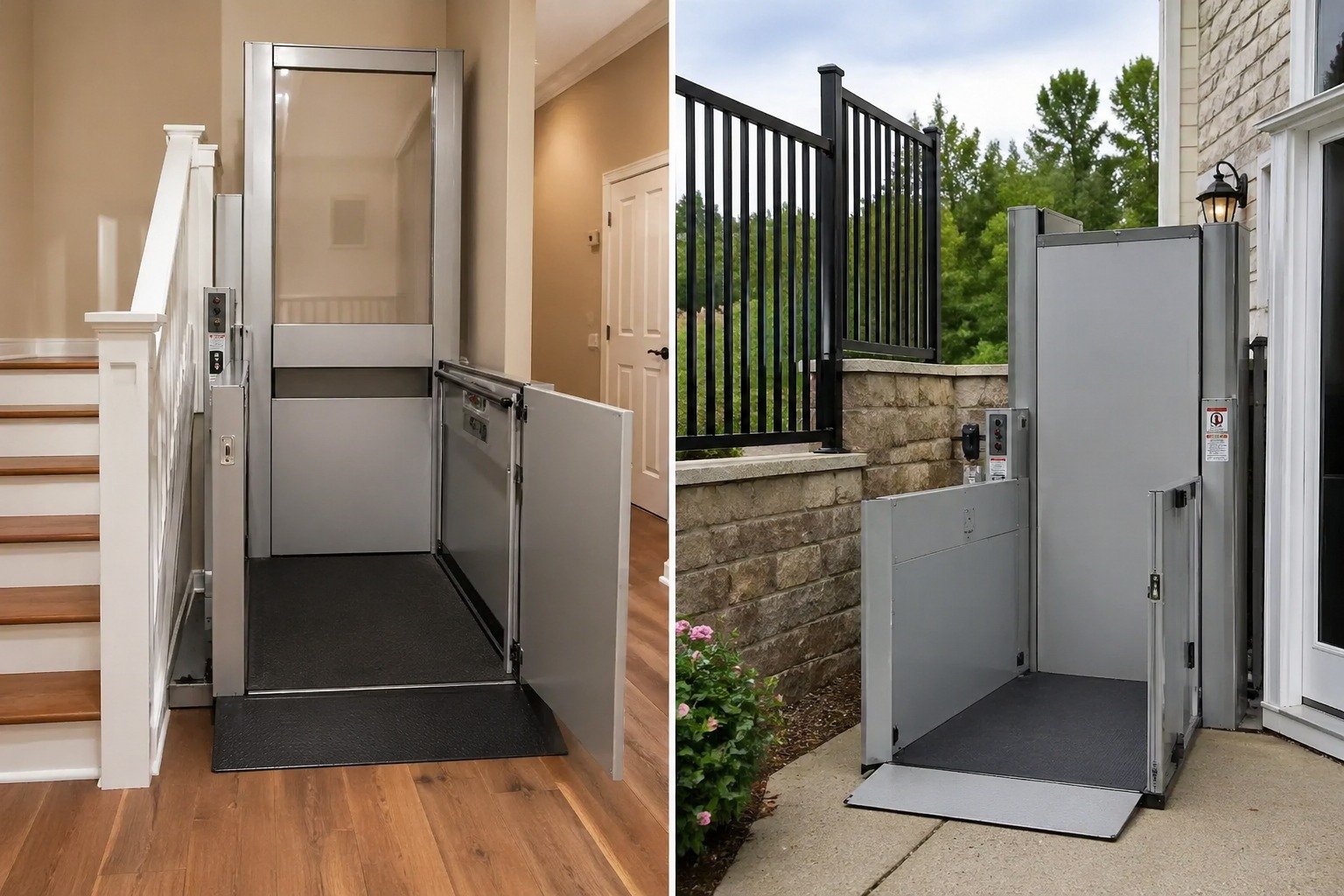
Understanding Accessibility Beyond the Front Door
When people begin exploring accessibility solutions, they often focus on a specific challenge. Perhaps there are steps leading to the front entrance that have become difficult to navigate. Maybe a split-level interior makes moving between rooms increasingly frustrating. In many cases, families start by looking for a solution to one problem, only to discover that accessibility affects how they experience the entire home.
A vertical platform lift can be a life-changing addition, creating safe and reliable access where stairs or elevation changes once created obstacles. However, one of the first decisions homeowners face is whether they need an indoor or outdoor vertical platform lift.
At first glance, the difference seems obvious. One is installed inside the home, and the other is placed outside. Yet the decision involves much more than location. It affects daily routines, long-term accessibility planning, maintenance expectations, and how people move through their living spaces.
Understanding the strengths of each option helps families make choices that support both immediate needs and future independence.
What Is a Vertical Platform Lift?
Before comparing indoor and outdoor models, it helps to understand what a vertical platform lift actually does.
A vertical platform lift, often called a VPL, is an accessibility device that transports individuals safely between different elevations. Unlike a stairlift, which carries a person along a staircase in a seated position, a vertical platform lift moves straight up and down on a platform.
The user can remain in a wheelchair, scooter, or standing position throughout the ride. This eliminates the need for transfers and provides a comfortable experience for individuals who rely on mobility devices daily.
Many people describe vertical platform lifts as compact residential elevators designed specifically for accessibility. While they share some similarities with elevators, they are purpose-built to address mobility challenges in homes and residential settings.
Why Location Matters
Choosing between an indoor or outdoor vertical platform lift begins with identifying where accessibility barriers exist.
For some families, the primary challenge occurs before they even enter the home. Front steps, porch elevations, garage entrances, or backyard access points may create daily obstacles. In these situations, an outdoor vertical platform lift often provides the most practical solution.
Other households find that accessibility challenges exist inside the home. Split-level layouts, raised living areas, or transitions between floors can limit movement and reduce access to important spaces. Indoor vertical platform lifts are designed specifically for these environments.
The best choice depends not only on where the elevation change occurs but also on how the household functions every day.
Understanding Indoor Vertical Platform Lifts
Indoor vertical platform lifts are installed within the home's interior and are designed to blend seamlessly into residential spaces.
These lifts are commonly used in homes with multiple levels where individuals need safe access between floors. Because they operate in a controlled indoor environment, they are protected from weather, temperature fluctuations, and moisture.
This allows for a wider range of design possibilities. Homeowners often choose finishes and configurations that complement their interior décor, creating a solution that feels integrated rather than added as an afterthought.
Many indoor installations become surprisingly discreet. Guests may notice the lift, but it often feels like a natural part of the home's layout rather than a piece of equipment.
The experience of using an indoor vertical platform lift is smooth and convenient. Individuals can move between levels without worrying about stairs, preserving access to bedrooms, offices, family rooms, and other important living spaces.
The Benefits of Indoor Installations
One of the greatest advantages of an indoor vertical platform lift is convenience.
Weather is never a factor. Rain, snow, humidity, and extreme temperatures do not affect daily use because the system operates entirely within the home's protected environment.
Indoor lifts also tend to remain cleaner, requiring less exposure-related maintenance over time. Components experience less wear from environmental conditions, contributing to long-term reliability.
Families often appreciate the sense of privacy indoor lifts provide. Users can move freely throughout the home without needing to exit the building or navigate exterior pathways.
For households planning long-term accessibility improvements, indoor vertical platform lifts often become central components of aging-in-place strategies.
Understanding Outdoor Vertical Platform Lifts
Outdoor vertical platform lifts address accessibility challenges at entry points and exterior areas of the property.
Many homes include front porches, raised decks, garage thresholds, or outdoor staircases that create barriers for wheelchair users and individuals with mobility limitations. In these situations, an outdoor lift provides direct access without requiring extensive ramps or structural changes.
Outdoor models are specifically engineered to withstand environmental conditions. Protective coatings, weather-resistant materials, and sealed electrical systems help ensure reliable operation throughout changing seasons.
These lifts create safe access to entrances that might otherwise require significant physical effort or caregiver assistance.
For many families, installing an outdoor vertical platform lift means regaining the ability to enter and leave the home independently.
The Advantages of Outdoor Accessibility
Outdoor vertical platform lifts solve accessibility challenges at their source.
Instead of addressing mobility barriers only after entering the home, they provide safe access from the very beginning of the journey.
This is particularly important for wheelchair users. A home may be fully accessible indoors, but if the entrance remains difficult to reach, independence is still limited.
Outdoor lifts also preserve outdoor living spaces. Patios, decks, gardens, and recreational areas become more accessible, allowing individuals to continue enjoying their property fully.
Many homeowners find that restoring access to these spaces improves quality of life as much as improving access inside the home.
Weather Considerations and Durability
One of the most significant differences between indoor and outdoor lifts involves environmental exposure.
Indoor lifts operate in stable conditions where temperature and humidity remain relatively controlled. Outdoor lifts must withstand rain, sunlight, wind, and seasonal changes.
Manufacturers address these challenges through specialized materials and construction methods. Weather-resistant finishes protect against corrosion, while sealed components help prevent moisture-related issues.
Although outdoor lifts are built for durability, they generally require more attention to maintenance because of their exposure to environmental conditions.
Routine inspections and servicing help ensure reliable performance regardless of weather.
Space and Installation Requirements
Both indoor and outdoor vertical platform lifts require dedicated space, but installation considerations differ.
Indoor installations often focus on integrating the lift into existing floor plans. Homeowners may need to allocate space near staircases, hallways, or open areas where vertical travel can occur safely.
Outdoor installations require attention to foundation stability, drainage, and access pathways. Proper placement ensures the lift remains functional and accessible throughout the year.
Professional assessments play a crucial role in determining the most effective location while minimizing disruption to the home.
Safety Features in Both Environments
Whether installed indoors or outdoors, vertical platform lifts prioritize safety.
Most systems include secure gates, non-slip surfaces, emergency stop controls, and smooth start-and-stop technology. These features create a predictable and comfortable riding experience.
Outdoor lifts often include additional weather-related protections, while indoor models may emphasize aesthetic integration and space efficiency.
Regardless of location, safety remains the foundation of every installation.
Which Option Is Right for Your Home?
The answer depends entirely on where accessibility challenges exist.
If entering the home is the primary concern, an outdoor vertical platform lift may provide the most direct and effective solution. It creates independent access to entrances, porches, garages, and outdoor spaces.
If mobility barriers occur between interior levels, an indoor lift may offer greater convenience and seamless integration into daily routines.
Some households even benefit from both solutions. An outdoor lift ensures safe entry, while an indoor lift provides access to every level of the home.
The goal is not simply installing equipment. It is creating an environment where movement feels natural, comfortable, and unrestricted.
Looking Toward the Future
Accessibility planning works best when it considers future needs as well as present challenges.
A thoughtfully selected vertical platform lift supports long-term independence and allows homeowners to remain comfortably in familiar surroundings. Whether installed indoors or outdoors, the right system helps eliminate barriers before they become overwhelming.
By investing in accessibility today, families often gain peace of mind for years to come.
Conclusion
Indoor and outdoor vertical platform lifts both provide valuable accessibility solutions, but they serve different purposes. Indoor lifts enhance movement between levels inside the home, while outdoor lifts create safe access to entrances, porches, garages, and outdoor living areas. The right choice depends on your home's layout, mobility needs, and long-term accessibility goals.
At KGC, every accessibility solution begins with understanding how people live, move, and interact with their homes. The team works closely with families to design customized vertical platform lift installations that prioritize safety, independence, comfort, and style. Whether your accessibility needs are indoors, outdoors, or both, KGC provides guidance tailored to your unique situation.
If you are considering a vertical platform lift and would like expert advice on the best solution for your home, visit the KGC Contact Page.
