
Vertical Platform Lifts vs. Ramps: Which Is Better for Your Space?
Introduction
I remember the afternoon clearly because it felt like one of those moments that gently shifted everything. Someone I deeply care about was sitting on their porch, staring out at the yard in quiet contemplation. The house they loved was full of memories, laughter, and everyday moments that felt comfortable and familiar. But accessibility had become a challenge, and both of us could feel it in the rhythm of daily life without even saying much.
We sat there for a few minutes in silence before they turned to me and said, I just want to move around my home without fear.
In that simple sentence was years of small decisions made to avoid risk. Avoiding the steps at the front porch. Turning around instead of going for a walk in the yard. Adjusting routines so that access felt predictable rather than intimidating. It was not dramatic. It was not urgent. It was simply a shift in the lived experience of a home that was supposed to feel safe.
That moment began a conversation about how to make their home more accessible. We talked about modular ramps, traditional ramps, and eventually vertical platform lifts. At first, the technical differences felt overwhelming. But over time, the question became less about the equipment and more about what kind of experience would allow independence to flourish without turning the home into a medical space.
Which is better for your space — a vertical platform lift or a ramp
This article explores that question deeply and thoughtfully. It examines the physical, emotional, spatial, and lifestyle considerations that help families and individuals determine the right choice for their homes. The goal is not to tell you what to choose, but to empower you to make the decision that preserves access, dignity, and joy in the spaces you love.
Understanding What Vertical Platform Lifts Are
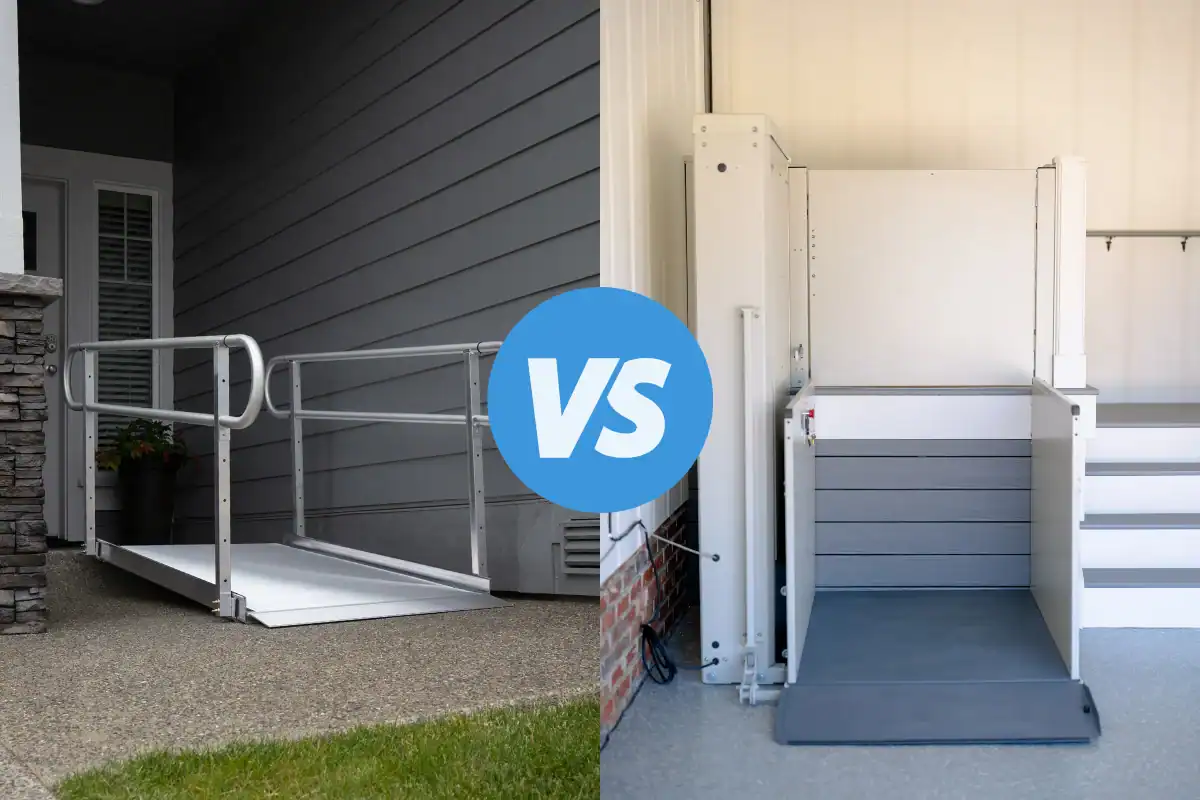
A vertical platform lift is a mechanical device that moves a platform straight up and down between two levels. Unlike a ramp, which provides an inclined plane for gradual elevation, a vertical platform lift transports you vertically with minimal floor space required. These systems are often used when the change in elevation is significant, or when the home’s layout cannot accommodate a ramp with the necessary gentle slope.
Vertical platform lifts can be installed indoors or outdoors. They are particularly useful when a walkout entrance opens into the home or when a porch, deck, or landing is slightly elevated from the surrounding terrain. They provide smooth, level travel for wheelchair users, people with walkers, or anyone who prefers not to navigate slopes.
It is not magic that makes these lifts work. It is thoughtful engineering that reimagines a vertical challenge as a moment of support rather than a barrier.
Understanding What Ramps Are
A ramp is a gently sloped surface that connects two different levels. Ramps are designed to provide a gradual, controlled ascent or descent. In most home accessibility guidelines, the recommended slope ratio is designed to minimize effort and prevent strain during movement.
Ramps may be built of wood, aluminum, concrete, or composite materials. They can be straight, curved, or switchback designs, depending on space and elevation change.
Many people think of ramps as simple and straightforward. In reality, a ramp that truly supports safe and comfortable movement requires careful planning in terms of slope, length, and surface texture. A well designed ramp opens movement rather than demanding effort.
The Core Difference: Vertical Movement Versus Horizontal Adaptation
The primary difference between a vertical platform lift and a ramp is how they address elevation change. A ramp adapts the space horizontally to achieve the vertical change. The platform lift simply moves vertically within the footprint of the existing space.
This difference affects the way each solution feels, the amount of space it occupies, and how the user experiences the transition from one level to another. Choosing between them is not just about mechanics. It is about how the movement feels in the lived environment of the home.
When Vertical Platform Lifts Make Sense
Vertical platform lifts shine in spaces where elevation changes abruptly and space is limited. For example, if the entryway of a home is raised several feet above the ground level without enough yard space to create a gentle ramp slope, a vertical platform lift can provide access without requiring extensive landscaping or a lengthy ramp.
They are also ideal in urban settings where yards are small or nonexistent. They serve well in apartment building entries, raised decks, and situations where stairs are the only existing path.
Vertical platform lifts move you comfortably and confidently without requiring you to exert effort. This can be especially important for individuals with limited strength, balance, or endurance. Rather than pushing up a long ramp, a person simply steps onto the platform and rises smoothly to the next level.
This vertical movement often feels reassuring. It creates a clear transition from one level to another. For many families, that feeling of controlled elevation becomes a cornerstone of daily independence.
When Ramps Make Sense
Ramps excel when you have the horizontal space to support a gentle slope. They provide a way to move naturally from one level to another. People can walk, wheel, or roll up and down comfortably without mechanical assistance.
Ramps are often the preferred choice for individuals who use manual wheelchairs, walkers, or who simply wish to move independently without relying on powered systems. Ramps can also feel more integrated into the landscape of a home. They can lead gracefully to a patio, garden, or front door. They can double as walkways that enhance curb appeal.
When the elevation change is relatively small or the available area is wide enough, ramps become elegant solutions that promote physical engagement and flexibility.
How Space Requirements Affect the Decision
Space is one of the most practical considerations when choosing between a vertical platform lift and a ramp. A ramp that meets accessibility slope recommendations requires a longer path as the elevation change increases. A modest rise may be accommodated within a small yard, but a taller porch or entryway can require a ramp that stretches well beyond the available space.
This is where vertical platform lifts offer a distinct advantage. They use vertical space rather than horizontal space. They do not require a sprawling footprint. A compact vertical movement can solve a significant elevation change without altering the home’s exterior or landscaping.
Understanding your space — not just in terms of square footage, but in terms of elevation change, yard layout, architecture, and existing features — is essential to selecting the right solution.
How Long Term Use Shapes the Choice
Accessibility needs shift over time. Someone recovering from an injury may need support only temporarily. Someone aging in place may have long term mobility changes that last decades. Understanding how a solution will function over time helps guide the decision.
Vertical platform lifts often feel like a long term commitment because they are powered systems that integrate into the home’s structure. They require maintenance, but they also offer reliable performance year after year. For individuals who anticipate long term reliance on vertical movement support, a lift can become a durable and consistent companion.
Ramps, on the other hand, require minimal ongoing maintenance once installed. They do not have mechanical components. Ramps are often built of weather-resistant materials that require periodic cleaning or sealing but generally stand up well over time.
Long term use is not about durability alone. It is about how the solution feels in daily life. Some people prefer the seamless, gentle flow of a ramp that is always there. Others prefer the effortless rise of a vertical platform lift when energy conservation is essential.
The Physical Experience: Moving Up and Down
The way a solution feels physically matters deeply. A ramp engages the body in movement. It distributes energy gradually. Some people enjoy that rhythm. It feels natural and empowering.
For others, particularly those with limited strength or endurance, any continuous effort can be exhausting. In these cases, the vertical motion of a lift eliminates physical exertion in favor of effortless movement.
Daily routines become easier when the physical experience aligns with personal needs. Understanding how each option feels in motion helps individuals anticipate how their days will unfold.
Weather, Climate, and Maintenance Considerations
Weather plays a significant role in both ramps and vertical platform lifts. Ramps must be designed with surface traction to prevent slips in rain or ice. Certain materials handle moisture better than others. Wood may require more maintenance than aluminum or composite materials. Snow removal may be necessary in colder climates.
Vertical platform lifts also require weather consideration, especially if installed outdoors. Protective canopies, weatherproof components, and strategic placement can help ensure reliable performance. Electronic and mechanical components need protection from excessive moisture or extreme temperatures.
Maintenance plans differ. Ramps usually require periodic cleaning, surface treatment, and occasional repairs. Vertical platform lifts require scheduled inspections, lubrication of moving parts, and battery or electrical maintenance.
Understanding the climate and maintenance needs of your region helps predict how each solution will perform through seasons.
Emotional and Psychological Impact of Each Option
Independence is not purely physical. It has emotional and psychological dimensions. For someone who values movement and enjoys engaging with their environment, a ramp can feel empowering. It allows participation in movement rather than delegation of motion to a machine.
For someone who feels anxious about physical exertion or faces fatigue easily, a vertical platform lift can ease worry. It creates a sense of security and predictability.
The psychological comfort of knowing that access will feel safe and manageable every time is as important as the physical mechanics of movement.
Safety Considerations: Transitions and Access Points
Safety is a critical factor. Ramps must maintain proper slope, consistent surface traction, and railing support if needed. Landings, edges, and transitions must be carefully planned. A poorly designed ramp can create hazards rather than reduce them.
Vertical platform lifts require safety gates, smooth platform surfaces, and reliable control systems. Emergency stop features ensure safe travel. Professionals test these systems to confirm that they perform consistently.
Safety also intersects with daily use. An aging person who occasionally forgets steps or tires easily may benefit more from a vertical platform lift that eliminates physical risk entirely.
Understanding how safety and daily lifestyle intersect helps families choose thoughtfully.
Installation and Home Modification
Installing a ramp often involves carpentry, grading, and possibly permit requirements. It may impact landscaping or require retaining walls. Installation professionals assess the terrain, slope, and materials to ensure the ramp fits naturally within the space.
Vertical platform lifts require structural support, electrical work, and precise placement. The home may need reinforcement at the installation point. Professionals evaluate load bearing structures, grounding, and access points.
Both options require thoughtful planning and professional support. The choice often comes down to how much modification you want, how complex the installation will be, and how you want the final result to feel in your home.
Cost Considerations and Long Term Value
Cost is an important consideration for many families. Ramps can vary widely depending on length, materials, and design complexity. A long ramp with switchbacks and landings may cost significantly more than a simple straight ramp.
Vertical platform lifts typically involve higher upfront costs due to mechanical components and installation labor. However, when space is limited and a ramp would be impractical or excessively long, a lift may make financial sense in the long term. Additionally, the lift’s durability and ease of use can offer extended value.
Thinking about cost over time — not just the initial price tag — helps families make thoughtful decisions. Value includes safety, longevity, maintenance, and the quality of daily experience.
Aesthetic Integration and Home Character
Homes are more than physical structures. They reflect identity, style, and personal history. Some families worry that accessibility solutions will make their home look clinical or out of place.
Ramps can be designed to integrate with the home’s existing style. Wood tones, composite surfaces, and landscaping can make a ramp feel like an intentional part of the home rather than an add on.
Vertical platform lifts can be discreetly placed, sometimes integrated into porch designs or tuck areas that minimize visual impact. Thoughtful color choices and placement can help the lift feel like a natural part of the home.
Prioritizing aesthetics ensures that the home remains a comfortable, familiar space rather than a reminder of limitation.
The Role of Professional Assessment
Choosing between a vertical platform lift and a ramp is not something to guess at. Professionals assess home layout, terrain, lifestyle needs, mobility goals, and safety concerns. These assessments provide clarity and help families see the possibilities that match their unique circumstances.
Professionals also guide permit requirements, design customization, and maintenance planning. Their expertise turns complexity into clarity.
When you feel informed, you can choose with confidence rather than uncertainty.
Real Life Reflections and Family Stories
I once met a family who thought a ramp would be the obvious choice. Their home had plenty of yard space, and they envisioned a graceful path leading to the porch. When the accessibility specialist measured the elevation change, they realized the ramp would be nearly sixty feet long. Rather than carving up the yard and creating an unwieldy structure, they opted for a vertical platform lift that worked beautifully within the home’s footprint. Both family members later said it felt like a seamless extension of the house rather than an intrusion.
Another neighbor chose a ramp because they valued physical engagement and the ability to move freely at their own pace. The ramp wound gently along the side of the house and became a favorite place for morning walks with a cup of coffee. Their independence felt embodied in each step rather than delegated to a machine.
These stories remind us that there is no universal answer. The right choice reflects personal needs, home layout, and lifestyle.
Planning for Future Needs
Accessibility needs evolve. A solution that feels perfect today may require adaptation tomorrow. Choosing a system that allows for future modification — whether extending a ramp or adding features to a platform lift — supports long term independence.
Planning ahead reduces stress and allows families to remain focused on life rather than logistics.
Conclusion
Choosing between a vertical platform lift and a ramp depends on your home’s layout, space availability, personal preferences, and daily lifestyle needs. Ramps offer natural, gradual movement over a surface that feels intuitive and engaging. Vertical platform lifts provide compact, effortless access when space is limited or physical exertion is a concern.
Both solutions improve access, independence, and quality of life. The choice comes down to how you want to move through your home, how much space you have, and how the solution will feel in your daily experience.
At KGC, we understand that accessibility is not a one size fits all decision. Our approach focuses on thoughtful assessment, clear guidance, and solutions that support safety, dignity, and confidence at home. If you are exploring whether a ramp or a vertical platform lift is right for your space, our team is here to help you make the choice that feels right for your family and your home.
You can reach our team through the KGC Contact Page.
