
Can a VPL Be Installed Outdoors? What Homeowners Should Know
Introduction
The question came up on a quiet afternoon while standing near the front steps of a home that had been lived in for decades. The porch was familiar, worn just enough to show years of use. The yard was peaceful. Everything felt right except for one thing. The steps no longer felt welcoming. They felt like a boundary.
Someone I care about stood beside me and said softly, I love this house. I just need a better way to get in and out of it.
That moment captures where many homeowners find themselves. The home still fits their life emotionally, but physically, access has become a challenge. Stairs at an entryway, a raised porch, or a deck can quietly turn independence into negotiation. When outdoor accessibility becomes the focus, many people begin to ask about vertical platform lifts, often with one key concern.
Can a VPL really be installed outdoors and still be safe, reliable, and comfortable
The short answer is yes. The longer answer involves thoughtful planning, weather considerations, safety features, and design choices that ensure the lift works seamlessly with both the home and the environment. This article explores what homeowners should know about installing a vertical platform lift outdoors, not just from a technical standpoint, but from a lived experience perspective that prioritizes safety, dignity, and long term independence.
What a Vertical Platform Lift Is Designed to Do
A vertical platform lift is designed to move a person and their mobility device straight up and down between two levels. Unlike ramps that require long, gradual slopes, a VPL handles elevation changes compactly and efficiently. This makes it especially useful at home entryways where space is limited or the height difference is too great for a practical ramp.
When installed outdoors, a VPL often serves as the primary access point to the home. It becomes part of the daily routine. Morning errands. Evening returns. Welcoming guests. Everyday life passes through it, which is why outdoor installation must be done with intention and care.
Why Outdoor Installation Is So Common
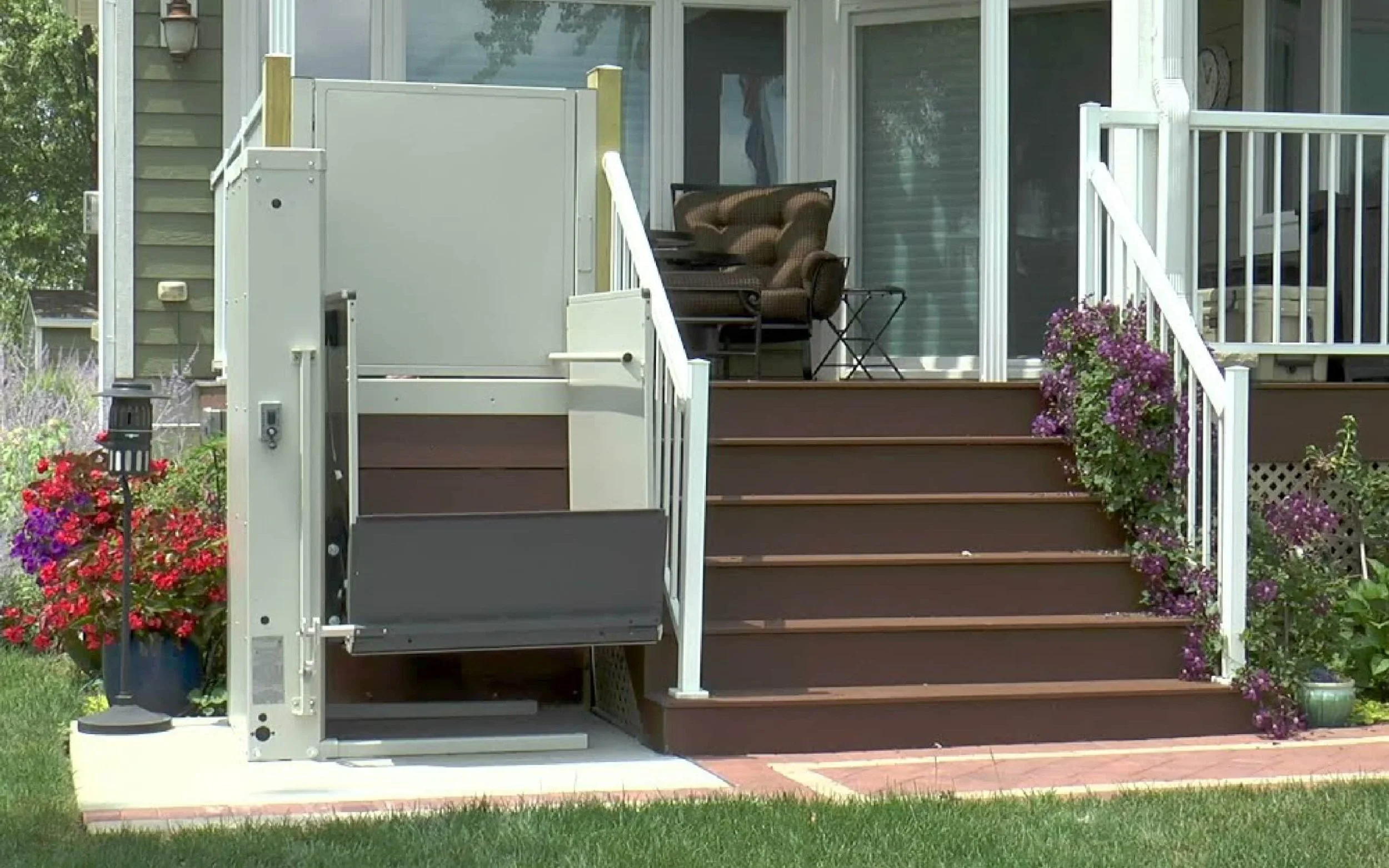
Outdoor installation is one of the most common applications for vertical platform lifts. Many homes have front porches, decks, or garage entries that sit several feet above ground level. These elevation changes are often too steep for ramps without extensive construction.
Outdoor VPLs allow homeowners to maintain the original architecture of their home while improving access. Instead of redesigning the landscape or altering the structure significantly, the lift provides a direct solution that fits within the existing footprint.
For many homeowners, this means preserving curb appeal while gaining independence.
Weather Exposure and Why It Matters
When considering an outdoor VPL, weather is one of the most important factors. Rain, snow, heat, humidity, and temperature swings all affect how equipment performs over time.
Outdoor VPLs are specifically designed to handle these conditions when properly selected and installed. Materials are chosen for durability. Electrical components are sealed. Moving parts are protected. However, not all lifts are created equal, and homeowners must ensure the model they choose is rated for outdoor use.
Weather readiness is not optional. It is foundational to long term safety and reliability.
Protection From Rain and Moisture
Moisture is one of the greatest challenges for outdoor equipment. Rain, melting snow, and humidity can affect mechanical and electrical systems if they are not properly protected.
Outdoor VPLs use weather resistant components and sealed controls to prevent water intrusion. Drainage around the base of the lift is also essential. Standing water can compromise stability and increase wear over time.
In many installations, a canopy or partial enclosure is added to provide additional protection. This not only extends the life of the lift but also improves comfort for the user during use.
Cold Weather Performance and Snow Considerations
In colder climates, snow and ice become major considerations. Outdoor VPLs must be able to operate reliably in freezing temperatures. This includes motors, batteries, and platform surfaces.
Non slip platform materials help maintain traction in wet or icy conditions. Heating elements or weather tolerant batteries may be used to ensure consistent performance. Regular snow removal around the lift area is also important to maintain safe access.
When planned correctly, an outdoor VPL can remain reliable throughout winter without compromising safety.
Heat, Sun, and UV Exposure
In warmer climates, heat and direct sunlight can impact outdoor equipment. Prolonged UV exposure can degrade certain materials over time if they are not designed for outdoor use.
Outdoor VPLs use finishes and materials that resist fading, warping, and cracking. Controls are designed to remain functional even in high temperatures.
Shade structures or strategic placement can further improve comfort and longevity, especially in regions with intense sun exposure.
Safety Features That Matter Outdoors
Outdoor environments introduce variables that indoor spaces do not. Wind, debris, uneven ground, and changing conditions all influence safety.
Outdoor VPLs include safety features designed to address these challenges. Guardrails, secure entry gates, non slip surfaces, and smooth start and stop motion all contribute to a safe experience. Emergency stop controls ensure immediate response if something feels wrong.
These features work together to create confidence, especially when using the lift alone.
Stability and Foundation Requirements
A stable foundation is critical for outdoor VPL installation. The lift must be anchored to a solid surface capable of supporting the load safely. This often involves a concrete pad or reinforced surface.
Professionals assess soil conditions, drainage, and load bearing capacity before installation. This ensures that the lift remains level and stable over time, even as weather and ground conditions change.
A strong foundation supports not just the lift, but peace of mind.
Space Planning and Entry Alignment
Outdoor VPLs must align properly with entry doors, landings, or porches. This alignment ensures smooth transitions and reduces risk during entry and exit.
Space planning considers door swing direction, clearance for mobility devices, and approach paths. The goal is to create a natural flow from ground level to home interior without awkward turns or tight spaces.
Thoughtful alignment improves both safety and comfort.
Visual Integration With the Home
One common concern homeowners express is how an outdoor VPL will look. Will it make the home feel institutional or out of place?
Modern outdoor VPLs are designed with aesthetics in mind. Finishes can complement the home’s exterior. Compact designs minimize visual impact. When integrated thoughtfully, a VPL can feel like a natural extension of the home rather than an afterthought.
Preserving the character of the home matters deeply to many homeowners.
Noise and Neighborhood Considerations
Outdoor lifts operate with quiet motors designed for residential settings. When installed correctly, they do not create disruptive noise for neighbors or household members.
This quiet operation supports privacy and comfort, ensuring that daily use does not draw unwanted attention or disrupt the surrounding environment.
Permits and Local Regulations
Outdoor installations often require permits or adherence to local building codes. Regulations may address setback requirements, electrical connections, and safety standards.
Working with professionals who understand local requirements simplifies this process. Proper permitting ensures compliance and protects homeowners from future issues.
Planning ahead avoids delays and complications.
Maintenance Expectations for Outdoor VPLs
Outdoor VPLs require regular maintenance to ensure continued safe operation. This includes inspections, cleaning, and occasional component replacement.
Maintenance schedules may vary based on climate and usage frequency. Staying proactive with maintenance extends the life of the lift and preserves reliability.
Routine care becomes part of responsible home ownership.
Daily Life With an Outdoor VPL
Once installed, an outdoor VPL often fades into the background of daily life. It becomes simply how someone enters and exits their home.
Homeowners often describe a sense of relief once the lift is in place. Errands feel easier. Social outings feel less stressful. Independence returns in a quiet, steady way.
The lift does not dominate life. It supports it.
Emotional Impact of Restored Access
Being able to come and go freely has emotional significance. It affects confidence, mood, and connection to the outside world.
An outdoor VPL restores that freedom. It allows homeowners to greet visitors at the door, step outside without assistance, and remain connected to their community.
This emotional impact is often as meaningful as the physical support.
Comparing Outdoor VPLs to Ramps in Real Homes
While ramps remain excellent solutions in many cases, outdoor VPLs often make more sense when space is limited or elevation change is significant. They offer compact access without extensive construction.
Choosing a VPL outdoors is not about replacing ramps universally. It is about selecting the solution that best fits the home, the person, and the environment.
Planning for Long Term Use
Outdoor VPLs are often chosen as long term solutions. Planning for future needs ensures that the lift continues to support independence as mobility changes.
Choosing durable materials, adaptable designs, and reliable components supports long term success.
Long term planning reduces future stress.
Professional Assessment and Installation
Successful outdoor VPL installation begins with professional assessment. Experts evaluate the home, environment, and user needs to design a solution that fits naturally.
Professional installation ensures safety, compliance, and reliability. It transforms a complex project into a smooth experience.
Real Life Reflections From Homeowners
I once spoke with a homeowner who said their outdoor VPL gave them their front door back. They no longer entered through the garage or waited for help. Another shared that the lift allowed them to enjoy their porch again, watching sunsets without worrying about how to get back inside.
These stories highlight the quiet power of accessible design.
Conclusion
Yes, a vertical platform lift can absolutely be installed outdoors, and when done correctly, it becomes a safe, reliable, and empowering solution for home access. By addressing weather exposure, safety features, foundation requirements, and thoughtful design, outdoor VPLs support daily independence without compromising the character of the home.
At KGC, we believe accessibility solutions should work with your home, not against it. Our approach to outdoor vertical platform lifts focuses on safety, durability, and thoughtful integration so homeowners can move freely and confidently in the spaces they love.
If you are considering an outdoor VPL and want guidance tailored to your home and environment, our team is here to help.
You can reach our team through the KGC Contact Page.
