
Vertical Platform Lift Installation Process Explained
Understanding What Happens Before Installation Begins
For many homeowners, the idea of installing a vertical platform lift can feel like a major construction project. It is easy to imagine noise, disruption, and long timelines. Yet in reality, the process is often far more structured, organized, and predictable than people expect.
A vertical platform lift installation is not just about placing equipment into a home. It is about designing a safe, reliable accessibility pathway that integrates seamlessly into the space while supporting daily life for years to come.
Before any tools are brought in or any equipment arrives, the process begins with understanding the home, the people who will use the lift, and the specific mobility challenges that need to be addressed.
This early stage is where everything important starts taking shape.
The Initial Conversation and Understanding Needs
Every installation begins with a conversation.
This is where homeowners share their experiences, challenges, and goals. Some people are looking to improve access to a front entrance. Others want to move more easily between levels inside the home. In some cases, the goal is to restore independence after mobility changes have made stairs difficult or unsafe.
This conversation is not just about equipment. It is about daily life.
Professionals take time to understand how the home is used, what routines matter most, and where accessibility barriers create the biggest impact. These details help guide every decision that follows.
This stage often brings clarity. Many families begin the process unsure of what solution they need, and through discussion, they start to see how a vertical platform lift can fit naturally into their environment.
On-Site Assessment and Space Evaluation
After the initial consultation, the next step is a detailed site assessment.
This is where professionals visit the home to evaluate the physical environment. They measure available space, examine elevation changes, and review structural conditions that may affect installation.
Every home is different, and this stage ensures that the lift is designed specifically for the space it will occupy.
The assessment includes careful attention to how people move through the home. It is not just about whether the lift fits physically, but whether it fits naturally into daily routines.
Professionals look at entry points, turning space, clearances, and accessibility flow. They also consider safety factors such as nearby obstacles, lighting, and surface conditions.
This stage is essential because it transforms general ideas into a clear, practical installation plan.
Designing the Right Accessibility Solution
Once measurements and observations are complete, the design phase begins.
This is where the vertical platform lift system is selected and configured to match the home’s requirements. Platform size, travel height, gate configuration, and placement are all carefully considered.
The goal is to create a system that feels natural within the home while meeting safety and functionality needs.
During this stage, homeowners often gain a clearer picture of what the finished installation will look like. The design process helps bridge the gap between concept and reality.
It is also where customization becomes important. Some homes require compact solutions due to limited space, while others may prioritize larger platforms for wheelchair or scooter use. Every decision is made with long-term usability in mind.
Preparing the Installation Area
Before the lift is installed, the designated area must be properly prepared.
This step ensures that the structure can support the system safely and operate smoothly over time.
Preparation may include clearing space, reinforcing structural elements if necessary, and ensuring that electrical requirements are in place.
For outdoor installations, additional considerations such as weather exposure, drainage, and foundation stability are evaluated.
This stage is often quiet compared to what homeowners expect. There is usually minimal disruption, and much of the work is focused on precision and preparation rather than heavy construction.
The goal is to create a stable foundation for the lift so that once installed, it performs reliably and safely.
The Installation Process Itself
Once preparation is complete, the actual installation begins.
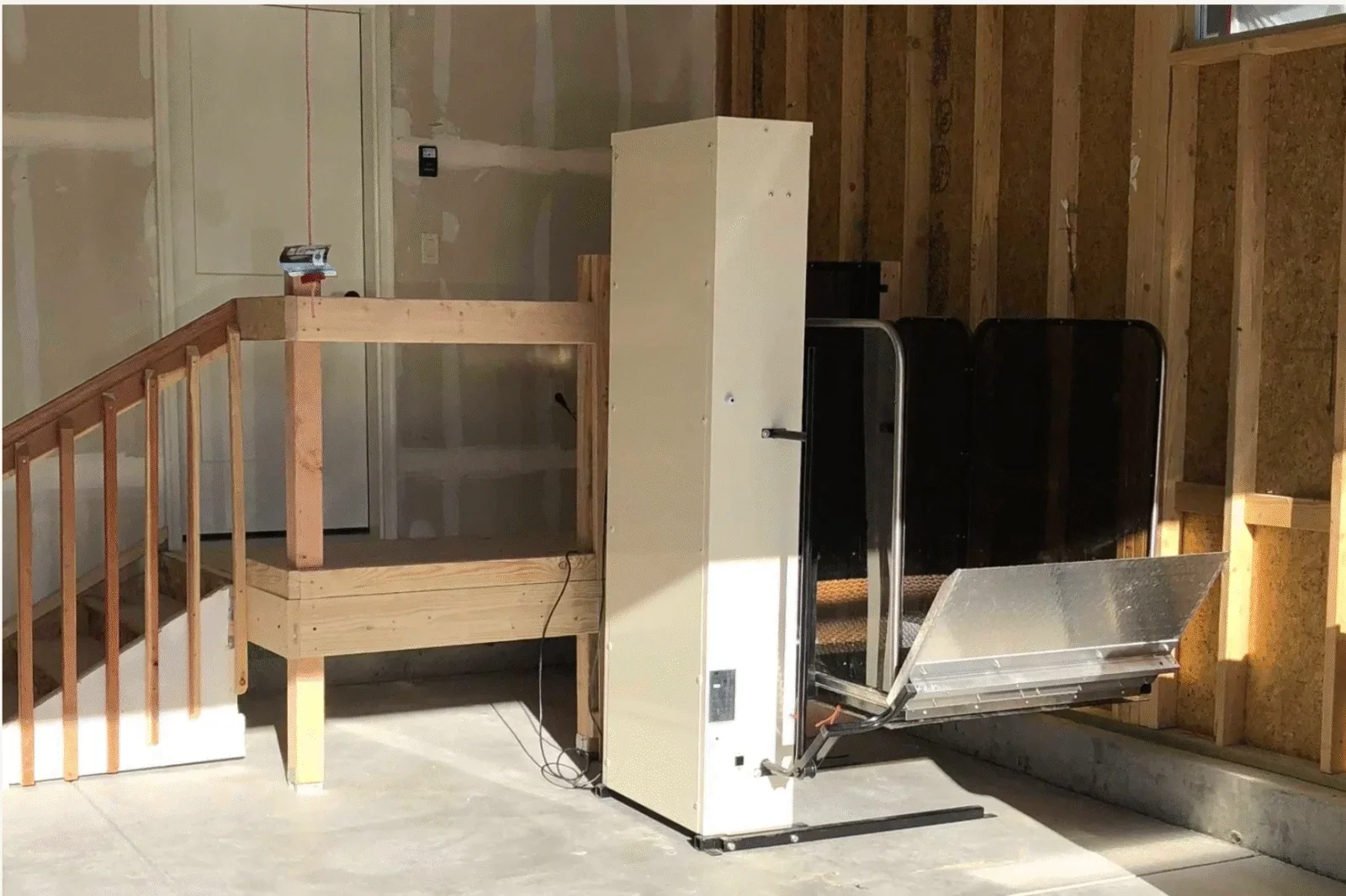
This is where the vertical platform lift components are assembled and secured in place. The platform structure, support system, and guide mechanisms are carefully installed according to manufacturer specifications.
Professional installers work methodically, ensuring that each component aligns correctly and functions as intended.
Electrical connections are then integrated, allowing the lift to operate smoothly and safely. These systems are tested throughout the installation process to ensure consistency and reliability.
Despite the technical nature of this stage, homeowners often find it surprisingly organized and efficient. Experienced installers follow a clear sequence that minimizes disruption while maintaining precision.
Safety System Integration
After the main structure is in place, safety systems are installed and tested.
These include platform gates, safety sensors, control systems, and emergency stop functions.
Each feature plays a specific role in ensuring user safety. Gates prevent accidental movement during travel. Sensors detect obstacles. Controls provide intuitive operation. Emergency systems offer immediate response options if needed.
This stage is one of the most important parts of the entire process because it ensures the lift is not only functional but also fully safe for daily use.
Testing and Performance Checks
Once installation is complete, the system undergoes thorough testing.
Every movement is evaluated for smooth operation, stability, and responsiveness. Safety features are tested individually and together to ensure they function as a complete system.
The lift is run through multiple cycles to confirm consistent performance.
This stage helps identify any fine-tuning adjustments needed before the lift is handed over for everyday use.
Testing is not rushed. It is done carefully and repeatedly to ensure full confidence in the system.
User Training and Familiarization
After testing is complete, homeowners receive guidance on how to use the lift.
This includes understanding controls, safety features, and best practices for operation. Users are shown how to enter and exit the platform safely, how to operate gates, and what to expect during movement.
The goal is to ensure that every user feels comfortable and confident from the very first use.
Many people find this stage reassuring because it transforms the lift from a new piece of equipment into something familiar and easy to use.
Final Inspection and Completion
Before the installation is considered complete, a final inspection is conducted.
This ensures that all components meet safety and performance standards and that the lift is fully ready for daily use.
Once everything is verified, the system is officially handed over to the homeowner.
At this point, the lift becomes part of the home’s daily life, providing consistent accessibility and support.
Life After Installation
After installation, most homeowners quickly adjust to using the lift as part of their routine.
What once felt unfamiliar becomes a natural part of moving through the home. The lift begins to blend into daily life, offering independence and convenience without requiring constant thought or effort.
Regular maintenance helps ensure long-term performance, but day-to-day use is typically simple and intuitive.
Many families find that the lift not only improves mobility but also reduces stress and increases confidence in navigating the home.
Conclusion
The vertical platform lift installation process is carefully structured to ensure safety, precision, and long-term reliability. From the initial consultation and site assessment to design, installation, testing, and training, each step plays an important role in creating a dependable accessibility solution.
At KGC, every installation is approached with care, professionalism, and attention to real-life needs. The focus is not just on placing equipment into a home, but on creating a safe and comfortable environment where individuals can move with confidence and independence.
If you are considering a vertical platform lift and want expert guidance through every step of the installation process, visit the KGC Contact Page to connect with a specialist and begin planning your accessibility solution today.
