
Stairlifts for Narrow Staircases: What Are Your Options?
Introduction
The staircase was never meant to be impressive. It was narrow, tucked between two walls, built to save space rather than make a statement. Someone I care about stood at the bottom of it, looking up with a mix of frustration and doubt.
There’s no way a stairlift would fit here, they said. It’s too tight.
That assumption is incredibly common. Narrow staircases make people feel boxed in before any real assessment happens. They assume accessibility requires wide, open staircases or major remodeling. For many families, that belief delays solutions that could make daily life safer and far less stressful.
The truth is that narrow staircases are not barriers to stairlifts. They simply require thoughtful planning and the right type of system. Modern stairlift design has evolved precisely to address these kinds of homes.
This article explores the real options available for narrow staircases. It looks at design, safety, comfort, and how stairlifts can work even when space feels limited. Most importantly, it shows how accessibility can adapt to the home rather than forcing the home to change.
Why Narrow Staircases Feel So Limiting
Narrow staircases create psychological barriers as much as physical ones. They feel unforgiving. There is little room to shift your weight or recover if balance falters. For people experiencing mobility changes, this can turn everyday movement into a source of anxiety.
Because these staircases were often designed decades ago, they were never meant to accommodate modern accessibility solutions. This history fuels the misconception that stairlifts require wide, open spaces.
In reality, many stairlifts are engineered specifically for tight staircases.
Understanding What “Narrow” Really Means
Narrow is a relative term. What feels narrow to a homeowner may still fall within safe installation guidelines.
Professional assessments look at usable width rather than overall width. They consider where the rail will sit, how far the seat extends, and how much clearance remains for others to walk.
Many staircases that feel impossible are actually very workable.
How Stairlifts Are Designed to Save Space
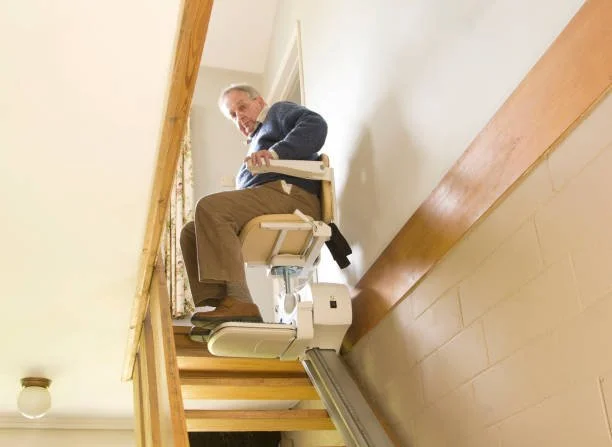
Modern stairlifts are built with space efficiency in mind. Slim rails, compact seats, and foldable components all reduce how much room the lift occupies.
When not in use, the seat, armrests, and footrest fold up, allowing the staircase to remain functional for others.
This design flexibility is key for narrow staircases.
Straight Stairlifts for Narrow Stairs
Straight staircases are the simplest configuration, even when they are narrow. Straight stairlifts use a single rail that follows the line of the stairs without curves.
Because the rail is narrow and mounted directly to the stair treads, it often takes up less space than people expect.
In many homes, a straight stairlift fits comfortably without obstructing foot traffic.
Curved Stairlifts in Tight Spaces
Curved staircases or staircases with landings can still accommodate stairlifts, even when space is limited.
Curved stairlifts are custom built to follow the exact shape of the stairs. This precision allows them to stay close to the steps rather than protruding into the walkway.
While curved systems require more customization, they often provide elegant solutions for complex, narrow layouts.
Wall Side Versus Banister Side Installation
One important decision in narrow staircases is which side of the stairs the rail will be installed on.
Depending on layout, installing the rail closer to the wall or closer to the banister can preserve more walking space. Professionals evaluate doorways, landings, and furniture placement to determine the best option.
This flexibility allows stairlifts to adapt to unique spaces.
Folding Features Make a Big Difference
Folding features are especially valuable in narrow staircases. Seats, footrests, and armrests that fold neatly out of the way restore usable stair width when the lift is parked.
Some systems also include folding rails at the bottom of the stairs to prevent obstruction in hallways or entryways.
These features help maintain household flow.
Compact Seat Design and User Comfort
Narrow stairlifts do not mean uncomfortable stairlifts. Compact seat designs are engineered to provide support while minimizing bulk.
Seats are shaped to support posture and stability without excessive width. Armrests and footrests are positioned carefully to maximize comfort within a small footprint.
Comfort and space efficiency can coexist.
Safety Considerations in Narrow Staircases
Safety becomes even more important in tight spaces. Modern stairlifts include safety sensors that stop the lift if something obstructs its path.
Secure seat belts, stable footrests, and smooth motion ensure that users feel supported throughout the ride.
Narrow does not mean unsafe when the system is properly designed.
Clearance for Others Using the Stairs
In shared households, people often worry about whether others will still be able to use the stairs.
With folding features engaged, many stairlifts leave enough clearance for careful walking. This allows households to function normally.
Balancing accessibility and shared use is a key part of design.
Installation Without Structural Changes
Even in narrow staircases, installation rarely requires structural modification. Stairlifts mount to the stair treads rather than walls.
This preserves the staircase and avoids narrowing it further.
Minimal intervention supports both safety and aesthetics.
Addressing Visual Concerns
Some people worry that adding a stairlift to a narrow staircase will make it feel cramped or cluttered.
Modern designs use neutral finishes and low profile rails that blend into the space. When folded, the lift often becomes barely noticeable.
Visual simplicity helps narrow spaces feel calmer.
Emotional Relief After Installation
Once installed, many users describe a sense of relief. The staircase no longer feels like an obstacle or a daily test.
Confidence replaces caution. Movement becomes predictable rather than stressful.
This emotional shift is often more impactful than the physical change.
Real Life Reflections From Narrow Staircase Homes
I once spoke with someone who delayed installation for years because they believed their stairs were too narrow. After installation, they said the lift fit better than expected and changed how they felt about their home.
Another family shared that the stairlift allowed them to stop worrying every time their loved one went upstairs.
These experiences are common and deeply reassuring.
When a Stairlift Truly Is Not the Right Fit
There are rare cases where staircases are too narrow or steep to accommodate a stairlift safely. In those situations, other accessibility solutions may be explored.
A professional assessment provides honest guidance rather than forcing a solution.
Transparency matters.
Why Professional Assessment Is Essential
Every narrow staircase is different. Professional evaluation ensures that the solution is safe, comfortable, and appropriate.
Guessing based on appearance alone often leads to unnecessary delay.
Assessment replaces assumption.
Narrow Staircases Do Not Mean Limited Options
What feels like a limitation is often just a design challenge waiting for the right solution.
Modern stairlifts are versatile, compact, and adaptable. Narrow staircases are no longer exclusion zones.
Access is possible more often than people realize.
Conclusion
Narrow staircases do not disqualify homes from stairlift solutions. With modern design, compact systems, and thoughtful installation, stairlifts can fit safely and comfortably in tight spaces. They preserve walking clearance, support independence, and restore confidence without requiring major changes to the home.
At KGC, we believe accessibility should meet homes where they are. Our approach to stairlifts includes careful assessment and custom solutions designed to work even in narrow staircases. If you are unsure whether your stairs can accommodate a stairlift, our team is here to help you explore your options with clarity and care.
You can reach our team through the KGC Contact Page.
