
How Much Maintenance Does a Stairlift Really Need?
Introduction
The question came up in a quiet, ordinary moment. Someone I care about was sitting at the kitchen table, watching their stairlift move smoothly up the stairs for the first time since installation. There was no tension in their shoulders anymore. No hesitation in their expression. Just a calm sense of relief.
Then they looked at me and asked, almost casually, So how much work is this thing going to be?
It was a simple question, but an important one. Maintenance has a way of shaping how people feel about new equipment. Some imagine constant servicing, complicated care routines, and endless costs. Others assume it requires no attention at all.
The truth lives somewhere in between. Modern stairlifts are designed to be low maintenance, reliable, and easy to live with. They are not fragile machines that demand constant attention, but they are not invisible either. Like any system that supports daily movement, they benefit from thoughtful care.
This article explores how much maintenance a stairlift really needs, what homeowners can realistically expect, and how simple habits and professional support work together to keep stairlifts safe, quiet, and dependable for years.
Why People Worry About Maintenance
Maintenance feels intimidating because it represents uncertainty. People worry about breakdowns, complicated repairs, and unexpected costs.
For individuals who already manage health, mobility, or caregiving responsibilities, the idea of adding another responsibility can feel overwhelming.
Understanding that stairlift maintenance is predictable and manageable changes the emotional weight of the decision.
How Modern Stairlifts Are Designed for Reliability
Modern stairlifts are built for everyday use. They are engineered to operate consistently in residential environments without constant intervention.
Battery powered systems, sealed components, and durable materials reduce wear. Smooth motion and controlled speed reduce mechanical strain.
These design choices minimize the need for frequent service.
Daily Use Does Not Create Daily Maintenance
One of the biggest misconceptions is that frequent use means frequent maintenance. In reality, stairlifts are built to be used daily.
Using the stairlift does not wear it out quickly. Regular movement keeps components functioning smoothly rather than stressing them.
Normal use is part of healthy operation.
The Simplicity of Basic Care
For homeowners, day to day maintenance is minimal. It mostly involves awareness rather than action.
Keeping the stairs clear of clutter. Wiping dust from the rail occasionally. Making sure nothing blocks the track.
These small habits protect the lift without creating work.
Battery Maintenance and Charging
Most modern stairlifts use battery systems that charge automatically when the lift is parked. Homeowners do not need to manually charge the batteries.
Over time, batteries may need replacement, usually after several years of use. This is normal and expected.
Battery replacement is part of long term ownership, not daily care.
Professional Maintenance and Inspections
While daily care is minimal, professional maintenance plays an important role in long term performance.
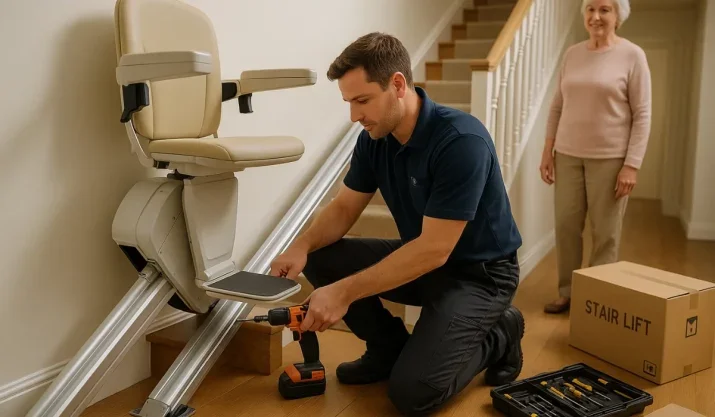
Periodic inspections allow technicians to check alignment, lubrication, safety sensors, and electrical components. These visits prevent small issues from becoming larger problems.
Professional servicing ensures continued safety and smooth operation.
How Often Professional Service Is Needed
Most stairlifts require professional inspection once a year or as recommended by the manufacturer. This schedule balances reliability with practicality.
Some households choose maintenance plans that include regular checkups and priority service.
This proactive approach reduces stress and surprises.
What Technicians Check During Service
During professional maintenance, technicians inspect mechanical components, safety systems, sensors, wiring, and battery performance.
They also test smooth movement, seat operation, and control responsiveness.
This thorough review protects both user and equipment.
Environmental Factors and Maintenance Needs
Environment influences maintenance needs. Homes with pets, dust, or high humidity may require slightly more attention to cleanliness.
Outdoor exposure does not apply to stairlifts, but indoor climate conditions can affect dust accumulation and component wear.
Simple cleaning habits reduce environmental impact.
Noise as a Maintenance Indicator
Changes in sound can indicate maintenance needs. New noises, grinding, or vibration may signal misalignment or wear.
Listening to the lift’s normal sound helps homeowners recognize when something feels different.
Early attention prevents bigger issues.
How Long Stairlifts Typically Last
With proper care and maintenance, stairlifts are long term solutions. Many operate reliably for years.
Longevity depends on quality of installation, regular servicing, and general care.
A well maintained stairlift becomes a permanent part of the home’s rhythm.
Repair Versus Replacement
When issues arise, they are often repairable without full replacement. Components such as batteries, switches, or rollers can be serviced individually.
Major replacements are rare when maintenance is consistent.
Maintenance protects investment.
Emotional Impact of Low Maintenance
Low maintenance means low stress. When homeowners trust that their stairlift will work reliably, they stop thinking about it.
The lift becomes part of daily life rather than a source of concern.
Peace of mind is a form of maintenance too.
Real Life Reflections From Stairlift Users
I once spoke with someone who expected constant upkeep. After a year of use, they laughed and said they did almost nothing besides keep the stairs clean.
Another family shared that their yearly service visit felt like a routine checkup rather than a repair call.
These experiences are common.
Maintenance Compared to Other Home Systems
Compared to appliances, heating systems, or vehicles, stairlift maintenance is minimal. It requires less attention than most mechanical systems in the home.
This perspective helps normalize the reality of care.
The Role of Professional Installation
Proper installation reduces maintenance needs. When the lift is aligned correctly from the start, wear is minimized.
Professional installation is the foundation of low maintenance ownership.
Preventive Care Versus Reactive Repair
Preventive care costs less and causes less disruption than emergency repairs.
Routine service keeps the lift operating smoothly and predictably.
Proactive care protects independence.
Supporting Confidence Through Reliability
Reliable equipment supports confidence. When a stairlift works every time, users move without hesitation.
This trust is built through consistent performance, not constant maintenance.
Long Term Ownership Experience
Over time, stairlift ownership feels simple. It becomes another part of the home, not a project to manage.
Maintenance becomes routine, predictable, and manageable.
Conclusion
A stairlift does not require constant maintenance. Modern stairlifts are designed for reliability, ease of use, and low daily care. Basic awareness, occasional cleaning, and periodic professional inspections are enough to keep them operating safely and smoothly.
At KGC, we believe accessibility solutions should simplify life, not complicate it. Our approach to stairlifts includes long term support, clear maintenance guidance, and reliable service so homeowners can focus on living rather than upkeep. If you are considering a stairlift and want honest insight into long term care, our team is here to help you plan with confidence.
You can reach our team through the KGC Contact Page.
