
Safety Standards for Vertical Platform Lifts
Why Safety Matters More Than Anything Else
When families begin exploring accessibility solutions, the conversation often starts with independence. Someone wants to move more freely throughout their home. A caregiver hopes to reduce physical strain. A family wants to ensure that a loved one can continue enjoying every part of the property without unnecessary barriers.
These goals are important, but underneath every discussion about accessibility lies a deeper concern: safety.
A vertical platform lift is more than a convenience. It is a mobility solution that people trust every day. Whether it is helping someone enter their home independently, access a porch, move between levels indoors, or enjoy outdoor living spaces again, the lift becomes part of daily life. That level of trust is only possible because modern vertical platform lifts are built around strict safety standards and rigorous engineering principles.
Many homeowners assume that accessibility equipment is simply manufactured and installed like any other home improvement product. In reality, vertical platform lifts are subject to extensive safety requirements designed to protect users in a wide variety of situations. Every movement, every control, every safety gate, and every component is carefully designed with reliability in mind.
Understanding these safety standards helps homeowners make informed decisions and appreciate the many layers of protection built into today's accessibility solutions.
What Are Vertical Platform Lift Safety Standards?
Safety standards are essentially a set of guidelines and requirements that manufacturers, installers, and service professionals follow to ensure that equipment operates safely.
These standards cover nearly every aspect of a lift's design and performance. They establish requirements for structural integrity, platform stability, electrical systems, safety controls, emergency functions, accessibility features, and installation procedures.
Think of these standards as a blueprint for reliability. Rather than leaving safety decisions up to individual interpretation, they create a consistent framework that ensures every properly manufactured and installed lift meets established expectations.
For homeowners, this means that safety is not dependent on a single feature or component. It is built into the entire system from the beginning.
The result is a lift that has been designed to provide dependable operation day after day, year after year.
How Safety Standards Have Evolved Over Time
Accessibility technology has come a long way over the past few decades.
Earlier mobility solutions often focused primarily on functionality. The goal was simply to move people from one level to another. While effective, many older systems lacked the sophisticated safety technologies available today.
As accessibility became a greater priority in both residential and public spaces, manufacturers invested heavily in research, engineering, and user experience. Safety standards evolved alongside these innovations.
Modern vertical platform lifts now include features that many homeowners may not even realize are operating in the background. Sensors monitor movement. Gates remain secured during travel. Emergency systems provide backup protection. Controls are designed to prevent accidental activation.
The difference between older accessibility equipment and today's systems is similar to the difference between an older vehicle and a modern automobile. Both may perform the same basic function, but today's technology incorporates multiple layers of protection designed to enhance safety and confidence.
The Importance of Structural Integrity
One of the most fundamental safety considerations involves the lift's structure itself.
Every vertical platform lift must support not only the weight of the user but also the weight of mobility devices such as wheelchairs and scooters. In many cases, the system must handle these loads repeatedly over many years while maintaining smooth and reliable operation.
To achieve this, manufacturers use carefully engineered materials and construction methods. Components are tested under demanding conditions to ensure durability and performance.
When homeowners step onto a platform, they may only notice the comfort of the ride. Behind the scenes, however, a sophisticated structure is working to provide stability throughout the entire travel process.
This stability is critical because it forms the foundation upon which all other safety features depend.
Platform Safety and Stability
The platform itself is one of the most important parts of the lift.
It serves as the user's primary point of contact and must remain stable throughout operation. Safety standards require platforms to provide secure footing and predictable movement.
Non-slip surfaces help reduce the risk of slipping during entry and exit. Smooth travel mechanisms minimize vibration and sudden movement. Carefully designed edges and barriers help users feel secure while the platform is in motion.
Imagine standing on a platform that feels completely stable from start to finish. There are no unexpected shifts, no sudden movements, and no uncertainty about what will happen next.
That sense of confidence is the direct result of safety standards that prioritize platform stability.
Safety Gates and Access Control
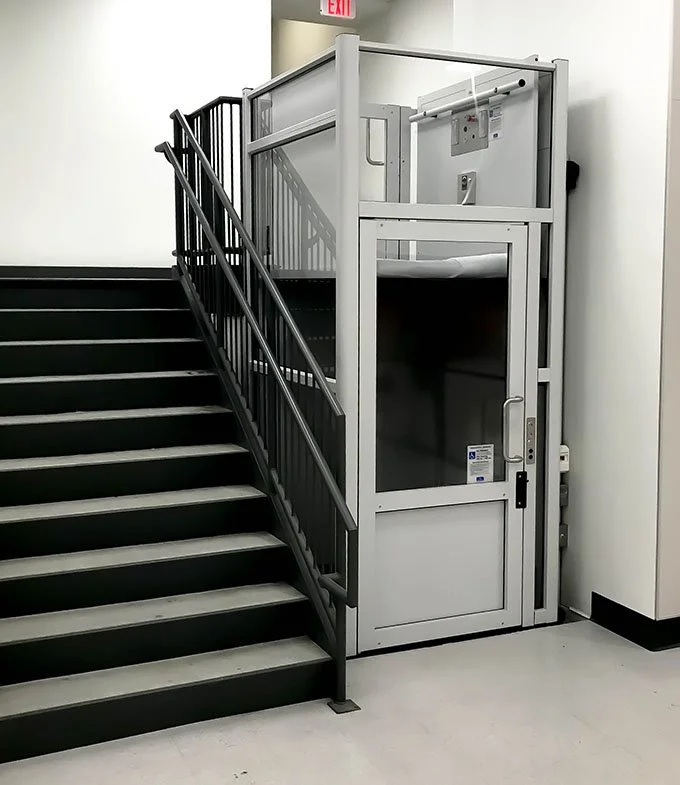
One of the most recognizable safety features on a vertical platform lift is the gate.
These gates serve an important purpose. They help prevent accidental movement on or off the platform while it is elevated.
Modern systems are designed so that gates remain securely closed during travel. They only unlock when the platform reaches a safe landing position.
This simple feature provides significant protection because it eliminates the possibility of stepping onto or off the platform while it is between levels.
Many users quickly become accustomed to this process. The gates operate so naturally that they fade into the background of the experience. Yet they remain one of the most important safeguards built into the system.
Emergency Stop Functions
No discussion of safety standards would be complete without mentioning emergency controls.
Every vertical platform lift includes emergency stop mechanisms that allow operation to be halted immediately if necessary.
Although emergencies are rare, these controls provide an additional layer of protection and reassurance.
The presence of emergency stop functions reflects a broader philosophy behind modern accessibility equipment. Safety is never based on assumptions. Instead, systems are designed to anticipate potential situations and provide clear responses when needed.
For users and caregivers alike, knowing that emergency controls are available helps create confidence in everyday operation.
Obstacle Detection Systems
One of the most impressive advancements in lift safety is the use of obstacle detection technology.
Modern vertical platform lifts are designed to recognize objects that may interfere with travel. If an obstacle is detected, the system automatically stops movement to prevent damage or injury.
This technology is especially valuable in residential settings where daily life can be unpredictable. A misplaced item, an unexpected object, or changes in the surrounding environment do not have to become safety hazards.
The lift actively monitors its path, helping maintain safe operation at all times.
These systems demonstrate how modern accessibility equipment has evolved from simple transportation devices into intelligent mobility solutions.
Electrical Safety Standards
Electricity powers most vertical platform lifts, making electrical safety another essential consideration.
Safety standards require proper wiring, grounding, and protection against electrical faults. Components must be designed to operate reliably under expected conditions while minimizing risks associated with power fluctuations or failures.
Professional installation plays a significant role here because even the safest equipment depends on proper electrical integration.
When installed correctly, the lift's electrical systems operate quietly and efficiently, supporting smooth performance without drawing attention to themselves.
Battery Backup and Power Outage Protection
Power outages are an unavoidable reality in many areas.
For individuals who rely on accessibility equipment, losing access during an outage can be concerning. This is why many modern vertical platform lifts include battery backup systems.
These systems allow the lift to continue operating or safely return to a designated landing position when power is interrupted.
Battery backup features provide more than convenience. They provide peace of mind.
Knowing that accessibility remains available during unexpected situations helps users feel secure and prepared.
The Role of Professional Installation
Even the most advanced lift can only perform as intended when installed correctly.
Professional installation is a critical part of overall safety because every home presents unique challenges. Structural conditions, electrical requirements, environmental factors, and user needs all influence the installation process.
Experienced installers conduct thorough assessments before work begins. They evaluate elevation changes, available space, accessibility requirements, and potential obstacles.
This careful planning ensures that the finished system functions safely and efficiently.
Many homeowners are surprised by how much thought goes into placement, clearances, and operational details. Yet these decisions have a direct impact on long-term safety and usability.
Regular Inspections and Ongoing Safety
Safety is not something that happens only during manufacturing or installation.
Like any important home system, vertical platform lifts benefit from regular inspections and maintenance.
Technicians evaluate moving components, safety controls, gates, sensors, and electrical systems to ensure continued reliability.
Routine inspections help identify minor issues before they become larger concerns. They also provide reassurance that all safety features remain fully operational.
Many families view these inspections as an investment in confidence. Knowing that the lift has been professionally evaluated allows users to focus on daily life rather than equipment performance.
User Training and Safe Operation
A well-designed lift should feel intuitive, but proper training still plays an important role.
During installation, homeowners and users typically receive guidance on controls, safety features, and best practices for operation.
This training helps ensure that users understand how the system works and how to use it comfortably.
Confidence often grows quickly once people become familiar with the equipment. What initially feels new soon becomes part of a normal routine.
Education and safety go hand in hand, creating a smoother and more positive experience.
Creating Confidence Through Safety
Perhaps the greatest benefit of modern safety standards is not a specific feature or regulation.
It is confidence.
When individuals trust their accessibility equipment, they move more freely. They participate more fully in daily activities. They focus less on limitations and more on living.
Caregivers experience this confidence as well. They worry less about physical strain, transfers, and potential accidents. Families gain peace of mind knowing that accessibility is supported by systems specifically designed to protect their loved ones.
Safety standards create this confidence by ensuring that reliability is built into every stage of the process.
Conclusion
Safety standards for vertical platform lifts exist to protect users, support independence, and create confidence in everyday accessibility. From structural engineering and platform stability to safety gates, emergency controls, obstacle detection systems, and professional installation, every element is designed with reliability in mind.
A properly installed and maintained vertical platform lift is more than an accessibility solution. It is a dependable pathway to greater freedom, comfort, and peace of mind.
At KGC, safety is at the heart of every mobility solution. The team understands that accessibility is not simply about overcoming physical barriers. It is about creating environments where people feel secure, confident, and empowered to live independently. Through personalized consultations, professional installation, and ongoing support, KGC helps homeowners choose solutions that meet both their mobility needs and their safety expectations.
If you are considering a vertical platform lift and would like expert guidance tailored to your home, visit the KGC Contact Page to connect with a specialist and learn more about creating a safer, more accessible living environment.
