
Permanent vs. Modular Ramps: Which Option Is Right for Your Home?
Introduction
There is a quiet moment that many families experience long before they ever think about installing a ramp. It happens when the front steps feel just a little taller than they used to or when someone you love pauses at the doorway as if they are gathering themselves before taking the next move. I remember one of those moments vividly. It was an ordinary morning with the kind of easy sunlight that makes the house feel both warm and slow. Someone dear to me was preparing to head outside. They reached the door, opened it, and stood for just a second longer than usual, looking at the steps beneath them.
There was no panic. No dramatic shift. No visible struggle. Just a subtle pause that felt different from the pauses that are born from distraction or deep thought. This one had weight behind it. A small adjustment in their stance. A careful exhale. Then a steady step downward, deliberate and slow. I remember thinking about that moment long after they stepped outside. It lingered with me through the morning because it was so quiet yet so revealing.
I wondered whether that pause had been happening for months before I noticed it. I wondered whether the steps had already become a daily negotiation. And I wondered how often families overlook these turning points simply because nothing dramatic has happened yet. It was then that I realized mobility changes do not announce themselves with loud signals. They arrive gently. They show up in the delicate spaces between one step and another. They whisper rather than shout.
For many families, that whisper becomes the first reason to consider installing a ramp. Not because someone cannot move freely anymore, but because they want movement to feel easier, safer, and more natural. Ramps are one of the simplest and most transformative accessibility solutions you can add to a home. They remove the barrier of lifting the body up and down stairs. They create smooth pathways. They restore comfort. And they allow someone to enter and exit their home without hesitation or strain.
Choosing between a permanent ramp and a modular ramp is one of the most important decisions families make during this process. It is not always obvious which one is right. Both options serve similar purposes but in different ways. Both support safe mobility but fit different lifestyles, home layouts, and personal preferences. That is why understanding how they differ, how they support independence, and how they fit into the flow of everyday life is essential.
This guide explores those differences through a warm and narrative lens, blending personal reflections with clear explanations to help you find the ramp that fits your home and your needs best.
Understanding Why Ramps Matter
Ramps carry more meaning than their simple structure suggests. They are not just sloped surfaces that replace stairs. They are pathways that transform how someone moves through their home. They make it possible for wheelchairs, walkers, mobility aids, strollers, and rolling bags to glide smoothly across thresholds. They eliminate the need to lift weight, adjust posture, or calculate each step.
For individuals who rely on mobility devices, a ramp is not an optional addition. It is a necessity for movement. For those with changing mobility or temporary limitations, a ramp turns complicated entryways into simple transitions. For families with regular visitors who have different mobility needs, a ramp makes the home welcoming and inclusive.
Ramps also reflect something deeper. They show that a home is ready to evolve with the people who live there. They show foresight rather than fear. They prioritize comfort over difficulty. And they acknowledge that accessibility should be part of the home’s design, not a last minute solution.
Choosing between a permanent ramp and a modular ramp is not just about picking materials. It is about picking the experience that fits the home and the person who will use it every day.
What Defines a Permanent Ramp
A permanent ramp is exactly what its name suggests. It is built into the structure of the home, usually crafted with wood or concrete, and designed to remain in place for years. These ramps are custom tailored to the home’s architecture, often blending seamlessly with porches, entrances, walkways, and exterior features.
Permanent ramps are popular among families who want an accessibility solution that looks like it has always belonged to the home. They offer long term stability, weather resistance, and the visual appeal of a built in feature. The design can be stained to match the home’s exterior, shaped to complement the landscaping, or structured in ways that feel more architectural than mechanical.
What stands out most about permanent ramps is the emotional experience they create. They feel grounding. Solid. Dependable. They look like part of the home’s identity. For many people, that visual connection provides a sense of pride rather than a reminder of limitation. It becomes part of the home’s story rather than a sign of change.
Permanent ramps work especially well when the home has:
A larger landing area
A multi step entry
An architecturally integrated porch
Long term mobility considerations
A desire for a visually cohesive solution
They serve families who want a lasting, dependable ramp that blends into the surroundings and offers strong stability.
What Defines a Modular Ramp
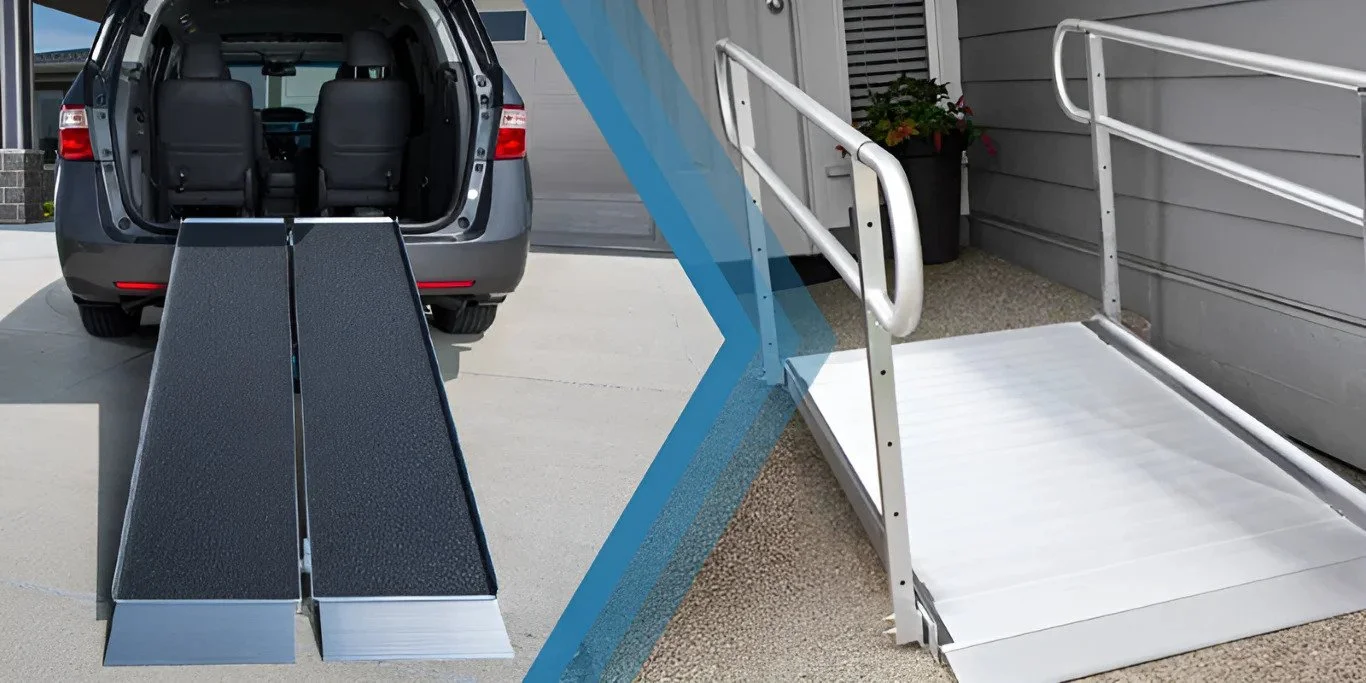
Modular ramps are crafted from aluminum and designed for flexibility, adaptability, and fast installation. Instead of being built into the home, they are assembled using interlocking components that can be customized to the exact layout of the site. They can be adjusted, expanded, relocated, or reconfigured if the home’s needs change.
Modular ramps are ideal for families who want a strong and reliable accessibility solution without committing to permanent structural changes. They are especially useful for renters, individuals recovering from surgery, families anticipating future moves, or homes where mobility needs may evolve.
One of the greatest strengths of modular ramps is their efficiency. They can be installed quickly, sometimes in a single day, and they require minimal disruption to the home. Their aluminum material makes them weather resistant, low maintenance, and durable across seasons.
They may not have the natural wood appearance of permanent ramps, but they offer something equally valuable. They offer adaptability. They offer freedom to change the layout if needed. They offer a removable solution that respects both mobility and flexibility.
Modular ramps are perfect when the home requires:
A faster installation timeline
A solution that can move with the family
Custom configurations for unique layouts
Minimal long term construction
Low maintenance expectations
This type of ramp reflects movement, transition, and long term thinking that considers both today’s needs and tomorrow’s possibilities.
The Personal Side of Choosing a Ramp
Choosing a ramp is not just about slope calculations or material preferences. It is about the emotional relationship someone has with their home. It is about how they want to feel when they enter and exit. It is about whether they want something that blends in or something that can adapt with them.
I once worked with a family whose home had a beautiful front porch with wide wooden posts and a hand carved railing that had been part of the house for generations. They wanted a ramp that would honor the warmth of their home’s character. A permanent wooden ramp was the ideal choice. Once installed, it looked so natural that most visitors never realized it had been added recently.
Another family lived in a charming townhouse and needed a ramp because one member was recovering from hip surgery. They were renting and did not want to commit to any structural changes. A modular ramp allowed them to create a safe and comfortable entryway without altering the property. When their recovery was complete, the ramp was removed with ease.
These stories matter because they highlight that ramps are not just functional choices. They are deeply personal decisions that reflect the rhythms of the home and the dignity of the person using them.
How Permanent Ramps Support Daily Life
Permanent ramps feel strong underfoot. They offer a sense of grounding that many individuals find comforting. They can be designed with railings, landings, and details that mirror the style of the home. They withstand weather changes with proper treatment, and they stay in place for years.
Families who choose permanent ramps often describe the same feelings. Stability. Belonging. Confidence. They appreciate that the ramp feels like part of the house rather than an add on. They enjoy the warmth of natural materials. They like that the ramp reflects craftsmanship and intention.
Permanent ramps also work well with wide entryways and homes that have enough space to accommodate a long slope. When a ramp is designed thoughtfully, it becomes an elegant and functional part of the property.
Permanent ramps can include textured surfaces for traction, integrated railings for stability, and soft angles that make movement feel natural. Their presence becomes reassuring. For individuals who navigate their home daily, that level of comfort matters.
How Modular Ramps Support Daily Life
Modular ramps provide a different type of support. Their aluminum construction gives them a smooth, steady surface that remains slip resistant even in challenging weather. Their adaptability allows them to be shaped around garden beds, walkways, doorways, or tight angles.
Families often appreciate how the modular ramp respects their evolving needs. If someone’s mobility device changes, the ramp can be adjusted. If the family moves, the ramp can move with them. If temporary recovery turns into long term mobility needs, additional sections can be added without starting from scratch.
Modular ramps are especially helpful for homes with limited space. Their design allows them to fit into compact areas while still meeting accessibility standards. They are also ideal for families who anticipate life transitions, such as caregiving changes, temporary accommodations, or rental housing.
What stands out most is how these ramps give families freedom. Freedom to adapt. Freedom to maintain mobility without disrupting the home’s structure. Freedom to choose a solution that does not lock them into a long term commitment unless they want one.
Considering the Home’s Architecture
When choosing between permanent and modular ramps, the home itself often guides the decision long before preferences do. The layout, the entryway dimensions, the height of the steps, the available space for landings, and the exterior design all play significant roles.
A permanent ramp may complement a home with a large porch or a sprawling front entry. A modular ramp may better suit a compact entrance or a home with limited outdoor space. A permanent ramp may enhance the visual character of a classic home. A modular ramp may offer a sleek and practical solution for a contemporary residence.
Walking through the home’s exterior with fresh eyes can reveal what type of ramp would feel most natural. Families often discover that the architecture tells its own story about what it can support.
Considering Mobility Needs
Mobility needs vary from person to person, and those differences matter when choosing a ramp. Someone using a manual wheelchair may need different slope considerations than someone using a power chair. Someone using a walker may prefer railings positioned a certain way. Someone in recovery may need a gentle slope for comfort.
Permanent ramps allow for fine tuning of design details, including slope length, railing height, and landing size. Modular ramps allow adjustments later on if the user’s needs change.
The best ramp is the one that supports mobility today while leaving room for tomorrow.
Considering the Future
Families often think about today’s needs when choosing a ramp, but the future deserves equal attention. Mobility can change. Health conditions can improve or evolve. Living situations can shift. Homes can be sold or remodeled. Preferences can grow or develop in new directions.
Permanent ramps offer stability for long term needs. Modular ramps prepare the family for change.
Thinking ahead helps the ramp become an investment rather than a temporary fix.
When a Permanent Ramp Is the Right Choice
A permanent ramp is ideal when stability, aesthetics, and long term use take priority. It is the right choice for families who:
Own their home and plan to stay for years
Want a visually cohesive design
Prefer natural materials like wood or integrated concrete
Are ready to invest in a long lasting structure
Have a spacious entryway that can accommodate a gradual slope
Prefer a ramp that feels like part of the home’s architecture
In these cases, a permanent ramp is not just a mobility solution. It becomes part of the home’s identity.
When a Modular Ramp Is the Right Choice
A modular ramp is ideal when flexibility, speed, or adaptability matters most. It is the right choice for families who:
Need a fast installation
May move homes in the future
Live in a rental property
Have temporary or changing mobility needs
Require a customizable configuration
Prefer low maintenance materials
In these situations, a modular ramp becomes a practical, empowering solution that fits today and prepares for tomorrow.
How Families Feel After Choosing the Right Ramp
One of the most meaningful parts of installing a ramp is witnessing the shift that occurs afterward. The hesitation disappears. The pauses fade. The sense of strain softens. Entryways become welcoming again. Movement becomes comfortable. The home feels whole.
People describe feeling surprised by how much difference the ramp makes. They describe feeling lighter. More confident. More connected to their home. They describe the way simple daily routines feel easier than they have in years.
Families describe relief. Relief that their loved one is safe. Relief that the home is ready for the future. Relief that the solution they chose supports dignity rather than diminishing it.
Whether permanent or modular, the right ramp brings peace.
Conclusion
Permanent and modular ramps both offer pathways to independence, comfort, and safe movement. The difference lies in how they interact with the home, how they support future needs, and how they align with personal preferences. Permanent ramps provide long term stability and aesthetic harmony. Modular ramps offer flexibility, adaptability, and quick installation. Both options honor dignity and empower mobility in meaningful ways.
At KGC, we believe that every ramp should reflect the unique needs of the home and the people who live in it. We take time to understand your daily routines, your long term goals, and the layout of your space. Our role is to guide you with clarity, compassion, and expertise so that your ramp feels like a natural extension of your life, not an interruption.
If you are ready to explore which ramp is best for your home, we are here to help with thoughtful guidance and custom solutions.
You can reach our team through the KGC Contact Page.
