
How to Choose the Right Ramp Material: Wood, Aluminum, or Concrete
Introduction
There are moments in life that are so gentle and so quiet that they almost slip past unnoticed, yet they become the starting point of a much deeper understanding. I remember one such morning clearly. The house was still, sunlight touching the floors in familiar patterns, the kind of morning that invites ease. Someone dear to me stepped outside with the intention of watering a few plants on the porch. The front steps had always been manageable, so ordinary that none of us ever thought about them. But that morning, I noticed something different. They paused at the top step, looking down with a thoughtful expression that carried a hint of caution.
It was not fear. It was not hesitation driven by worry. It was an awareness that the steps no longer felt quite as natural as they once did. The pause lasted only a moment, but it spoke volumes. And even after they continued down the steps safely, that moment stayed with me. It lingered in my thoughts throughout the day. Had the steps felt like this for a while now? Had they been quietly navigating discomfort or strain without mentioning it? How often do these small shifts go unnoticed because no one talks about them?
That pause became the beginning of our exploration into home accessibility. The first solution we considered was a ramp. It seemed simple at first. Just install a ramp. But the more we learned, the more we realized that choosing the right ramp involves thoughtful decision making. It is not just about slope calculations or measuring the entryway. It is about choosing a material that supports safety, comfort, longevity, and the rhythm of the home.
Wood, aluminum, and concrete are the three primary materials used for residential ramps. Each one carries its own strengths, challenges, emotional qualities, and practical considerations. Each one influences the experience of entering and exiting the home in different ways. Choosing the right material requires understanding not only what each one offers but what the person using the ramp truly needs and values.
This guide walks you through each option with clarity and warmth, blending personal examples with helpful insights so that you can choose a ramp that feels right for your home, your lifestyle, and the people who move through it every day.
Why Ramp Material Matters
The material chosen for a ramp shapes the user’s entire experience. It determines how stable the ramp feels beneath their feet or wheels. It influences the ramp’s longevity through weather changes. It affects maintenance needs, traction, comfort under different temperatures, and how the ramp blends with the appearance of the home.
For someone who uses a wheelchair or walker, the feel of the surface matters. For someone recovering from surgery, stability and traction matter. For someone aging in place, long term reliability matters. For families who welcome visitors with mobility needs, accessibility and inclusivity matter.
The material also affects installation time, cost, and whether the ramp can be adjusted or modified in the future. What seems like a simple decision becomes a thoughtful conversation about daily comfort, long term needs, and how the home supports everyone who lives there.
Wood Ramps
The Natural Warmth of Wood
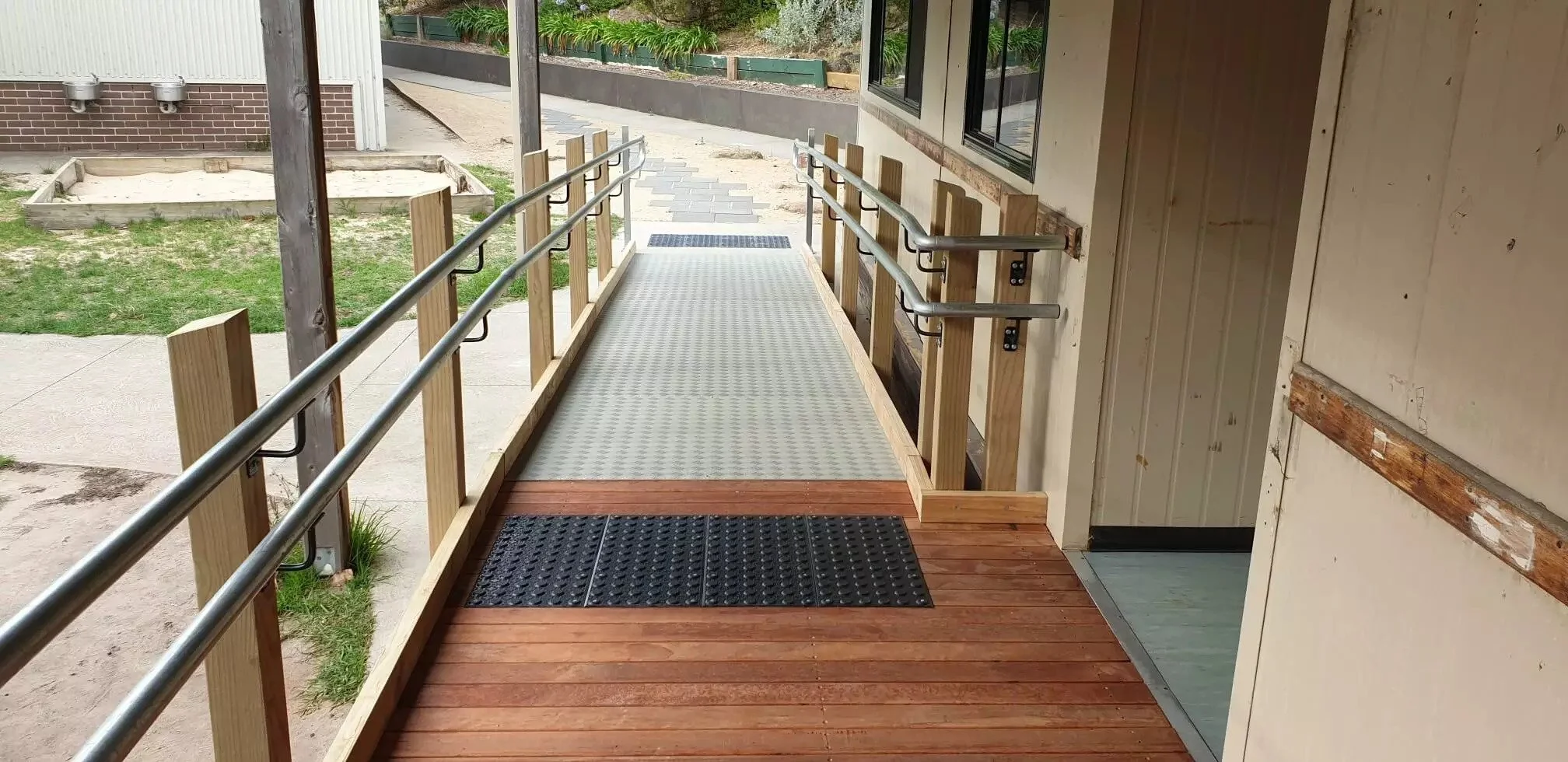
Wood ramps are often chosen for emotional reasons as much as practical ones. There is something undeniably warm and inviting about natural wood. It has a softness, a beauty, and a familiar presence that blends with many architectural styles. Homes with porches, historic details, or natural landscaping often pair beautifully with wooden ramps. They feel like part of the home rather than an addition. This emotional connection matters because accessibility should never feel clinical or intrusive. It should feel like a natural extension of the home.
How Wood Performs in Daily Use
A well built wooden ramp feels solid and secure. The material has natural grip and can be textured or treated to enhance traction. Wooden ramps can be built to fit complex spaces, long porches, or multiple turns. They offer flexibility in design and shape. Many families appreciate the gentle feel of wood underfoot, especially in dry weather when it feels warm and steady.
Weather Considerations
Wood and weather have a long standing relationship. Wood expands, contracts, and responds to moisture. Rain, snow, and humidity influence its condition. Because of this, wooden ramps require ongoing maintenance. They need to be sealed regularly, inspected seasonally, and cared for to prevent rot or surface wear. Families who enjoy home maintenance or appreciate natural materials often feel comfortable with these responsibilities. Others may prefer a material with fewer long term caretaking needs.
Lifespan and Longevity
A well maintained wooden ramp can last many years. But its lifespan depends heavily on climate and upkeep. In dry climates, wood performs well with minimal issues. In wet or snowy regions, extra care is needed to protect the ramp from moisture related challenges.
Customization and Aesthetic Appeal
Wood offers unparalleled design flexibility. It can be stained, painted, shaped, or built with railings that match the home. It can include landings that mirror the porch and blend with existing architecture. For homes that value visual harmony, wood is often the preferred choice.
Aluminum Ramps
The Clean, Modern Feel of Aluminum
Aluminum ramps carry a different emotional quality. They feel modern, streamlined, and efficient. They have a sleek presence that works well with newer homes, rental properties, townhouses, and spaces where clean lines matter. While they may not have the warmth of wood, they have a quiet confidence that appeals to families who prioritize practicality and reliability.
How Aluminum Performs in Daily Use
Aluminum ramps are lightweight but surprisingly strong. The surface is designed to provide excellent traction, even in wet weather. Aluminum ramps do not warp, rot, or crack. They remain consistent in performance across seasons. For wheelchair users, the smooth and even surface offers comfortable navigation.
Weather and Maintenance
One of the greatest strengths of aluminum is its resistance to weather. It does not rust. It does not absorb moisture. It does not require sealing or repainting. A quick rinse or sweep is usually enough to keep it in good condition. Families who want an extremely low maintenance solution often choose aluminum for this reason.
Lifespan and Durability
Aluminum ramps last an exceptionally long time. They maintain their shape and integrity through years of use. Extreme temperatures do not affect them, though the surface may be cooler in winter or warmer in direct sunlight. Their durability is one of the reasons aluminum ramps are common in environments where reliability is critical.
Flexibility and Adaptability
The modular nature of aluminum ramps is one of their greatest advantages. They can be adjusted, extended, or reconfigured easily. They can also be relocated if the family moves. This makes aluminum ramps ideal for rental homes, transitional living arrangements, or situations where future mobility needs may evolve.
Concrete Ramps
The Strength and Permanence of Concrete
Concrete ramps feel immovable and grounded. They carry a sense of permanence that no other material can offer. They are often chosen for homes with long term or permanent mobility needs. Their appearance can blend beautifully with certain architectural styles and landscaping. For people who want stability above all else, concrete ramps feel reassuring and strong.
Daily Experience and Surface Feel
Concrete ramps provide excellent traction when designed with textured surfaces. They offer a firm and reliable feel underfoot, ideal for wheelchairs, walkers, and scooters. Their solidity creates a sense of confidence for the user. They feel like part of the home’s foundation.
Weather and Maintenance
Concrete performs well in a wide range of weather conditions, though it can develop cracks over time due to temperature changes or natural settling. Concrete ramps require less maintenance than wood but may need occasional sealing or small repairs to maintain surface quality.
Lifespan and Longevity
Concrete ramps can last decades when built properly. They withstand heavy use and extreme weather. Their lifespan makes them a strong choice for long term living situations where the ramp will be needed permanently.
Custom Design and Visual Cohesion
Concrete can be shaped, colored, or finished to match the home’s exterior. It can integrate seamlessly with pathways, driveways, and porches. While the installation process is more involved, the final result can be beautiful and polished.
Matching Ramp Material to Your Home
Choosing the right ramp material involves understanding how each option interacts with the home’s structure, style, climate, and daily rhythms. A wooden ramp might feel perfect for a historic home surrounded by natural landscaping. An aluminum ramp might fit the needs of someone who prioritizes ease, speed, and low maintenance. A concrete ramp might fit a home with long term mobility needs and a desire for a permanent structure.
Walking around your home and imagining how each material would look and feel can help guide the choice. Families often discover that the home itself hints at which material fits best.
Matching Ramp Material to Mobility Needs
Mobility needs vary widely. Some individuals use manual wheelchairs. Others use power chairs, scooters, walkers, or canes. The ramp material influences how each mobility device interacts with the surface. Aluminum provides smooth consistency. Concrete offers strong traction. Wood provides natural grip but requires more maintenance.
One material may feel more comfortable for daily use, while another may feel better for long term planning. Understanding how the ramp will be used today and in the years ahead helps narrow the options.
Matching Ramp Material to Climate
Climate plays a surprisingly large role in choosing ramp material. In regions with heavy rain or snow, aluminum’s weather resistance is a clear advantage. In areas with mild climates, wood can be enjoyed with minimal upkeep. In places with extreme temperature shifts, concrete offers reliability but may require periodic attention.
Thinking about the seasons, the sun exposure, and the natural elements around your home will guide you toward the right choice.
Matching Ramp Material to Lifestyle
Lifestyle considerations often matter more than families realize. Some people enjoy maintaining outdoor structures. Others want a solution that requires almost no care. Some want a ramp that looks like part of the home’s design. Others want the flexibility to change or remove the ramp in the future.
Wood supports custom aesthetics. Aluminum supports adaptable living. Concrete supports long term stability.
The right material honors the lifestyle of the person using it.
The Emotional Experience of the Ramp
Ramps are practical, but they are also emotional. They change how someone feels about entering and leaving their home. They influence dignity, independence, and confidence. They should always feel empowering.
Wood ramps create warmth. Aluminum ramps offer reassurance through reliability. Concrete ramps offer grounding strength.
The best ramp is the one that feels supportive not just physically but emotionally.
Conclusion
Choosing the right ramp material is not just about selecting wood, aluminum, or concrete. It is about choosing comfort, independence, and safety. It is about selecting the solution that fits your home’s architecture, your climate, your long term needs, and your emotional connection to the space. Wood offers natural beauty and custom design. Aluminum offers flexibility and low maintenance. Concrete offers permanence and strength.
At KGC, we believe accessibility should feel personal, supportive, and respectful of every individual’s dignity. We take time to understand your home, your vision, and your daily routines so we can recommend the ramp that brings confidence and ease into every movement. Our team specializes in creating solutions that blend seamlessly with the home while providing the highest standards of safety and comfort.
If you are ready to explore which ramp material is right for your home, we are here to help with thoughtful guidance and custom solutions.
You can reach our team through the KGC Contact Page.
