
Common Stairlift Misconceptions and the Truth Behind Them
Introduction
There is a moment that many families experience, though most do not speak about it right away. It is the moment when you realize that someone you love is navigating the house differently than they used to. For me, it happened on a slow afternoon filled with soft light and the kind of quiet that settles naturally in familiar spaces. Someone dear to me was making their way toward the staircase. They moved with care, holding a few items that needed to go upstairs. There was nothing dramatic in their steps, but there was something different. A pause. A shift in weight. A small calculation in their eyes that told me those steps no longer felt like an effortless part of the day.
There was no fear in that moment, only awareness. Awareness that home had changed in a subtle way. Awareness that the staircase was becoming something to think about instead of simply move through. Later that day, this quiet shift stayed with me. I began to wonder how many times this change had already happened unnoticed. I wondered when practicality had begun to outweigh comfort. I wondered how someone could be adapting so gracefully to something that was quietly becoming a challenge.
When we eventually started exploring stairlifts, we did so with questions, concerns, and a little bit of hesitation. We carried beliefs that many families hold. We worried that stairlifts looked bulky. We wondered whether they made someone look dependent. We wondered whether installing one meant losing some part of the home’s character. We carried misconceptions that came from outdated images, old assumptions, and stories we had heard from others who had never actually experienced a modern stairlift.
It did not take long to discover that most of what we believed was incomplete or simply untrue.
Stairlifts today are nothing like what many people imagine. They are not symbols of frailty. They are not bulky pieces of equipment that dominate a staircase. They are not loud or slow or restrictive. Instead, they are designed to support confidence, preserve independence, and blend naturally into the home’s environment. They are built with thoughtful engineering and subtle protections that make movement safer, easier, and more comfortable.
This guide uncovers the most common misconceptions about stairlifts and brings forward the truth behind them. The goal is not to convince or pressure anyone. It is to offer clarity. It is to replace outdated images with real understanding. It is to show that a stairlift is not about giving something up but about protecting everything that matters.
Misconception One
Stairlifts Are Only for People of a Certain Age
One of the most widespread misconceptions about stairlifts is the belief that they are intended only for people at a particular stage of life. Many families assume that stairlifts symbolize aging or weakness or a loss of ability. This belief can prevent people from seeking support even when the stairs are quietly becoming a barrier. It can hold them back from taking steps that would make their home safer and life easier.
The truth is that stairlifts are not age specific. They are mobility solutions, not age solutions. They support people who experience injuries, joint pain, balance fluctuations, chronic conditions, recovery from surgery, or temporary limitations. They help individuals who want to preserve their energy for activities that bring them joy rather than spending it climbing stairs that feel harder than they should.
The idea that stairlifts represent age is a misunderstanding. What they truly represent is empowerment. They preserve independence. They support comfort. They remove obstacles so that people can continue living fully in the home they love.
Misconception Two
Stairlifts Are Bulky and Will Make the Home Look Unattractive
Many people picture stairlifts as large, medical looking machines that permanently overpower the staircase. This image often comes from outdated models that were far more limited in design and aesthetics. Those earlier versions were bulkier and more noticeable, leading many families to hesitate because they did not want their home to feel like a clinical environment.
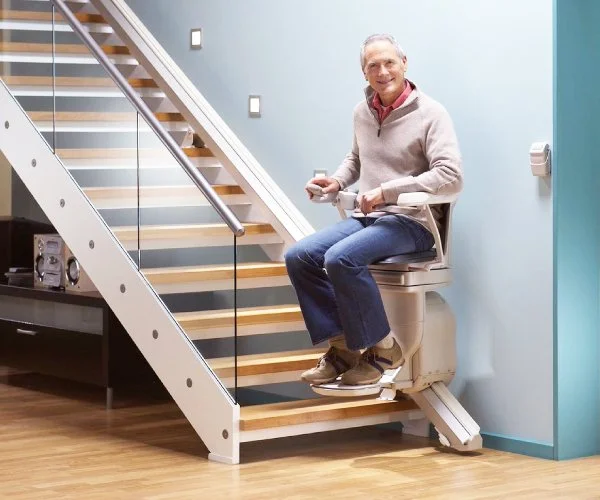
Modern stairlifts look very different. They are sleek, compact, and thoughtfully designed. They fold up neatly when not in use, keeping the staircase open and passable. Their rails blend with the natural line of the stairs, often looking like part of the home’s original structure. Seats are designed with comfortable upholstery that feels like a piece of furniture rather than equipment.
Many people who visit homes with stairlifts do not notice them until they fold out for use. This subtle integration ensures that the home retains its warmth, character, and beauty while providing essential support.
It is natural to want a home that feels welcoming. Stairlifts are now built to honor that desire.
Misconception Three
A Stairlift Means Losing Independence
Another misconception is that installing a stairlift symbolizes a loss of independence. Many individuals feel hesitant because they do not want others to see them as needing help. They want to protect their autonomy and manage their routines without relying on anyone else.
In reality, a stairlift does the opposite. It preserves independence. It gives freedom back to those who use it by eliminating the strain and uncertainty of climbing stairs when the body no longer supports it comfortably. It removes the need to ask for assistance. It reduces the risk of falls that could lead to major disruptions in daily life. It allows someone to access every level of the home on their own terms.
Independence is not about managing every challenge without help. It is about having the tools needed to live safely and comfortably. A stairlift supports confidence and autonomy rather than diminishing it.
Misconception Four
Stairlifts Are Noisy and Slow
Many families worry that stairlifts will be loud, mechanical, or disruptive. This misconception often comes from memories of older models that operated with noticeable sound or uneven movement. People imagine the stairlift grinding along the rail or humming loudly through the house.
Modern stairlifts are intentionally engineered for quiet operation. They glide smoothly with a gentle hum that is softer than many household appliances. Some are so quiet that people can use them early in the morning or late at night without disturbing anyone in the home.
Movement is controlled through advanced motor systems that ensure a smooth and steady ride. There is no jerking or sudden shifting. Instead, the lift starts and stops with a soft motion that feels natural and calm.
Speed is set to be safe and comfortable, not rushed. The goal is not to travel quickly but to travel securely. The smoothness of the ride matters far more than speed, and modern stairlifts achieve that balance with remarkable consistency.
Misconception Five
Stairlifts Will Damage the Home
Families sometimes worry that installing a stairlift will require drilling into the walls or altering the home’s structure in a way that causes damage. They imagine large bolts attaching the rail to drywall or changes to the staircase that cannot be reversed.
The truth is that stairlifts do not attach to the wall at all. They attach directly to the staircase. The rails are secured to the steps, making installation stable and minimally intrusive. This process protects the walls entirely and keeps the lift aligned with the natural shape of the stairs.
The changes made during installation are small, precise, and reversible. If the stairlift is ever removed, the staircase can be restored easily. Most families are surprised by how simple the installation process is and how little disruption it causes.
Modern stairlifts are built to respect the home and preserve its original structure.
Misconception Six
Stairlifts Take Up Too Much Space
Some people worry that a stairlift will reduce the usable width of the staircase or make it difficult for others to walk up and down. This misconception often leads families to believe that their staircase is too narrow or that the lift will become an obstruction.
Modern stairlifts are designed with foldable features. The seat, footrest, and armrests all fold neatly when the lift is not in use. This significantly reduces the space the lift occupies. Most staircases remain completely passable even with the rail installed.
Installers evaluate the width of the staircase, nearby doors, entry angles, and hallway spacing to ensure that the stairlift fits comfortably in the home. Families are often surprised by how much room remains available once the lift is folded.
A well designed stairlift respects the shared use of the home while offering essential support for those who need it.
Misconception Seven
Stairlifts Are Only Useful for Severe Mobility Limitations
Many people believe stairlifts are only necessary when mobility declines significantly. They assume they must wait until navigating the stairs becomes nearly impossible before considering one. This misunderstanding often leads to delayed decisions that result in increased risk and stress.
In truth, stairlifts benefit individuals long before mobility becomes severely limited. They support people who experience mild discomfort, temporary injuries, post surgical recovery, or conditions that make stairs unpredictable. They help individuals conserve energy for daily activities rather than spending it on climbing stairs that require more effort than they used to.
Waiting until mobility declines significantly can make the transition more difficult. Installing a stairlift earlier allows individuals to adapt to it gradually, while still feeling strong, confident, and capable.
A stairlift is not a last resort. It is a proactive choice that enhances comfort and safety.
Misconception Eight
Stairlifts Are Too Complicated to Use
Some people worry that stairlifts require technical skill or that they will be confusing to operate. They imagine multiple buttons, complicated controls, or sequences that require memorization.
Modern stairlifts are intentionally designed for simplicity. There is typically a single direction control on the armrest, often shaped like a small toggle or switch. Pressing the switch moves the lift up or down. Releasing it stops the lift instantly. The motion is intuitive and easy.
Swivel seats operate with straightforward levers or optional power turning features. Footrests fold easily, and many models include powered footrests that lift automatically. Remote call buttons allow users to send the lift up or down from either floor.
The simplicity of these controls is not accidental. Designers understand that comfort comes from ease, not complexity. Families often find that learning to use a stairlift takes only a minute.
Misconception Nine
Stairlifts Are Uncomfortable
Another misconception is that stairlifts are uncomfortable to sit in or not supportive enough for daily use. This belief often stems from older designs with minimal padding or rigid seat structures.
Modern stairlifts prioritize comfort as much as function. Seats are designed ergonomically, with supportive cushioning, smooth textures, and curved backrests. Armrests provide stability without feeling restrictive. Footrests support the legs in natural positions, reducing strain on joints and muscles.
The smooth glide of the lift complements the comfort of the seat, making the ride feel relaxed and natural. Many people describe it as sitting in a calm and steady chair rather than feeling perched or imbalanced.
Comfort is a key element of modern stairlift design because comfort creates confidence.
Misconception Ten
Stairlifts Are All the Same
Some people believe that all stairlifts are identical and that choosing one is simply a matter of selecting a basic model. This misconception overlooks the wide range of options available today.
Stairlifts vary significantly in features, functionality, design, rail shape, seat style, power options, safety components, and the type of staircase they serve. Straight stairlifts differ from curved stairlifts. Outdoor stairlifts are made with weather resistant materials. Some models include powered swivels, powered footrests, and customizable speed settings.
Professionals evaluate the home to determine which design best serves the staircase and the individual using the lift. There is no one size fits all solution because every home and every person has unique needs.
Understanding the options helps families choose a stairlift that feels like it was built specifically for their home.
Misconception Eleven
Stairlifts Are Too Expensive to Consider
Many families assume stairlifts are unaffordable without ever exploring the range of options available. This misconception often comes from outdated ideas about cost or confusion between straight and curved models.
The truth is that there is a wide spectrum of stairlift designs that fit different budgets. Straight stairlifts are often more affordable and can be installed quickly. Curved stairlifts involve custom engineering and therefore cost more, but they offer essential support for homes with landings or turns.
What many families discover is that the cost reflects not just the equipment but the safety, freedom, peace of mind, and continued use of the entire home. They also discover that the cost of a stairlift is often significantly less than the cost associated with modifying the home, relocating, or recovering from a fall.
A stairlift is an investment in safety and independence that often pays for itself emotionally and practically.
Misconception Twelve
A Stairlift Will Feel Like an Unwelcome Reminder of Limitations
Some individuals resist the idea of a stairlift because they fear it will constantly remind them of physical changes. They worry it will feel like an admission of decline or a visible symbol of loss.
The truth is that stairlifts rarely carry emotional heaviness once they are installed. In fact, most people describe feeling relief, not loss. They feel supported. They feel freer. They feel more connected to their home rather than restricted by it.
Stairlifts become part of the routine, just like using a chair, a handrail, or a light switch. They do not diminish identity. They strengthen it by helping individuals stay engaged with their home and daily life.
The emotional shift tends to be positive because the stairlift gives something back rather than taking something away.
Misconception Thirteen
Only People with Severe Conditions Need a Stairlift
Sometimes families worry that installing a stairlift means acknowledging a severe limitation. They believe that unless someone cannot use the stairs at all, a stairlift is unnecessary.
The truth is that stairlifts prevent challenges long before they become severe. They protect people from falls that could drastically change their mobility. They lighten the physical load on joints, muscles, and balance systems. They help individuals maintain an active lifestyle by reducing fatigue.
Using a stairlift is not about the severity of a condition. It is about preventing discomfort, avoiding risk, and preserving the freedom to move easily through the home.
Misconception Fourteen
Stairlifts Cannot Be Installed on Narrow or Curved Stairs
This misconception often stops families before they even begin exploring options. They assume their staircase is not compatible with a stairlift because it has curves, landings, or limited width.
Modern stairlifts are incredibly adaptable. Curved stairlifts are custom designed to fit even the most unique staircases. Rails can wrap around turns, extend onto landings, and shape themselves precisely to the home’s architecture. Narrow staircases are evaluated carefully, and many rail designs are slim enough to fit tight spaces comfortably.
Professionals measure the staircase with advanced tools to ensure a secure and smooth fit. There are very few staircases that cannot accommodate some form of stairlift.
This flexibility means families do not need to remodel or change the home’s structure. Modern stairlifts honor the home’s natural layout.
Misconception Fifteen
Stairlifts Are a Last Resort
Many people view stairlifts as a final step taken only when no other options remain. This misconception often delays decisions until mobility challenges have already become significant.
In reality, stairlifts work best when they are chosen early enough to prevent stress, discomfort, and risk. They are tools of empowerment. They allow individuals to preserve energy, maintain confidence, and enjoy their home without strain. They support independence rather than replacing it.
Choosing a stairlift early ensures that safety and comfort remain part of everyday life rather than becoming reactions to crisis.
Conclusion
Stairlifts carry many misconceptions that come from outdated images rather than the reality of modern design. Today’s stairlifts are sleek, comfortable, safe, and highly customizable. They do not symbolize decline. They symbolize freedom. They protect confidence, support independence, and allow individuals to move safely through the home they love.
At KGC, we know that choosing a stairlift is a personal decision rooted in care and respect. We take time to understand your home, your goals, and your comfort so we can offer solutions that fit naturally and support your quality of life. Our commitment is to guide families through the process with clarity, compassion, and expertise.
If you would like to explore stairlift options or learn more about modern safety and design features, our team is here to help.
You can reach us directly through the KGC Contact Page.
