
How to Choose a Lift System for a Loved One With Limited Mobility
Introduction
I remember the first time the question was asked out loud. It happened late in the evening, after the house had settled into its usual quiet. Someone I love sat at the kitchen table, hands wrapped around a mug that had long since gone cold. They were not asking for themselves, at least not directly. They were asking for someone else. A loved one whose mobility had changed enough that daily tasks now required careful planning.
How do we choose the right lift system without making them feel like they are losing control of their life
That question carried so much weight. It was not about equipment alone. It was about protecting dignity. It was about keeping routines intact. It was about finding a way to help without overstepping, to support without diminishing independence.
Choosing a lift system for a loved one with limited mobility is one of the most caring decisions a family can make, and one of the most emotionally complex. There is love in the intention, fear in the uncertainty, and hope woven through every possibility. This article is written for families standing in that space. It is meant to guide you through the process with clarity, compassion, and respect for the person at the center of the decision.
Understanding Limited Mobility Beyond the Surface
Limited mobility is often misunderstood. It is not always about complete inability to move. More often, it is about inconsistency, fatigue, pain, or risk. A person may be able to walk short distances but struggle with transfers. They may manage stairs on good days but feel unsafe on others. They may rely on strength in some parts of the body while compensating for weakness in others.
What makes limited mobility especially challenging is that it changes how someone experiences their environment. Ordinary tasks become calculations. Doorways, steps, bathrooms, and beds turn into potential obstacles. A lift system is not meant to replace movement entirely. It is meant to support movement where the body needs help.
Understanding your loved one’s specific challenges is the foundation of choosing the right solution.
The Emotional Layer of Choosing for Someone Else
When you are choosing a lift system for yourself, the decision feels personal. When you are choosing for someone else, it carries a different emotional weight. There may be fear of making the wrong choice. There may be concern about how the recommendation will be received. There may be guilt about acknowledging that help is needed.
Many loved ones worry about appearing controlling or dismissive of autonomy. Others worry about waiting too long and risking injury. These feelings are natural. They reflect care.
The goal is not to take control away. The goal is to create safety while preserving choice. A lift system should feel like an invitation to keep living fully, not a symbol of decline.
Starting With the Person, Not the Equipment
It can be tempting to begin by researching products. Stairlifts. Vertical platform lifts. Overhead lifts. But the most effective approach begins with the person.
How do they move now
Where do they feel unsafe
What tasks cause the most strain
What parts of the home feel out of reach
Listening to their answers provides insight that no brochure can offer. It also communicates respect. It tells your loved one that their voice matters in this process.
When the person feels heard, they are more likely to feel empowered rather than managed.
Understanding the Different Types of Lift Systems
Lift systems come in many forms, each designed to solve specific mobility challenges. Understanding their purpose helps families make informed decisions without feeling overwhelmed.
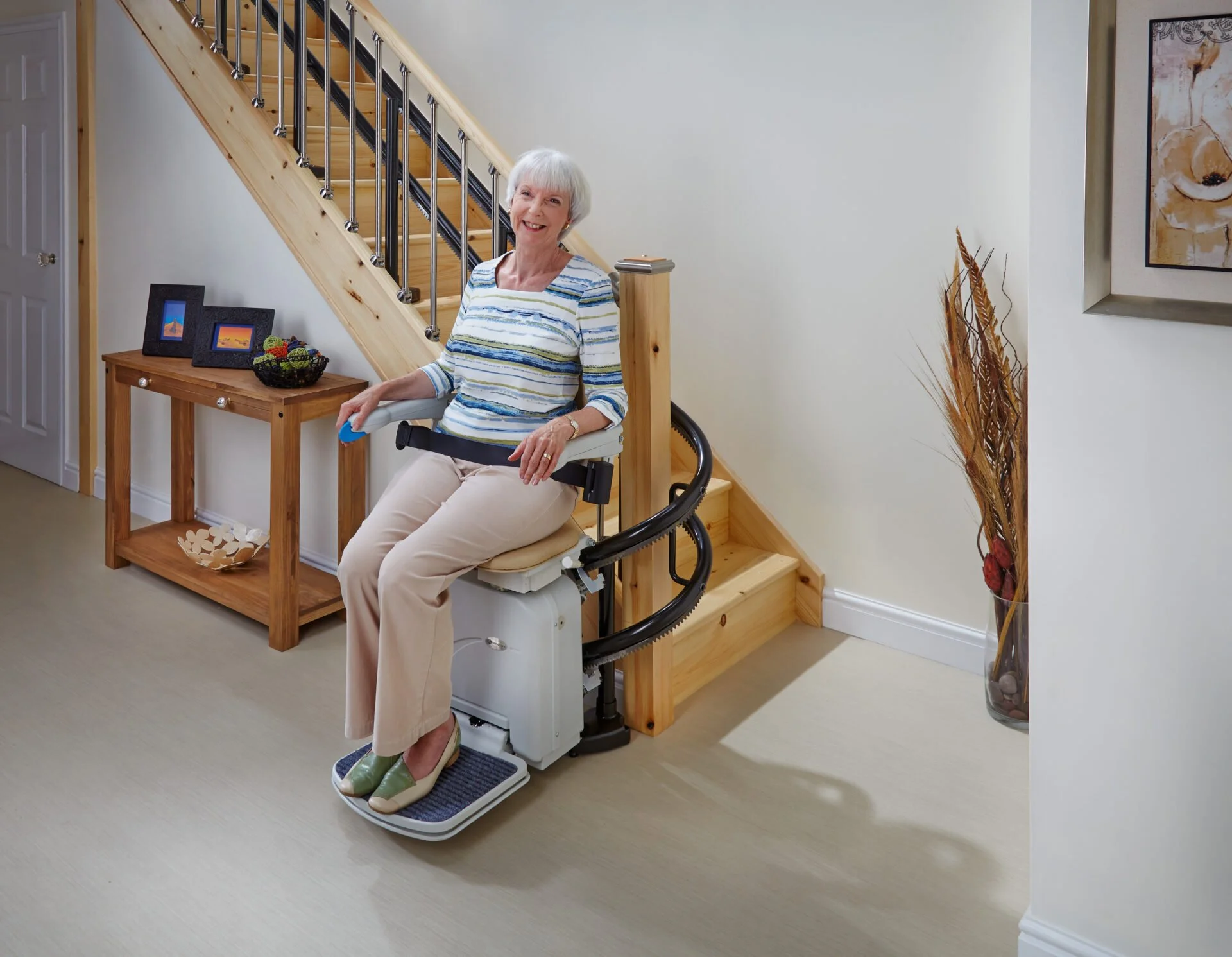
Stairlifts support movement up and down stairs while seated. They are ideal when stairs are the primary barrier but the person can still transfer independently.
Vertical platform lifts move a person between levels while standing or seated in a wheelchair. They are often used when stairs are not feasible at all or when wheelchair access is needed.
Overhead patient lifts assist with transfers between surfaces, such as bed to wheelchair or wheelchair to bathroom. They are designed for individuals who need help lifting their body weight safely.
Each system serves a different need. The right choice depends on how and where mobility is limited.
Assessing the Home Environment
A lift system does not exist in isolation. It interacts with the home. Stair width, ceiling height, doorway placement, room layout, and floor levels all influence what is possible.
Walk through the home with fresh eyes. Notice where your loved one hesitates. Notice where assistance is required. Pay attention to tight spaces, turns, and transitions.
The goal is not to force a system into the home, but to find a system that works with the space as it is or with minimal modification.
Safety as the Primary Lens
Safety should guide every decision. Falls are one of the greatest risks for people with limited mobility. Transfers, stairs, and uneven surfaces are common points of injury.
A lift system should reduce these risks, not introduce new ones. It should feel stable, predictable, and easy to use. Controls should be intuitive. Movements should be smooth. Emergency features should provide reassurance.
If a system feels intimidating or complicated, it may not be the right fit.
Preserving Independence Wherever Possible
One of the greatest fears associated with lift systems is the fear of dependence. Many people worry that once a lift is introduced, independence will disappear.
In reality, the right lift system often restores independence. It allows people to move without waiting for help. It reduces the need for physical assistance. It enables privacy and autonomy.
When choosing a system, consider how it supports self directed movement. Can your loved one operate it independently? Does it reduce reliance on caregivers rather than increase it?
Independence is not about doing everything alone. It is about having control over one’s own life.
Considering Physical Strength and Endurance
Limited mobility often comes with limited strength or endurance. A lift system should not require excessive effort to use. Transfers should be manageable. Controls should not require fine motor skills that may be difficult.
Consider how much standing, gripping, or balancing is required. A system that demands strength your loved one does not have will quickly become unused.
The best system works with the body as it is, not as it once was.
The Role of Comfort and Dignity
Comfort is not a luxury. It is essential to dignity. A lift system that feels uncomfortable, awkward, or exposing can erode confidence and willingness to use it.
Seats should be supportive. Harnesses should feel secure without being restrictive. Movements should be smooth and quiet. The experience should feel respectful.
Dignity also comes from discretion. Many modern systems are designed to blend into the home rather than announce themselves. This subtlety matters deeply to many users.
Involving Your Loved One in the Decision
Whenever possible, involve your loved one in every step of the decision. Let them try different systems. Let them ask questions. Let them express concerns.
This involvement transforms the decision from something being done to them into something being done with them. It builds trust and acceptance.
Even when cognitive or physical limitations exist, inclusion remains important. It honors the person’s role in their own life.
Caregiver Needs and Safety
Lift systems also protect caregivers. Assisting with transfers or stairs places significant strain on the body. Over time, this strain can lead to injury.
A lift system that supports safe caregiving reduces burnout and physical harm. It allows caregivers to focus on connection rather than exertion.
When evaluating options, consider how the system supports both the user and the caregiver.
Planning for Change Over Time
Mobility rarely remains static. It may improve, decline, or fluctuate. Choosing a lift system with adaptability in mind provides peace of mind.
Some systems can be adjusted, expanded, or repurposed. Others are designed for specific stages. Understanding this flexibility helps families plan responsibly.
Planning for change is not pessimistic. It is practical and compassionate.
Emotional Resistance and How to Navigate It
Some loved ones may resist the idea of a lift system. This resistance often comes from fear rather than logic. Fear of stigma. Fear of change. Fear of loss.
Approach these conversations gently. Focus on safety and comfort rather than limitation. Share stories of how the system can make life easier rather than what it replaces.
Sometimes acceptance comes slowly. Patience matters.
Real Life Reflections on Choosing Well
I once spoke with a family who delayed choosing a lift system because they feared upsetting their loved one. When a fall finally occurred, the urgency changed everything. After the system was installed, the loved one admitted something surprising. They wished it had been done sooner.
Another family involved their loved one from the beginning. They explored options together, discussed fears openly, and made the decision collaboratively. The lift system became a shared success rather than a reluctant compromise.
These stories highlight the value of thoughtful, timely decisions.
Professional Assessment and Guidance
Choosing a lift system is not something families need to do alone. Professionals assess mobility, environment, and safety needs holistically. They recommend solutions tailored to the individual rather than generic answers.
This guidance reduces uncertainty and ensures the system truly fits the person and the home.
Balancing Practicality With Compassion
Practical considerations like cost, installation time, and maintenance matter. But compassion should always guide the process. The right lift system balances logistics with humanity.
It supports daily life while honoring the person’s identity and values.
The Gift of Peace of Mind
When the right lift system is in place, something remarkable happens. Worry fades. Tension eases. Life opens up again.
The home becomes accessible rather than restrictive. Loved ones relax, knowing safety is supported. The person at the center regains confidence and control.
That peace of mind is the true measure of a good decision.
Conclusion
Choosing a lift system for a loved one with limited mobility is an act of deep care. It requires listening, empathy, and thoughtful evaluation. The right system supports safety without sacrificing dignity. It restores independence rather than limiting it. It adapts to change rather than resisting it.
When chosen with intention, a lift system becomes more than equipment. It becomes a bridge to continued living, connection, and confidence.
At KGC, we believe mobility solutions should be guided by compassion as much as expertise. Our approach centers on understanding the person first, then matching them with a solution that truly supports their life and home. If you are navigating this decision for someone you love, our team is here to help you move forward with clarity, respect, and care.
You can reach our team through the KGC Contact Page.
