
Choosing a Stairlift for Someone With Limited Balance or Stability
Introduction
I remember standing at the bottom of a staircase one evening, watching someone I love pause before taking the first step. It was a pause I had not seen before. Not dramatic. Not fearful. Just cautious. They reached for the railing, adjusted their footing, and waited a moment longer than usual. The stairs had not changed, but their body had. Balance had become unpredictable. Stability no longer felt guaranteed.
Later, they admitted that the stairs were now the most stressful part of their day. Not because they could not walk, but because they could not always trust themselves. Some days felt fine. Other days, their body seemed slightly out of sync. A small wobble. A delayed reaction. Enough to make each trip up or down feel like a calculated risk.
When we began talking about stairlifts, the conversation was not about convenience. It was about safety. It was about confidence. It was about finding a way to move through the home without constantly bracing for a fall. Choosing the right stairlift for someone with limited balance or stability is not just a technical decision. It is deeply personal. It touches on dignity, trust, and the desire to remain independent without feeling fragile.
This article explores how to choose a stairlift for someone with limited balance or stability. It looks at the physical realities of balance challenges, the features that matter most, and the emotional considerations that often go unspoken. It is written for families and individuals who want a solution that feels supportive rather than restrictive, and empowering rather than alarming.
Understanding What Limited Balance Really Means
Limited balance does not look the same for everyone. For some people, it shows up as occasional dizziness. For others, it is muscle weakness, neurological changes, or difficulty coordinating movement. Some days may feel steady. Other days may feel uncertain.
What unites these experiences is unpredictability. The person may not know when their balance will falter. That uncertainty is often more distressing than the physical limitation itself. It turns everyday tasks into moments of vigilance.
Stairs amplify this challenge. They require precise foot placement, controlled weight shifts, and the ability to recover quickly if something goes wrong. For someone with limited stability, stairs demand a level of trust in the body that may no longer be there.
A stairlift removes that demand. It replaces physical balance with mechanical reliability. But only if it is chosen thoughtfully.
Why Balance Concerns Change Stairlift Priorities
When choosing a stairlift for general mobility support, comfort and fit are often primary considerations. When balance is limited, safety features move to the forefront. The stairlift must support the body fully. It must reduce the need for standing, turning, or shifting weight. It must feel stable at every moment of use.
This changes what matters most in the selection process. Seat design, transfer ease, restraint systems, and control placement become critical. The goal is not just to move up and down stairs, but to do so without triggering fear or instability.
A well chosen stairlift becomes a stabilizing presence rather than another thing to manage.
The Importance of a Secure Seat
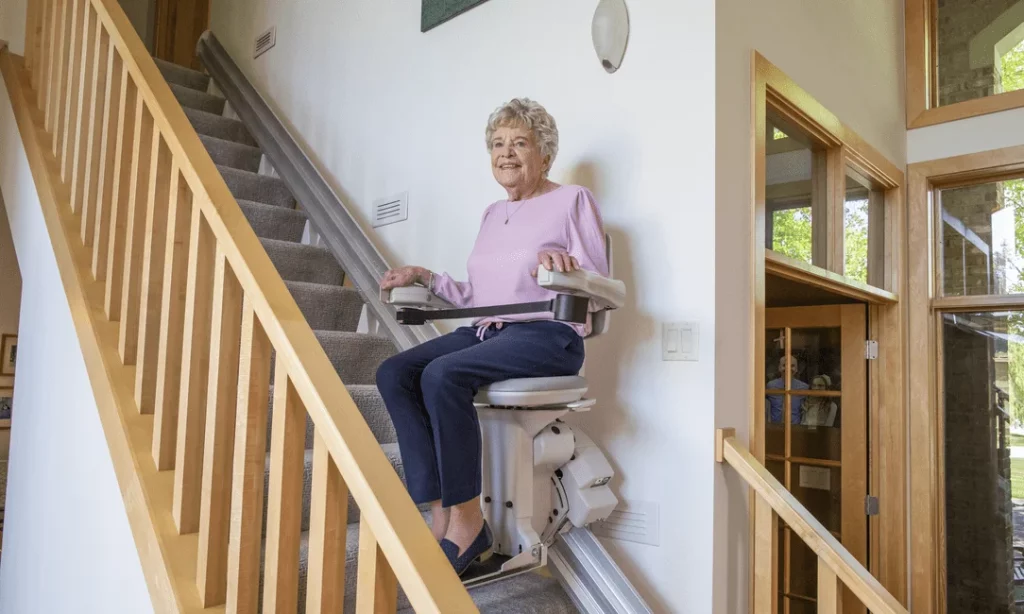
For someone with limited balance, the seat is the heart of the stairlift experience. It must feel secure, supportive, and easy to use. A seat that is too narrow, too slippery, or too shallow can undermine confidence.
Look for a seat with adequate width and depth to support the body comfortably. Contoured seating helps maintain posture without effort. Armrests should feel sturdy and well positioned, offering something solid to hold during transfers.
The seat height matters as well. A seat that is too high makes sitting down difficult. A seat that is too low makes standing up risky. Proper seat height allows the user to sit and stand with minimal strain and without sudden shifts in balance.
When the seat feels like a stable chair rather than a moving device, confidence grows.
Swivel Seats and Safe Transfers
Transfers are often the most vulnerable moment for someone with balance challenges. Getting on and off the stairlift requires standing, turning, and sitting. These movements can feel risky without proper support.
Swivel seats are designed to reduce that risk. When the seat rotates at the top of the stairs, it allows the user to exit onto the landing rather than facing the staircase. This orientation reduces the chance of losing balance near the edge.
Some swivel seats lock securely in place during transfers, preventing unexpected movement. This locking feature is especially important for users with limited stability. It ensures that the seat does not shift as weight is applied.
A smooth, controlled swivel makes the transition feel natural rather than precarious.
Seat Belts and the Feeling of Security
Seat belts are not just safety features. They are emotional anchors. For someone with balance concerns, knowing they are secured can make the difference between relaxing and tensing throughout the ride.
Modern stairlifts offer seat belts that are easy to fasten and comfortable to wear. Some are designed to be used with one hand. Others offer additional torso support for users who need it.
The presence of a seat belt should never feel restrictive. When chosen correctly, it feels reassuring. It allows the user to trust the lift and focus on the ride rather than bracing themselves.
Footrests and Stability
Footrests play a surprisingly important role in balance. A stable footrest supports the lower body and prevents the feet from dangling or shifting during the ride. For users with limited balance, this support reduces the need to adjust posture mid ride.
Look for footrests that are wide, non slip, and positioned at a comfortable height. Some footrests fold automatically, reducing the need to bend down. Others include sensors that stop the lift if an obstacle is encountered, adding another layer of safety.
When the lower body feels supported, the entire experience feels more secure.
Control Placement and Ease of Use
Controls should be intuitive and easy to reach. For someone with balance challenges, fumbling for controls can create stress or require awkward movements.
Many stairlifts use a simple toggle or joystick located on the armrest. This allows the user to operate the lift while seated securely. The motion should be gentle and responsive, not jerky or overly sensitive.
Some users benefit from larger controls or alternative control placements. The key is minimizing effort and movement while maximizing clarity and confidence.
Smooth Start and Stop Technology
Sudden movement can destabilize someone with limited balance, even while seated. That is why smooth start and stop technology is essential. This feature ensures the stairlift accelerates and decelerates gradually rather than abruptly.
A smooth ride allows the body to remain relaxed. It prevents the sensation of being pulled or jolted. For users with inner ear issues or neurological conditions, this gentle motion is especially important.
When the ride feels calm and predictable, trust builds quickly.
Rail Design and Ride Quality
The rail guides the stairlift and influences how stable the ride feels. A well designed rail supports smooth movement and reduces vibration. For someone with balance concerns, even small vibrations can feel unsettling.
Straight rails tend to offer the simplest and smoothest ride. Curved rails, when designed properly, are equally stable but require precise engineering. The quality of the rail installation matters greatly.
A quiet, steady glide contributes to a sense of security that cannot be overstated.
Weight Capacity and Stability
Using a stairlift within its intended weight capacity is essential for safety and longevity. For users with limited balance, stability under load is especially important. The lift should feel solid and unmoving, not strained.
Choosing a stairlift with an appropriate or slightly higher weight capacity can enhance stability and confidence. It ensures the motor and rail are operating well within their limits.
This margin of support can make the lift feel more dependable.
The Role of Armrests in Balance Support
Armrests are more than comfort features. They provide critical support during transfers. For someone with limited balance, being able to lean slightly on sturdy armrests while sitting or standing adds a layer of safety.
Armrests should be well padded but firm. They should be positioned to allow natural leverage without requiring awkward reach. Folding armrests can also help maintain clear pathways when the lift is not in use.
The right armrest design supports both physical stability and emotional reassurance.
Considering Standing Versus Seated Stairlifts
In some cases, people with balance issues consider standing or perch style stairlifts due to space constraints. However, limited balance often makes standing lifts less suitable.
Seated stairlifts provide full body support and reduce the need for active balance. For most users with stability concerns, seated models offer significantly greater safety and comfort.
Choosing seated support is not about limitation. It is about prioritizing safety and ease.
Cognitive and Sensory Considerations
Balance challenges sometimes coexist with cognitive or sensory changes. Visual perception, reaction time, or spatial awareness may be affected. These factors influence stairlift selection as well.
Clear controls, simple operation, and predictable behavior are essential. The lift should not require complex steps or decision making. Visual indicators and audible cues can help reinforce understanding.
A stairlift should reduce cognitive load, not add to it.
The Emotional Weight of Balance Loss
Balance loss can be emotionally difficult. It often feels invisible to others but deeply personal to the individual. Accepting help can feel like acknowledging vulnerability.
Choosing a stairlift that feels dignified and supportive helps ease this emotional weight. When the stairlift feels like a tool rather than a symbol, acceptance comes more easily.
Language matters too. Framing the stairlift as a safety enhancement rather than a necessity shifts perspective. It becomes a proactive choice rather than a reactive one.
How a Stairlift Restores Confidence
One of the most powerful benefits of the right stairlift is restored confidence. When the fear of falling fades, people move more freely. They stop avoiding parts of their home. They stop planning their day around the stairs.
Confidence affects posture, mood, and overall wellbeing. It allows people to engage with their environment rather than defend against it.
A stairlift chosen with balance in mind becomes a source of quiet empowerment.
Involving the User in the Decision
Whenever possible, the person who will use the stairlift should be involved in the selection process. Trying out different models, feeling the seat, operating the controls, and experiencing the ride can make a tremendous difference.
This involvement fosters ownership rather than resistance. It allows concerns to surface and be addressed. It ensures the final choice truly fits the user’s needs and preferences.
Listening matters.
Professional Assessment and Customization
Balance challenges are nuanced. A professional assessment helps identify which features will offer the most benefit. Experts consider posture, strength, range of motion, and transfer ability.
Customization may include seat adjustments, control modifications, or additional safety features. This tailored approach ensures the stairlift supports the individual rather than forcing them to adapt.
Professional guidance transforms a complex decision into a confident one.
Planning for Future Changes
Balance and stability can change over time. Choosing a stairlift with adaptability in mind supports long term use. Features that accommodate future needs prevent premature replacement.
This forward thinking approach provides peace of mind. It acknowledges uncertainty without fear.
Real Life Reflections on the Right Choice
I once spoke with someone who had delayed getting a stairlift because they felt embarrassed about their balance issues. When they finally chose a model with a supportive seat and secure transfers, they described an unexpected feeling. Relief.
They said they no longer held their breath on the stairs. They no longer rehearsed each step mentally. The stairlift did not make them feel weaker. It made them feel safer.
That distinction matters.
Conclusion
Choosing a stairlift for someone with limited balance or stability is about more than mechanics. It is about creating a sense of safety that allows life to continue with confidence. The right stairlift supports the body fully, simplifies movement, and reduces risk during the most vulnerable moments.
Features like secure seating, stable transfers, smooth motion, and intuitive controls work together to create an experience that feels calm and dependable. When chosen thoughtfully, a stairlift becomes a trusted ally rather than a reminder of limitation.
At KGC, we believe mobility solutions should meet people with understanding, respect, and care. Our approach to stairlift selection centers on individual needs, especially when balance and stability are concerns. If you or someone you love is navigating these challenges, our team is here to help you find a stairlift that supports safety, dignity, and everyday confidence.
You can reach our team through the KGC Contact Page.
