
How Overhead Patient Lifts Reduce Injury Risk for Caregivers
Introduction: The Moment Caregiving Changes
It often begins quietly.
One day, helping someone stand feels simple. A steady arm, a shared laugh, a small moment of teamwork between two people who trust each other. Then, gradually, transfers become harder. A chair feels lower than it used to. Getting in and out of bed requires more effort. Movements take longer. What was once instinctive becomes physically demanding.
Many caregivers describe a moment when they realize they are calculating every motion before it happens. They adjust their footing, brace their back, and hope their strength will be enough. They rarely complain. Caregiving comes from love, commitment, and responsibility. Yet beneath that devotion lives a reality few talk about openly: caregiving can be physically risky.
There is often a turning point when someone suggests an overhead patient lift. At first, the idea can feel unfamiliar or even intimidating. Some worry it might feel clinical. Others wonder if it will change the atmosphere of the home. But once installed, families frequently say the same thing.
They wish they had done it sooner.
An overhead patient lift does not replace care. It protects it. It preserves the health of caregivers while supporting dignity and independence for the person receiving assistance. Understanding how these systems reduce injury risk reveals something deeper than equipment innovation. It reveals a shift toward safer, more sustainable caregiving for everyone involved.
The Hidden Physical Demands of Caregiving
Caregiving rarely looks dramatic from the outside. It happens in everyday moments. Helping someone move from bed to a wheelchair. Assisting with bathing. Supporting balance while dressing. Guiding someone safely into a favorite chair.
Each of these actions may seem small individually, yet together they create repeated physical strain. Unlike professional movers who lift occasionally with specialized equipment, caregivers perform transfers multiple times every day, often in confined spaces and unpredictable conditions.
Human bodies are not designed to lift other human bodies repeatedly without support. Even caregivers who are strong, experienced, and attentive face risks. Back injuries, shoulder strain, joint stress, and muscle fatigue are among the most common challenges reported by family caregivers and healthcare professionals alike.
The danger is not always immediate. Injuries often develop slowly, like a thread gradually fraying under tension. One awkward movement leads to soreness. Soreness becomes chronic pain. Eventually, the caregiver may struggle to provide assistance safely at all.
Overhead patient lifts interrupt this cycle before injury becomes inevitable.
Understanding What an Overhead Patient Lift Really Is
An overhead patient lift is often misunderstood. People imagine bulky machinery or hospital equipment dominating their home. In reality, modern systems are thoughtfully designed mobility solutions that integrate quietly into living spaces.
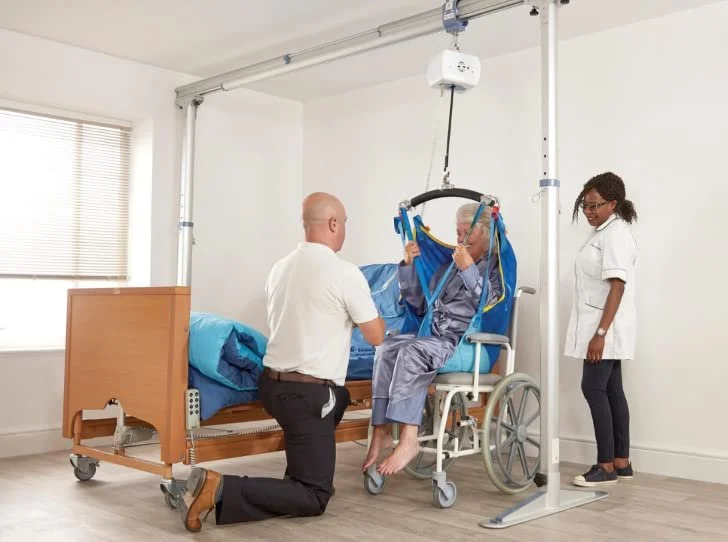
A track is installed along the ceiling, allowing a motorized lift to glide smoothly between locations such as a bed, bathroom, wheelchair, or seating area. A supportive sling gently cradles the individual while the lift performs the physical work of transferring.
Instead of lifting with muscle strength, caregivers guide movement with calm precision.
The difference is similar to pushing luggage on wheels rather than carrying it up several flights of stairs. The destination remains the same, but the effort and risk change dramatically.
What makes overhead lifts particularly effective is consistency. Every transfer follows a controlled, predictable motion. There is no sudden weight shift, no unstable pivot, no need for caregivers to twist or strain their bodies.
Safety becomes built into the process itself.
The Reality of Caregiver Injuries
Caregiver injuries are more common than many people realize. Healthcare professionals frequently cite patient handling as one of the leading causes of workplace injury. At home, the risks are even greater because family caregivers often lack specialized training or equipment.
A caregiver might attempt to help someone stand during a moment of urgency. The individual loses balance unexpectedly. Instinct takes over, and the caregiver absorbs the full weight to prevent a fall. The result may be immediate pain or an injury that appears days later.
What makes these situations especially difficult is the emotional context. Caregivers prioritize safety and comfort above their own physical well-being. They continue lifting even when their bodies signal strain.
Overhead lifts remove the need for heroic effort. Instead of relying on strength alone, caregivers gain mechanical support designed specifically to prevent injury.
The goal is not to care less. It is safer care.
Preserving Dignity Through Safer Transfers
One of the most powerful benefits of overhead patient lifts extends beyond physical safety.
Transfers become calmer experiences.
Manual lifting can feel rushed or stressful for both individuals involved. Caregivers worry about maintaining balance. The person receiving assistance may feel anxious about slipping or causing strain.
With an overhead lift, movement slows down in a reassuring way. The transfer becomes smooth, controlled, and predictable. Individuals often describe feeling secure rather than dependent.
Dignity grows when people feel stable and respected during moments of vulnerability. Instead of being physically carried, they are supported through a system designed to protect their comfort.
The emotional difference is profound.
A Day in the Life Before and After a Lift
Before installing a lift, mornings may begin with careful preparation. The caregiver braces their body, counts aloud, and hopes the transfer goes smoothly. Both individuals concentrate intensely, aware that one wrong movement could lead to injury.
After installation, the atmosphere changes.
Morning routines feel unhurried. The caregiver operates the lift with gentle control. The individual moves comfortably without fear of falling. Conversation replaces tension.
The energy once spent on physical exertion shifts toward meaningful interaction. Families often rediscover moments of connection that had been overshadowed by physical stress.
Caregiving becomes sustainable again.
Reducing Risk Beyond the Back and Shoulders
Most discussions about caregiver injury focus on back strain, yet the risks extend further.
Manual transfers place stress on wrists, knees, hips, and neck muscles. Repeated bending and twisting can affect posture and long-term mobility. Even experienced caregivers unconsciously adopt compensatory movements that increase injury likelihood over time.
Overhead lifts eliminate these awkward motions. Caregivers maintain natural body alignment while guiding transfers. The lift absorbs weight evenly, removing pressure from joints and muscles.
The result is cumulative protection. Each safe transfer prevents micro injuries that might otherwise build into serious health concerns.
Caregivers remain capable of providing support for longer periods without sacrificing their own well-being.
Emotional Relief for Caregivers
Physical strain is only part of the caregiving experience. Emotional stress often accompanies manual lifting.
Caregivers worry constantly about accidents. They fear dropping someone, losing balance, or causing discomfort unintentionally. Even when transfers succeed, anxiety lingers.
Installing an overhead lift often brings unexpected emotional relief. Caregivers describe sleeping better, feeling calmer, and approaching daily routines with renewed confidence.
The lift becomes a partner in care rather than a replacement for human connection.
Knowing that safety measures are in place allows caregivers to focus on compassion rather than risk management.
Supporting Independence Instead of Limiting It
A common misconception is that mobility equipment reduces independence. In reality, overhead lifts frequently expand it.
Individuals who once avoided transfers due to discomfort may feel more willing to move between rooms. Access to bathing areas improves hygiene and self-confidence. Participation in daily routines becomes easier.
Independence is not defined by doing everything alone. It is defined by having the freedom to participate fully in life with appropriate support.
Overhead lifts create opportunities rather than restrictions.
Designing Lifts That Belong in a Home
Modern overhead lift systems are designed with aesthetics in mind. Tracks can follow architectural lines. Equipment remains compact and discreet. Many systems blend seamlessly with existing décor.
Families often worry their home will feel institutional after installation. Instead, many find that thoughtful design enhances the space. The lift becomes another functional feature, much like recessed lighting or built-in shelving.
Accessibility and style coexist comfortably.
Homes remain warm, welcoming environments that reflect personal identity.
Preventing Falls Before They Happen
Falls are among the greatest risks in caregiving environments. Even a minor slip can lead to serious consequences for both the caregiver and the individual receiving assistance.
Manual transfers introduce moments of instability. Feet may catch on flooring transitions. Balance may shift unexpectedly. Fatigue increases vulnerability.
Overhead lifts remove these unstable moments. Transfers occur within a controlled path guided by ceiling-mounted tracks. The individual remains fully supported throughout movement.
Prevention replaces reaction.
Instead of responding to accidents after they occur, families create environments where accidents are far less likely.
Learning Curve and Ease of Use
Many families worry that operating a lift will feel complicated. In practice, most caregivers learn quickly.
Controls are intuitive. Movements are smooth and gradual. Professional installation teams provide training that builds confidence from the very first use.
Caregivers often compare the experience to learning a new household appliance. Initial hesitation gives way to familiarity within days.
The simplicity of operation becomes one of the system’s greatest strengths.
Long-Term Sustainability of Caregiving
Caregiving is rarely a short-term commitment. It often evolves over years, requiring endurance as much as compassion.
Without proper support, physical strain can limit a caregiver’s ability to continue providing assistance at home. Injuries may force difficult decisions about living arrangements or external care options.
Overhead lifts help extend the sustainability of home caregiving. By protecting caregivers physically, they allow families to maintain routines and relationships longer.
The lift becomes an investment in continuity.
When Families Realize the Difference
Many families describe a moment when they fully understand the impact of an overhead lift. It might occur during the first effortless transfer or after a week without physical soreness.
Caregivers notice they have energy left at the end of the day. Individuals receiving assistance feel more relaxed. The household rhythm changes subtly but meaningfully.
Caregiving stops feeling like a physical challenge and begins feeling manageable again.
That shift often brings renewed optimism.
Beyond Safety: Restoring Confidence
Confidence is rarely discussed in conversations about mobility equipment, yet it plays a central role.
Caregivers gain confidence knowing they can provide support safely. Individuals regain confidence moving between spaces without fear.
Confidence encourages participation in daily life. It supports emotional wellbeing. It strengthens relationships built on trust rather than worry.
An overhead lift does more than prevent injury. It restores assurance.
A Shared Experience of Care
Caregiving is deeply relational. Every transfer represents cooperation between two people.
Overhead lifts transform that interaction. Instead of strain and uncertainty, transfers become collaborative moments guided by technology designed to help both participants succeed.
The caregiver remains present and attentive. The individual remains respected and supported.
Care becomes a shared experience grounded in safety.
Conclusion: Safer Care Begins With Thoughtful Support From KGC
Overhead patient lifts represent more than mechanical innovation. They represent a commitment to protecting caregivers while preserving dignity and independence for those receiving assistance.
By reducing physical strain, preventing injuries, and creating calm, predictable transfers, these systems allow families to focus on what truly matters: connection, comfort, and quality of life at home.
At KGC, mobility and accessibility solutions are never one size fits all. Every home, every caregiver, and every individual brings unique needs and goals. KGC’s approach centers on listening first, designing thoughtfully, and delivering customized overhead lift solutions that blend safety, functionality, and style.
From initial consultation to installation and ongoing support, KGC works alongside families to create environments where caregiving feels sustainable, empowering, and secure.
If you are exploring ways to make caregiving safer and more comfortable, connect with KGC’s accessibility specialists today.
Visit the KGC Contact Page to start your conversation.
