
How Much Space Do You Really Need for a Home Elevator?
Introduction
The idea sounded bigger than the house.
Someone I care about stood in the hallway, looking around as if trying to imagine walls shifting and ceilings opening. “I love the idea of an elevator,” they said slowly, “but we don’t live in a mansion. Where would it even go?”
That question stops many homeowners before the conversation even begins. Residential elevators carry an old image with them. Large shafts. Expansive foyers. Grand staircases. But modern home elevators are nothing like their commercial cousins in office buildings or hotels.
The truth is, today’s residential elevator systems are designed specifically for real homes. Modest homes. Renovated homes. Multi level townhomes. Homes where space matters and every square foot counts.
Understanding how much space you really need is less about square footage and more about thoughtful planning. This article explores what kind of space residential elevators require, how they are integrated into existing homes, and why the answer is often more manageable than people expect.
Rethinking What an Elevator Looks Like
When most people imagine an elevator, they picture something large and industrial. But residential elevators are built on a completely different scale.
They are designed for private use. That means fewer passengers, shorter travel distances, and more compact systems.
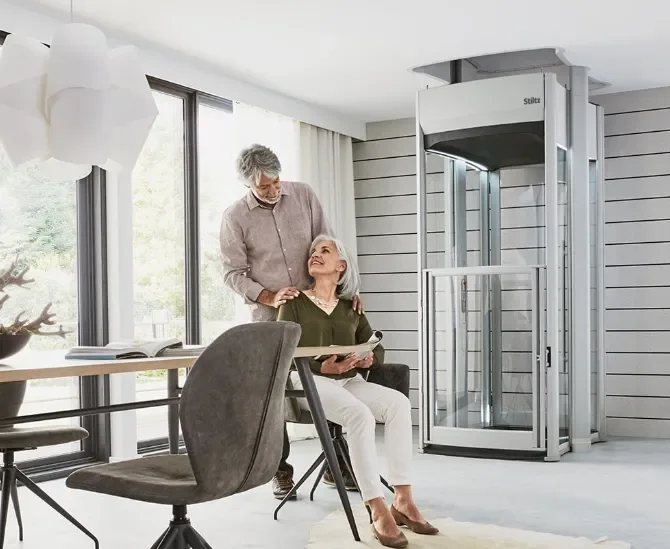
Instead of dominating a room, many modern elevators occupy a footprint similar to a small closet. When integrated thoughtfully, they feel intentional rather than intrusive.
The first shift is visual. It is not about building an elevator tower. It is about carving out vertical continuity within the existing home.
The Basic Footprint
Most residential elevators require a space roughly comparable to a large wardrobe or small walk in closet. The exact dimensions vary depending on the type of system, but the footprint is often surprisingly modest.
For many homeowners, this means repurposing an unused closet on each floor, stacking storage spaces vertically, or allocating a corner during a renovation.
In some homes, the elevator shaft fits into the same amount of space as a pantry or linen closet.
It is less about adding space and more about reimagining it.
Height and Vertical Planning
Beyond footprint, vertical clearance matters. Elevators require room to travel between floors and small allowances above and below for safe operation.
In new construction, this can be planned seamlessly. In existing homes, careful measurement determines what adjustments may be needed.
Ceiling heights, floor thickness, and structural framing all play a role.
But even in retrofits, solutions are often possible without dramatic reconstruction.
Different Elevator Types, Different Space Needs
Not all residential elevators require the same configuration.
Traditional hydraulic and traction elevators use a shaft enclosed by walls. These systems require slightly more structural space but provide a fully enclosed ride.
Shaftless elevators, on the other hand, are designed for minimal footprint. They travel between two floors without a full enclosed shaft, making them ideal for compact homes.
The type of system chosen influences how much space is needed, but options exist across a range of layouts.
Integrating Into Existing Homes
Many homeowners assume elevators are only realistic during new construction. In reality, retrofitting an elevator into an existing home is increasingly common.
Installers often identify stacked closets, storage rooms, or underused corners that align vertically between floors.
With careful design, the elevator becomes part of the home’s architecture rather than an obvious addition.
Creativity transforms possibility.
The Emotional Barrier of “Losing Space”
Even when the required footprint is small, the emotional reaction to sacrificing space can feel significant.
Closets store memories. Storage rooms hold seasonal items. Repurposing these areas requires adjustment.
But many homeowners find that trading a small amount of storage for complete vertical access is more than worthwhile.
Access creates freedom. Storage can be reorganized.
Open Concept Solutions
In modern open layouts, elevators can be incorporated as architectural features rather than hidden structures.
Glass panels, integrated lighting, and clean finishes allow elevators to feel like design elements.
When approached thoughtfully, an elevator can enhance the aesthetic rather than disrupt it.
Space planning becomes part of design rather than compromise.
Space for Wheelchairs and Walkers
Interior cab size influences usability. For homeowners planning long term accessibility, ensuring enough interior space for wheelchairs or mobility aids is important.
This may slightly increase footprint, but the additional comfort and flexibility often justify the difference.
Planning for ease of movement inside the cab supports independence over time.
Mechanical Room Considerations
Some elevator systems require small mechanical components placed nearby. Others integrate machinery within the shaft.
Understanding where these elements fit is part of the spatial conversation.
Modern systems increasingly minimize separate machine rooms, reducing overall space demands.
Technology continues to shrink the footprint of accessibility.
Real Life Reflections
I once worked with a family who believed their home was too small for an elevator. After evaluation, we identified stacked closets that aligned perfectly between two floors. The installation required thoughtful framing but no major expansion.
Another homeowner incorporated an elevator during a kitchen renovation by reconfiguring pantry space. They later described it as the most transformative change in the home.
Often, the solution is already there waiting to be seen.
Planning During Renovation
If a home is already undergoing renovation, adding elevator space becomes significantly easier.
Walls may already be open. Layouts may already be shifting. Allocating vertical space during that process reduces future disruption.
Planning early prevents retrofitting challenges later.
Considering Future Space Needs
Space planning for an elevator is not only about fitting the system today. It is about anticipating how needs may change.
Ensuring enough interior room for mobility devices or caregivers prevents future regret.
Future proofing is a spatial decision as much as a financial one.
When Space Truly Is Limited
In rare cases, homes may not have feasible vertical alignment for a traditional elevator.
In those situations, alternative solutions such as vertical platform lifts may provide accessibility without full shaft requirements.
The key is assessment, not assumption.
Most homes have more potential than their owners realize.
Shifting the Perspective
Instead of asking whether there is space for an elevator, it can be helpful to ask whether there is space for uncertainty.
Living in a multi level home without long term access planning can create emotional tension over time.
Allocating space for an elevator creates clarity and security.
Space becomes an investment in stability.
Conclusion
Residential elevators require far less space than many homeowners expect. With footprints often comparable to a small closet and flexible installation options available, modern systems are designed to integrate into real homes, not just luxury estates. Whether through stacked closets, corner configurations, or renovation planning, thoughtful design makes vertical access achievable without overwhelming the layout.
At KGC, we approach residential elevator planning with both precision and creativity. Our goal is to identify practical solutions that preserve your home’s character while creating seamless vertical mobility. If you are wondering whether your home has the space for an elevator, our team is here to help you explore the possibilities with clarity and confidence.
You can reach our team through the KGC Contact Page.
