
Why More Homeowners Are Choosing Residential Elevators Over Stairlifts
Introduction
The staircase had never been a problem before. It curved gently upward, lined with framed photos and soft lighting. Someone I care about paused halfway up, catching their breath, one hand steady on the railing.
“I could get a stairlift,” they said thoughtfully. “But I’m not sure that’s what I want.”
That hesitation wasn’t about pride. It wasn’t about denial. It was about envisioning the future. A stairlift would solve the immediate issue. But would it solve what came next? Would it adapt if mobility changed further? Would it feel like a long term solution or a temporary adjustment?
More homeowners are asking those same questions. While stairlifts remain an excellent accessibility option for many, residential elevators are becoming increasingly popular among families who want something more comprehensive, more future ready, and more integrated into the design of their home.
This shift is not about replacing one solution with another. It is about understanding why some homeowners are choosing elevators over stairlifts and what that decision represents.
Thinking Beyond the Immediate Need
Stairlifts are often installed in response to a specific challenge. Perhaps climbing stairs has become tiring. Maybe balance feels less predictable. The goal is to make the existing staircase usable again.
Residential elevators, on the other hand, are often chosen with a broader view. They address not just today’s comfort, but tomorrow’s possibilities. They eliminate stairs as a barrier entirely rather than working alongside them.
For homeowners who are planning long term living in their home, that distinction matters.
A Different Kind of Experience
Using a stairlift involves transferring into a seat, fastening a belt, riding along the rail, and transferring off again. It works well, but it is a visible process.
A residential elevator offers a different experience. You step inside. You press a button. You arrive.
There is no pivoting at the top of the stairs. No folding components. No navigating a staircase at all. The movement feels enclosed, smooth, and self contained.
For many homeowners, that experience feels more natural.
Supporting Changing Mobility Levels
One of the most common reasons people choose residential elevators is adaptability.
A stairlift supports someone who can safely transfer in and out of a seated position. But if mobility decreases significantly, transferring may become difficult.
An elevator accommodates wheelchairs, walkers, and caregivers alongside the user. It requires less repositioning and less physical maneuvering.
This flexibility makes it appealing for long term planning.
Eliminating the Visual Presence on Stairs
Stairlifts remain attached to the staircase even when folded. For some homeowners, that is not an issue. For others, it affects how they feel about their home’s appearance.
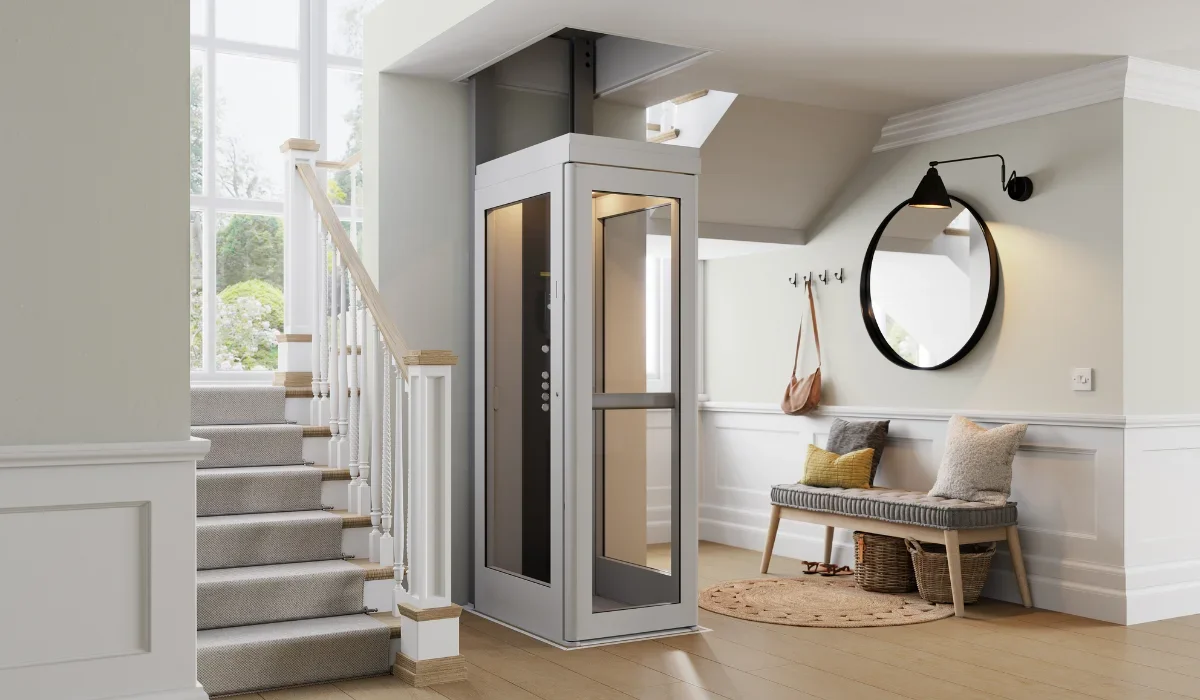
Residential elevators do not alter the staircase visually. They create an entirely separate vertical pathway.
For homeowners who value maintaining the architectural flow of their stairs, elevators feel less intrusive.
A Solution for Multi Level Living
Modern homes often include basements, main floors, upper levels, and sometimes additional living spaces above garages.
Navigating multiple staircases with stairlifts on each level can become complex. An elevator centralizes vertical movement.
For larger homes or families with frequent multi level access needs, this simplicity is compelling.
Enhancing Home Value
Residential elevators are increasingly viewed as desirable features rather than niche additions.
As more homeowners prioritize aging in place and universal design, elevators are seen as forward thinking upgrades.
They can increase property appeal, especially in higher end or multi story homes where long term livability matters.
Quiet Integration Into Modern Design
Advances in residential elevator design have changed perception dramatically. Modern systems are compact, quiet, and customizable.
They can be integrated into closets, corners, or architectural shafts without dominating a room.
Instead of feeling like industrial additions, many now resemble design features.
Accessibility has become aesthetic.
Reducing Physical Strain
For individuals experiencing fatigue, joint discomfort, or limited endurance, stair navigation can feel like a daily negotiation.
Even with a stairlift, getting to the chair, turning, and repositioning requires energy.
An elevator reduces those steps. It simplifies the entire process.
Less effort means more energy for living.
Supporting Multiple Family Members
Homes often serve more than one person’s needs. A stairlift is typically designed for one user at a time.
An elevator supports broader accessibility. A parent carrying laundry. A grandparent using a walker. A child transporting equipment.
Its versatility extends beyond one person.
Emotional Comfort and Privacy
Some homeowners describe stairlifts as feeling visible or transitional. Elevators often feel private and contained.
Stepping into a small enclosed space can feel calmer and more dignified for some individuals.
Privacy is a subtle but powerful factor in decision making.
Real Life Reflections
I once spoke with a couple who initially planned to install a stairlift. After discussing long term goals, they chose a residential elevator instead. Years later, they described it as the best decision they made for future peace of mind.
Another homeowner installed an elevator during a renovation, not because it was urgently needed, but because they wanted to eliminate uncertainty about stairs altogether.
Their common theme was preparation rather than reaction.
When Stairlifts Still Make Sense
Choosing an elevator over a stairlift does not mean stairlifts are inferior.
For many homes, stairlifts remain practical, affordable, and highly effective.
The decision depends on layout, budget, mobility goals, and personal comfort.
Accessibility is never one size fits all.
Long Term Investment Mindset
Residential elevators often require a larger initial investment. But for homeowners committed to staying in their home long term, that investment can provide stability and reassurance.
It transforms vertical access from a workaround into a permanent solution.
Confidence grows when barriers disappear entirely.
Future Proofing Without Waiting
One of the biggest motivations behind choosing a residential elevator is the desire to act before stairs become unmanageable.
Planning early allows homeowners to design intentionally rather than urgently.
Future proofing feels empowering rather than reactive.
A Shift in How We See Accessibility
Accessibility is no longer viewed as a last resort. It is increasingly integrated into modern living.
Residential elevators represent that shift. They combine technology, design, and foresight.
They are not symbols of limitation. They are investments in continuity.
Conclusion
More homeowners are choosing residential elevators over stairlifts because they offer adaptability, privacy, and long term peace of mind. While stairlifts remain valuable solutions for many, elevators eliminate stairs as a barrier entirely and support evolving mobility needs without compromise. For families planning to remain in their homes for years to come, that flexibility makes a meaningful difference.
At KGC, we believe accessibility decisions should align with your future, not just your present. Our approach to residential elevators focuses on thoughtful design, safety, and seamless integration so your home continues to support you at every stage. If you are exploring vertical mobility solutions and want guidance tailored to your goals, our team is here to help you move forward with clarity and confidence.
You can reach our team through the KGC Contact Page.
