
Do You Need a Permit to Install a Ramp? Here’s the Guide
Introduction
The ramp itself was not the difficult part. Someone I care about had already made peace with the decision. They had accepted that the steps leading into their home no longer felt safe, and they were ready to create a solution. What surprised them was the question that came next.
Do I need permission to make my own home accessible?
It felt strange. Accessibility felt personal, private, and necessary. Yet suddenly there were forms, local offices, and unfamiliar rules to consider. It introduced hesitation where there had been clarity.
This moment is more common than most people expect. Installing a ramp is not just a construction decision. It intersects with local building codes, safety regulations, and municipal requirements. These rules are not meant to create barriers. They exist to ensure that ramps are safe, structurally sound, and usable in the ways people truly need.
Understanding whether a permit is required, and why, helps transform confusion into confidence. This guide explains what permits are, when they are required, and how they support both safety and peace of mind.
Why Permits Exist in the First Place
Permits often feel like bureaucratic obstacles, but their purpose is rooted in safety. They ensure that structures added to homes meet standards that protect occupants and visitors.
A ramp is not simply a surface. It is a load bearing structure that must support weight consistently. It must maintain proper slope, stability, and durability.
Permits ensure that ramps are built correctly, not just quickly.
Safety Is the Core Reason Behind Permits
When ramps are improperly designed or built, they can introduce hazards instead of solving them. Steep slopes, unstable supports, or poor drainage increase fall risk.
Permit processes require plans to be reviewed before construction begins. This review identifies potential safety concerns early.
The goal is prevention, not restriction.
How Local Governments Approach Accessibility
Permit requirements vary depending on location. Cities, counties, and municipalities establish their own building codes based on regional conditions and safety priorities.
Some areas require permits for any structural addition. Others may exempt certain ramp types or temporary installations.
Understanding local rules ensures compliance and avoids unexpected complications.
Permanent Ramps Almost Always Require Permits
Permanent ramps built from wood or concrete typically require permits. These ramps alter the structure of the property and remain long term.
Because they become part of the home, they must meet building code requirements related to slope, support, and materials.
Permits verify that these permanent additions are safe and reliable.
Modular Ramps May Have Different Requirements
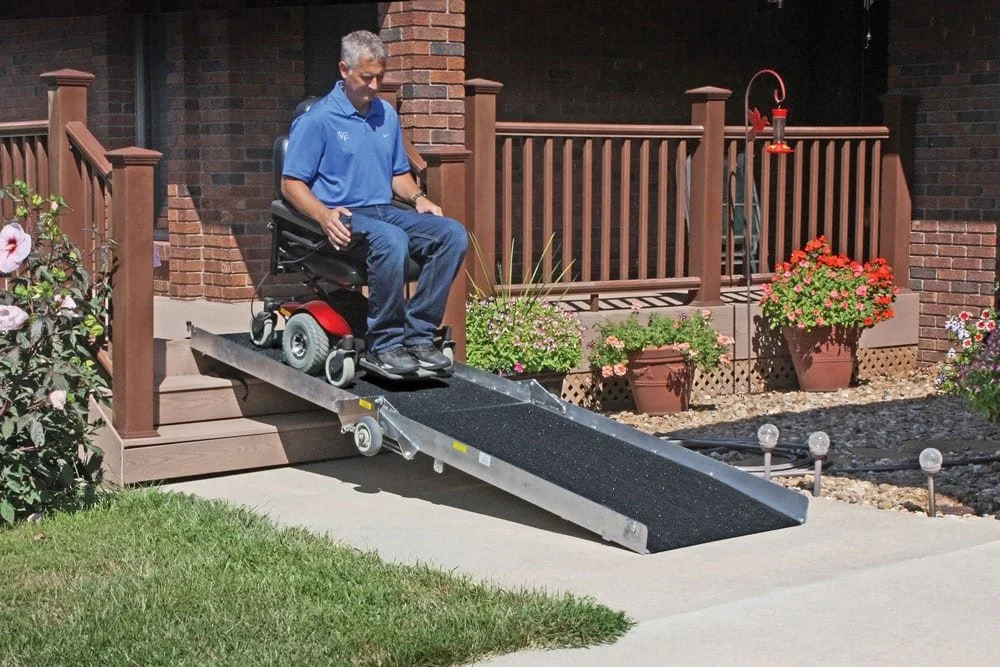
Modular ramps, often made from aluminum, are sometimes treated differently. Because they are not permanently attached and can be removed, permit requirements may vary.
Some jurisdictions still require permits for modular installations, especially if they affect entryways or property boundaries.
Clarifying requirements before installation prevents future issues.
Permits Protect Homeowners
Permits do more than satisfy regulations. They protect homeowners from liability and structural risks.
If an unpermitted ramp fails or causes injury, homeowners may face legal or insurance complications.
Permits provide documentation that the ramp meets safety standards.
The Inspection Process Builds Confidence
Permit approval often includes inspection after installation. Inspectors verify that construction matches approved plans.
This process confirms that the ramp is safe for use.
Inspections provide reassurance rather than inconvenience.
Emotional Resistance to Permit Requirements
Many homeowners feel frustrated by permit processes. They see accessibility as urgent and deeply personal.
Waiting for approval can feel like delay during an already difficult transition.
Understanding that permits exist to protect rather than hinder can ease that frustration.
Avoiding Future Problems
Unpermitted ramps may create complications when selling a home. Buyers, inspectors, or lenders may require documentation or corrections.
Permitted ramps ensure that accessibility improvements do not create future obstacles.
Planning ahead protects flexibility.
How Permits Affect Property Value
Properly permitted accessibility features can enhance property value. They demonstrate thoughtful design and structural integrity.
Unpermitted modifications may raise concerns about quality or compliance.
Permits protect investment.
The Role of Professional Guidance
Professionals familiar with accessibility installations understand local permit requirements. They can help navigate paperwork, design approval, and inspection scheduling.
This guidance simplifies the process and reduces stress.
Expertise transforms uncertainty into clarity.
Permit Costs and Expectations
Permit fees vary depending on location and project scope. While fees introduce additional expense, they contribute to safety assurance.
Considering permit costs as part of the overall project budget prevents surprises.
Transparency supports planning.
Real Life Reflections
I once spoke with a homeowner who initially skipped the permit process to save time. Later, they faced complications when refinancing their home. They ultimately obtained permits retroactively, which proved more stressful than doing it initially.
Another family described relief after completing the permit process. Knowing their ramp was inspected and approved gave them confidence in its safety.
Experience often reinforces preparation.
Temporary Versus Permanent Accessibility
Temporary ramps sometimes avoid permit requirements, but temporary solutions may not provide long term safety or stability.
Understanding the intended duration of use helps determine whether permits apply.
Clarity prevents missteps.
Permits and Accessibility Rights
Accessibility improvements are protected by broader principles of inclusion. Permit requirements do not exist to deny accessibility.
They exist to ensure accessibility solutions are safe and effective.
Safety and accessibility work together.
Building With Confidence
Approaching ramp installation with proper permits transforms the project from uncertain modification into reliable infrastructure.
Confidence replaces hesitation.
Preparation strengthens independence.
Conclusion
Permit requirements for ramp installation vary depending on location, ramp type, and permanence. Permanent ramps usually require permits, while modular ramps may have different requirements depending on local regulations. Permits ensure safety, protect homeowners, and provide confidence that accessibility solutions meet structural standards.
At KGC, we guide families through every step of ramp installation, including understanding permit requirements and navigating approval processes. Our approach ensures that accessibility improvements are not only safe but also fully supported by proper planning. If you are considering installing a ramp and want guidance you can trust, our team is here to help you move forward with clarity and confidence.
You can reach our team through the KGC Contact Page.
