
Do You Need a Permit to Install a Ramp? Here Is the Guide (Copy)
Introduction
The question came up in the driveway on a quiet afternoon. Someone I care about stood looking at their front steps, imagining how life might feel if getting in and out of the house did not require so much effort. The idea of a ramp felt simple. Sensible. Almost obvious.
Then they hesitated and said, I don’t want to do this wrong. I don’t want to get in trouble for trying to make my own home safer.
That pause is something many families experience. Installing a ramp often begins as an act of care and foresight, not construction ambition. Yet the moment the conversation turns to permits, codes, and approvals, what felt straightforward can suddenly feel intimidating.
This article is a clear, human guide to understanding whether you need a permit to install a ramp. It is not written to overwhelm or alarm, but to help homeowners feel confident, prepared, and empowered as they make decisions that support safety, dignity, and independence at home.
Why Permits Come Into the Conversation at All
Permits exist for a reason. They are meant to ensure that structures built onto homes are safe, stable, and compliant with local building standards. Ramps are no exception.
Because a ramp alters how people move into and out of a home, and often involves structural attachment or changes to the exterior, many municipalities treat ramp installations as construction projects rather than simple additions.
Understanding this context helps reframe permits not as obstacles, but as safeguards.
The Short Answer and Why It Is Rarely Enough
Many people ask a simple question. Do I need a permit to install a ramp.
The honest answer is sometimes yes and sometimes no. The reason this answer feels frustrating is because it depends on several factors, including where you live, how the ramp is built, and how it connects to the home.
The better question is not just whether a permit is required, but when and why one might be needed.
How Local Building Codes Influence Permit Requirements
Building codes vary by city, county, and state. Some areas have very clear requirements for ramps, while others evaluate them on a case by case basis.
Local codes may address ramp slope, width, handrails, landing size, attachment methods, and load capacity. If a ramp must meet specific standards, a permit is often required to ensure those standards are followed.
Even when a ramp is intended for accessibility, it is still considered a structural element in many jurisdictions.
Permanent Versus Temporary Ramps
One of the biggest factors in permit requirements is whether the ramp is considered permanent or temporary.
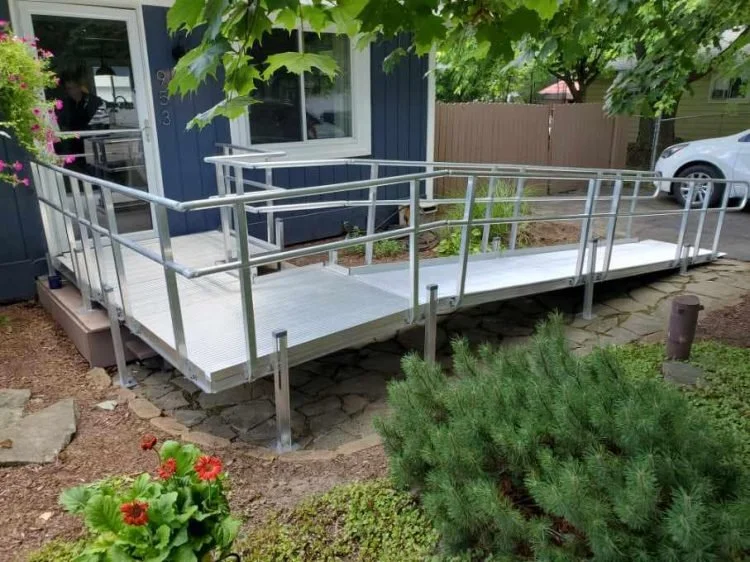
Permanent ramps are typically attached to the home or built into the landscape. They may involve concrete footings, structural supports, or permanent anchoring. These ramps almost always require a permit because they alter the property in a lasting way.
Temporary or modular ramps may not require a permit in some areas, especially if they are not permanently attached and can be removed without altering the structure. However, this is not universal. Some municipalities still require permits for modular systems, particularly if they are used long term.
Assumptions are where people often run into trouble. Temporary does not always mean permit free.
Attachment to the Home Matters
How a ramp connects to the home is another key factor. If the ramp is attached to the house, porch, or deck, it is more likely to require a permit.
Attachment introduces structural considerations. Load transfer, weather exposure, and long term stability all become relevant. Building departments often want to review how these connections are made to ensure safety.
Free standing ramps may face fewer requirements, but they are still subject to local interpretation.
Height and Length of the Ramp
The height a ramp needs to reach can influence permit requirements. A short ramp bridging a small threshold may be treated differently than a ramp spanning several feet of elevation.
Longer ramps often require more support, railings, and landings. These elements increase complexity and typically trigger permitting.
The greater the elevation change, the more likely a permit will be required.
Handrails, Landings, and Guarding
Ramps that include handrails, intermediate landings, or protective edging are more likely to fall under building code oversight.
These features are essential for safety, but they also classify the ramp as a more formal structure. Permits help ensure that these components are built correctly and positioned appropriately.
Safety features are part of why permitting exists.
Zoning and Property Line Considerations
In some cases, the ramp itself is not the issue. The location is.
Ramps that extend into setbacks, easements, or right of way areas may require zoning approval or special permits. This is especially common in urban or tightly spaced neighborhoods.
Understanding property boundaries before installation helps avoid costly changes later.
Historic Districts and HOA Rules
Homes located in historic districts or governed by homeowner associations may face additional layers of approval.
Historic guidelines may regulate exterior changes to preserve neighborhood character. HOAs may require design review before any exterior modification.
These approvals are separate from building permits but equally important.
ADA Guidelines and Residential Ramps
Many people assume that ADA guidelines automatically apply to residential ramps. In most private homes, ADA standards are not legally required.
However, many local codes borrow from ADA principles for safety and usability. Inspectors may reference slope ratios or landing dimensions inspired by ADA guidance.
Following these standards voluntarily often makes approval easier and improves safety.
What Happens If You Skip the Permit
Skipping a required permit can lead to complications. These may include fines, forced removal, difficulty selling the home, or challenges with insurance claims.
More importantly, unpermitted work may not be inspected for safety. That creates risk for the people the ramp is meant to support.
The goal of a ramp is to make life safer, not introduce new uncertainty.
When a Permit May Not Be Required
There are situations where permits are not required. Some municipalities exempt small, non structural ramps or truly temporary solutions.
In these cases, the ramp may be considered accessibility equipment rather than construction. However, these exemptions are specific and limited.
The only way to know for sure is to ask.
How to Find Out What Your Area Requires
The most reliable step is contacting your local building department. This can often be done with a simple phone call or website inquiry.
Describing the ramp, its size, location, and attachment method allows officials to guide you accurately. This step often takes far less time than people expect.
Clarity early prevents stress later.
Working With Professionals Simplifies the Process
Professionals who specialize in accessibility solutions are familiar with permit requirements. They often handle permitting as part of the project.
This support removes guesswork and ensures that the ramp meets both safety standards and local regulations.
Professional guidance turns a complex process into a manageable one.
Emotional Weight of the Permit Conversation
For many families, permits feel like bureaucracy standing in the way of care. That feeling is understandable.
But reframing permits as protection rather than permission can help. They exist to ensure that solutions meant to support independence do not introduce hidden risks.
Safety and dignity are aligned with compliance, not opposed to it.
Planning Ahead Reduces Delays
If a ramp is needed urgently, permit timelines can feel frustrating. Planning ahead allows time for review and approval without pressure.
Early planning also allows families to explore design options and choose solutions that fit the home beautifully.
Time is an ally when it is used intentionally.
Real Life Reflections From Homeowners
I once spoke with a homeowner who installed a ramp without checking permit requirements. When they later sold the home, the ramp became an issue during inspection, delaying the sale.
Another family worked with professionals from the start. The permit process was smooth, and the ramp became a seamless part of the home.
The difference was not effort. It was information.
Accessibility Should Not Feel Complicated
Installing a ramp is an act of care. It should not feel like navigating a maze.
Understanding permit requirements removes one of the biggest sources of stress and allows families to focus on what matters most. Safety. Access. Peace of mind.
Conclusion
Whether you need a permit to install a ramp depends on where you live, how the ramp is built, and how it connects to your home. While some ramps may not require permits, many do, especially when they are permanent or structurally attached.
Permits are not barriers to accessibility. They are safeguards that ensure ramps are built safely and responsibly. Taking the time to understand local requirements protects your home, your loved ones, and your future plans.
At KGC, we understand that accessibility decisions come with both practical and emotional considerations. Our approach to ramp solutions includes guidance through the permitting process so families can move forward with confidence and clarity. If you are considering a ramp and want support understanding what your area requires, our team is here to help.
You can reach our team through the KGC Contact Page.
