
Choosing the Right Patient Lift for Home Care
Finding the Right Lift Starts With Understanding Everyday Life
When a loved one begins needing assistance with daily transfers, families often focus on finding equipment that will make caregiving easier. While every patient lift is designed to improve safety, not every lift is the right fit for every home. The best solution depends on much more than weight capacity or product features. It depends on how people live, how often transfers occur, the home's layout, and the unique needs of both the individual and the caregiver.
For many families, choosing a patient lift can feel overwhelming at first. There are different types of systems, various sling options, installation methods, and technical specifications to consider. It is natural to wonder which option will provide the greatest comfort while making everyday routines easier. Fortunately, selecting the right lift does not have to be complicated when the decision begins with understanding daily life instead of simply comparing equipment.
A thoughtfully chosen patient lift can make transfers smoother, reduce physical strain on caregivers, and help individuals maintain greater dignity and confidence. It becomes more than a mobility device. It becomes an essential part of creating a home that supports independence, comfort, and long-term accessibility.
Taking the time to evaluate current needs while planning for the future helps ensure that the lift continues providing value as circumstances change.
Begin With the Individual's Mobility Needs
Every person experiences mobility challenges differently.
Some individuals require complete assistance during transfers, while others are able to participate in parts of the movement with minimal support.
Understanding the level of assistance needed is one of the most important steps in selecting the appropriate lift system.
Professionals evaluate factors such as balance, upper body strength, range of motion, and the individual's ability to assist during transfers.
These observations help determine which lift provides the safest and most comfortable experience.
Rather than choosing equipment based solely on appearance or popularity, the focus remains on supporting the individual's everyday mobility.
Think About Daily Transfer Routines
Patient lifts are used in many different ways throughout the day.
Some families perform only a few transfers each morning and evening.
Others assist with multiple transfers involving beds, wheelchairs, recliners, bathrooms, and therapy spaces.
Understanding how often the lift will be used helps identify the system best suited for long-term reliability.
A household performing frequent transfers may benefit from a permanently installed ceiling lift that is always ready for use.
Families needing occasional assistance in different areas of the home may appreciate the flexibility of a portable floor lift.
Matching the equipment to the daily routine helps make caregiving more efficient and comfortable.
Consider the Layout of Your Home
The physical layout of the home plays an important role in choosing a patient lift.
Room size, furniture placement, hallway widths, and doorway clearances all influence how the equipment will function.
Ceiling-mounted lift systems work especially well in homes where transfers occur regularly between the same locations.
Tracks can be installed to connect bedrooms, bathrooms, and other frequently used areas while keeping floors clear.
Portable floor lifts provide excellent flexibility but require enough open floor space to move safely around furniture.
A professional home assessment helps identify which option best suits the available space.
Thoughtful planning ensures that accessibility fits naturally into the home rather than disrupting everyday living.
Understanding Different Types of Patient Lifts
Several types of patient lifts are available, each designed to address different accessibility needs.
Ceiling-mounted lifts travel along overhead tracks and provide smooth, controlled transfers while reducing floor clutter.
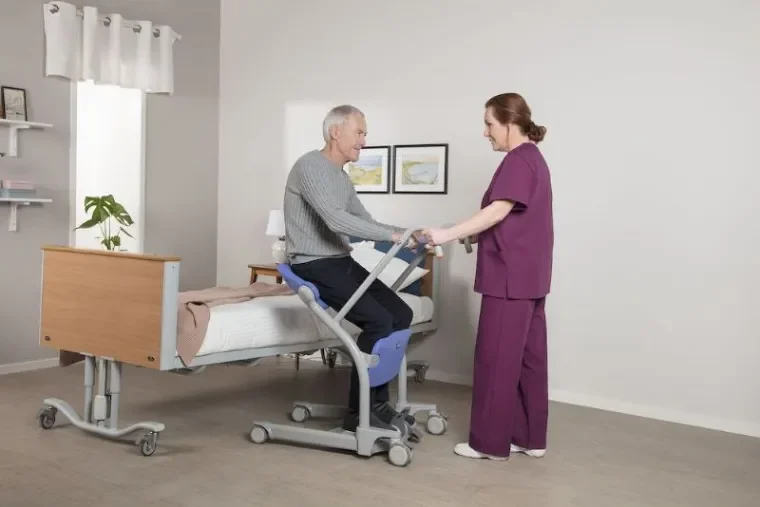
Portable floor lifts use wheeled bases that allow them to move between rooms, making them ideal for homes where flexibility is important.
Freestanding lift systems offer many of the advantages of ceiling lifts without requiring permanent structural installation.
Each option provides reliable support when selected according to the individual's mobility requirements and the home's design.
Understanding these differences makes it easier to choose equipment that supports long-term independence.
Choose the Right Sling
The sling is one of the most important components of a patient lift system.
It supports the individual throughout every transfer and directly influences both comfort and safety.
Different sling styles are available for varying levels of mobility and transfer needs.
Some provide full-body support, while others are designed for seated transfers or toileting assistance.
Selecting the correct sling helps distribute body weight evenly while promoting proper positioning during movement.
Accessibility specialists carefully evaluate the individual's physical needs before recommending the most appropriate sling.
A properly fitted sling creates a more comfortable and secure transfer experience.
Think About Caregiver Comfort
A patient lift should improve life for caregivers as much as it benefits the individual receiving assistance.
Repeated manual lifting can place considerable stress on the back, shoulders, knees, and other joints.
Choosing equipment that simplifies transfers helps reduce physical fatigue while lowering the risk of injury.
Ceiling lifts often require less physical effort because the track system performs much of the movement.
Portable floor lifts also reduce lifting demands while providing flexibility for different caregiving situations.
Selecting a lift that matches the caregiver's routine contributes to healthier and more sustainable home care.
Planning for Future Needs
Mobility needs rarely remain the same over time.
Someone who currently requires occasional transfer assistance may eventually benefit from greater support.
Choosing equipment that accommodates future changes helps families avoid replacing or upgrading systems sooner than expected.
Accessibility planning should always consider long-term goals rather than focusing only on immediate circumstances.
Professional guidance helps identify lift systems that continue supporting independence as mobility evolves.
Planning ahead often results in greater value and peace of mind.
Professional Installation Matters
The effectiveness of a patient lift depends on proper installation.
Ceiling-mounted systems require structural evaluations and secure track installation to ensure reliable operation.
Portable systems should also be assembled, adjusted, and tested according to manufacturer recommendations.
Professional installation verifies that every component functions safely before the equipment becomes part of everyday life.
It also provides homeowners with confidence that the system has been installed correctly.
Quality installation supports both safety and long-term performance.
Training Builds Confidence
Even the best patient lift requires proper training.
Caregivers should understand how to position the sling, operate the lift controls, communicate throughout transfers, and perform routine safety checks.
Professional instruction helps build confidence while reducing uncertainty during everyday use.
Hands-on education allows caregivers to become comfortable with the equipment before using it independently.
Proper training improves both safety and the overall transfer experience.
Knowledge is an important part of creating an accessible home.
Maintenance Protects Your Investment
Routine maintenance helps ensure that a patient lift continues operating safely for many years.
Regular inspections of slings, lifting mechanisms, controls, and structural components help identify minor issues before they become significant problems.
Keeping the equipment clean and following recommended maintenance schedules supports dependable performance.
Professional servicing provides additional reassurance that the system continues meeting safety standards.
Well-maintained equipment protects both the individual and the caregiver while extending the lift's lifespan.
Working With Accessibility Professionals
Choosing a patient lift is not simply about selecting a product.
It is about finding a solution that fits the individual's needs, the caregiver's routine, and the home's design.
Accessibility professionals take time to understand each family's unique circumstances before recommending equipment.
They evaluate mobility requirements, home layouts, transfer routines, and future accessibility goals to create a personalized plan.
This collaborative approach helps ensure the chosen lift becomes a practical, dependable part of everyday life.
Professional guidance removes uncertainty while helping families make informed decisions with confidence.
Creating a Home That Supports Independence
The right patient lift does much more than assist with transfers.
It allows caregivers to provide support more comfortably while helping individuals maintain dignity and independence.
Daily routines become smoother, physical strain is reduced, and everyone involved gains greater peace of mind.
Accessibility is most successful when it blends naturally into everyday living.
By carefully choosing the right lift system, families create an environment where movement feels safer, more comfortable, and more empowering for years to come.
Conclusion
Choosing the right patient lift for home care involves understanding the individual's mobility needs, the caregiver's responsibilities, and the home's unique layout. By selecting the appropriate lift system, sling, and installation approach, families can improve safety, reduce physical strain, and create more comfortable daily transfers. Careful planning ensures that the lift continues supporting independence and quality of life well into the future.
At KGC, every patient lift solution is customized to fit the individual, the caregiver, and the home. From comprehensive assessments and professional installation to ongoing support, KGC is committed to providing accessibility solutions that make home care safer, more comfortable, and more independent. Every project is designed with compassion, expertise, and a commitment to long-term mobility.
If you're ready to choose the right patient lift system for your home, visit the KGC Contact Page to connect with a KGC specialist and discover a customized accessibility solution that meets your family's needs.
