
Ceiling Lift vs. Floor Lift: Which Is Better?
Choosing the Right Lift Can Transform Everyday Care
When someone begins to need assistance moving from a bed to a wheelchair, a favorite chair, or the bathroom, families often discover that transfers become one of the most physically demanding parts of the day. What once took only a few seconds may now require careful planning, physical effort, and constant attention to safety. Caregivers naturally want to provide support while protecting both themselves and the person they are assisting, but repeated manual lifting can quickly become exhausting.
Patient lift systems have transformed the way these everyday transfers are handled. Instead of relying primarily on physical strength, families can use equipment specifically designed to make movement safer, smoother, and more comfortable. Among the most common options are ceiling-mounted lifts and portable floor lifts. Both are designed to accomplish the same goal, yet they approach transfers in very different ways.
It is common to wonder which option is better. The truth is that there is no universal answer. The best lift depends on the individual's mobility needs, the home's layout, how often transfers occur, and the level of caregiver assistance required. Understanding the strengths and limitations of each system helps families choose an accessibility solution that fits naturally into everyday life rather than forcing daily routines to adapt around the equipment.
Understanding Ceiling Lift Systems
A ceiling lift is a patient transfer system that travels along tracks installed overhead.
The lift motor moves along these tracks while supporting the individual in a specially designed sling.
Because the lifting mechanism is suspended from the ceiling, the floor remains clear of large equipment during transfers.
Many ceiling lift systems can be designed to connect multiple rooms, allowing individuals to move safely between the bedroom, bathroom, and other frequently used spaces without changing lifting devices.
This permanent installation creates an accessibility solution that becomes part of the home itself.
Understanding Floor Lift Systems
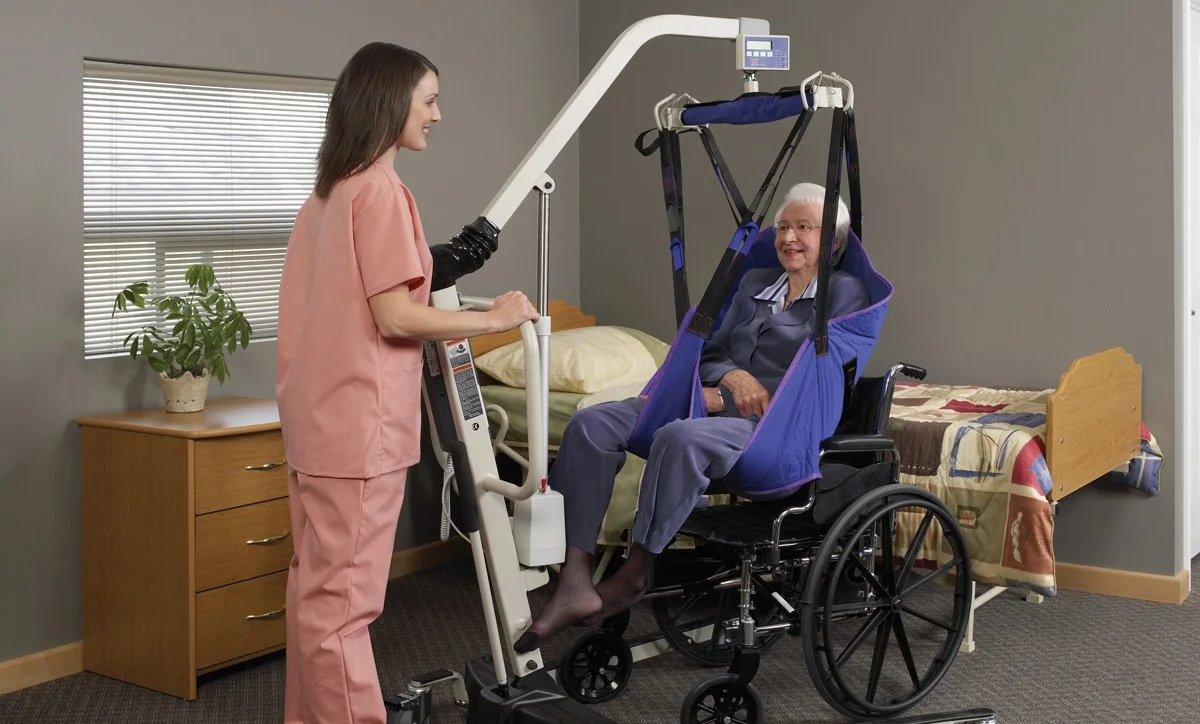
A floor lift is a portable patient lift that moves on wheels.
Instead of using ceiling tracks, it has a sturdy base with legs that roll underneath or around furniture during transfers.
The caregiver positions the lift beside the individual, attaches the sling, raises the person, and then moves the lift carefully to the desired location.
Because it is portable, a floor lift can often be used in different rooms without requiring structural modifications to the home.
This flexibility makes it an attractive option for households that need mobility assistance in multiple areas.
Space Requirements Are Different
One of the biggest differences between the two systems is how they use space.
Ceiling lifts keep the lifting mechanism above the individual, leaving floors open for wheelchairs, walkers, and caregivers.
This can make rooms feel less crowded while allowing easier movement throughout the space.
Floor lifts require enough open floor area to maneuver the wheeled base around furniture and into position for each transfer.
In larger rooms this may not present a challenge.
However, smaller bedrooms or bathrooms with limited space may make positioning the lift more difficult.
Evaluating room layouts is an important part of selecting the right system.
Ease of Everyday Transfers
For households where transfers happen several times each day, convenience becomes increasingly important.
A ceiling lift is always ready to use.
The caregiver simply positions the sling, operates the lift, and completes the transfer without moving large equipment across the room.
This streamlined process often reduces preparation time while making daily routines feel smoother.
A floor lift requires positioning before every transfer.
Although many caregivers become comfortable with this process, moving the equipment between locations adds additional steps that should be considered during long-term planning.
Supporting Caregiver Safety
Caregiver well-being is one of the primary reasons many families invest in patient lift systems.
Repeated lifting, bending, and repositioning can place considerable stress on the back, shoulders, and joints.
Both ceiling lifts and floor lifts reduce the amount of physical lifting required.
However, ceiling lifts often require less pushing and maneuvering because the track system performs much of the movement.
Floor lifts still significantly reduce lifting effort, but caregivers must guide the equipment carefully during transfers.
For individuals requiring frequent assistance, minimizing repetitive physical strain can contribute to healthier caregiving over time.
Comfort for the Individual
The transfer experience should feel as comfortable as possible.
Many individuals appreciate the smooth, controlled movement provided by ceiling lifts.
Since the lift follows a fixed track, transfers often feel steady and predictable from beginning to end.
Floor lifts also provide safe, comfortable transfers when operated correctly.
Because they move across the floor, individuals may notice slight changes in direction or movement while the lift is being repositioned.
For many people this difference is minor, but comfort preferences vary from one individual to another.
Choosing the appropriate sling and ensuring proper operation contribute significantly to a positive experience regardless of lift type.
Installation Requirements
Ceiling lifts require professional installation.
Accessibility specialists evaluate the home's structure to determine how tracks can be securely supported.
Some systems follow straight paths while others connect several rooms through continuous track layouts.
Although installation requires careful planning, the result is a permanent accessibility solution designed specifically for the home.
Floor lifts require much less installation.
Most arrive ready for assembly and adjustment before use.
Because they do not rely on ceiling structures, they are often suitable for homes where permanent modifications are not practical.
Professional setup and caregiver training remain valuable for ensuring safe operation.
Flexibility for Changing Needs
Floor lifts offer exceptional flexibility.
Because they are portable, they can often be moved between rooms or even transported to another location if needed.
Families who anticipate relocating or whose caregiving arrangements may change sometimes appreciate this adaptability.
Ceiling lifts offer a different kind of flexibility.
Although the system itself remains installed, track layouts can often be customized to connect the areas used most frequently.
For households planning long-term accessibility, this permanent integration creates a seamless experience that supports everyday routines.
The right choice depends on whether portability or permanent convenience is the greater priority.
Long-Term Value
When evaluating patient lift systems, it helps to think beyond today's needs.
If transfers are expected to remain part of everyday life for many years, a ceiling lift often provides outstanding long-term convenience and efficiency.
Its ease of operation and permanently available design may simplify daily caregiving while reducing physical demands.
Floor lifts also offer excellent long-term value, particularly for households that require flexibility or have changing care environments.
The best investment is the one that continues supporting the individual's lifestyle as mobility needs evolve.
Professional guidance helps families make decisions that provide lasting benefits.
Considering the Home's Layout
Every home presents unique opportunities and challenges.
A spacious open floor plan may easily accommodate a portable floor lift.
A smaller home with narrow bedrooms or compact bathrooms may benefit more from a ceiling-mounted system that eliminates the need for large equipment on the floor.
Accessibility planning should always begin with a careful evaluation of the home itself.
Rather than selecting equipment first, professionals assess how daily movement occurs throughout the property before recommending the most suitable solution.
This personalized approach leads to better outcomes and greater long-term satisfaction.
Professional Assessment Makes the Decision Easier
Choosing between a ceiling lift and a floor lift involves more than comparing product features.
Accessibility specialists consider mobility levels, caregiver responsibilities, room dimensions, transfer frequency, future needs, and structural considerations before recommending a solution.
Their expertise helps ensure that the lift becomes a practical part of everyday life rather than simply another piece of equipment.
With thoughtful planning, families can select a system that supports independence while making caregiving safer and more comfortable.
Conclusion
Both ceiling lifts and floor lifts provide safe and effective ways to assist with transfers, but the right choice depends on your unique needs. Ceiling lifts offer smooth operation, reduced caregiver strain, and a permanent accessibility solution that keeps floors clear, while floor lifts provide portability and flexibility without requiring structural modifications. Understanding how each system fits your home and daily routine is the key to making an informed decision.
At KGC, every patient lift solution is customized to match the individual's mobility needs, caregiving routine, and home environment. Whether a ceiling-mounted lift or a portable floor lift is the better option, KGC provides expert guidance, professional installation, and personalized support to help families create safer, more comfortable living spaces that promote independence and dignity.
If you're ready to explore the best patient lift system for your home, visit the KGC Contact Page to connect with a KGC specialist and discover the accessibility solution that's right for you.
