
Benefits of Vertical Platform Lifts for Commercial Buildings
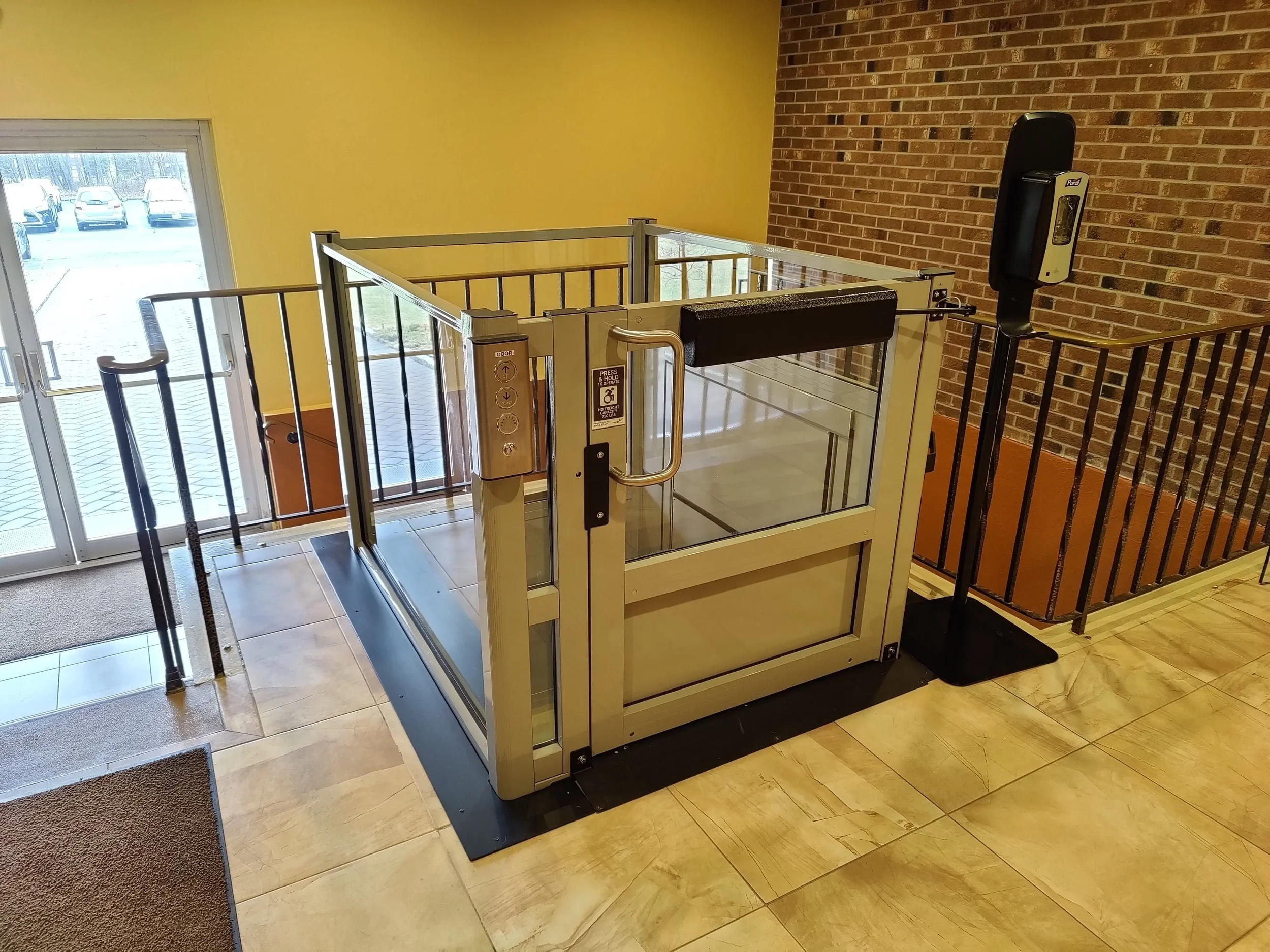
Creating Accessible Spaces That Welcome Everyone
The first impression of a commercial building often happens before a person even walks through the door. Visitors notice the entrance, the pathway, and how easily they can move into the space. For some people, this experience is effortless. For others, particularly those using wheelchairs, scooters, walkers, or other mobility aids, even a few steps can create a significant barrier.
Many business owners spend considerable time thinking about customer service, employee satisfaction, branding, and aesthetics. Yet accessibility plays an equally important role in shaping how people experience a building. When visitors encounter obstacles before they can access products, services, or opportunities, the impact extends beyond inconvenience. It affects comfort, independence, confidence, and the overall perception of the business.
Vertical platform lifts have become one of the most effective solutions for addressing these challenges in commercial environments. They provide safe and reliable access between different elevations while supporting a more inclusive experience for everyone who enters the building.
More importantly, they help transform accessibility from a requirement into a meaningful part of how businesses serve their communities.
Understanding What a Vertical Platform Lift Does
A vertical platform lift, often called a VPL, is an accessibility solution designed to transport individuals safely between different elevations.
Unlike a stairlift, which carries a seated user along a staircase, a vertical platform lift moves straight up and down on a secure platform. Users can remain in a wheelchair, scooter, or standing position throughout the journey.
The lift functions similarly to a compact elevator but is specifically designed to improve accessibility in locations where traditional elevators may not be practical or necessary.
Commercial buildings often use vertical platform lifts to overcome entry steps, raised floors, mezzanines, stages, split-level layouts, and other elevation changes that could otherwise limit access.
Because these systems require relatively little space compared to larger elevator installations, they offer a flexible solution for a wide variety of commercial settings.
Improving Accessibility for Customers and Visitors
One of the most obvious benefits of a vertical platform lift is improved accessibility.
Imagine arriving at a business where the main entrance includes several steps. While some visitors may move through without difficulty, others may need assistance or be forced to use a separate entrance if one exists.
This situation can create feelings of inconvenience and exclusion.
A vertical platform lift helps eliminate that barrier by providing a direct and accessible route into the building. Customers, clients, and visitors can enter safely and independently without requiring assistance from staff or companions.
The experience becomes more welcoming because accessibility is integrated into the environment rather than treated as an afterthought.
For businesses, this can significantly improve customer satisfaction and create a stronger sense of inclusion.
Supporting Employee Accessibility
Accessibility is not only important for customers.
Employees also benefit from environments that support safe and independent movement throughout the workplace.
A vertical platform lift can help ensure that staff members with mobility challenges have equal access to entrances, workspaces, meeting rooms, break areas, and other essential parts of the building.
Providing accessible pathways demonstrates a commitment to creating an inclusive workplace where everyone can contribute fully.
Employees who feel supported by their environment often experience greater confidence and engagement, benefiting both the individual and the organization as a whole.
Enhancing Independence and Dignity
Accessibility solutions are sometimes discussed primarily in terms of compliance and logistics. However, one of their most meaningful impacts involves independence.
People generally prefer to move through public and commercial spaces without relying on assistance whenever possible.
When someone can access a building independently, they gain more than convenience. They gain a sense of autonomy and confidence.
A vertical platform lift supports this independence by allowing users to navigate elevation changes on their own. There is no need to wait for assistance, search for alternative routes, or feel limited by physical barriers.
This seemingly simple benefit often has a profound effect on how people experience a space.
Improving Safety for Everyone
Stairs and elevation changes can present safety challenges in many commercial environments.
Visitors carrying bags, employees transporting materials, and individuals with mobility limitations all encounter potential risks when navigating steps.
A vertical platform lift provides a stable and controlled alternative.
Modern systems include safety gates, non-slip surfaces, emergency controls, and smooth operation designed to reduce risks associated with elevation changes.
The lift creates a predictable travel experience that supports safer movement throughout the building.
This improved safety benefits not only lift users but also businesses seeking to reduce potential hazards within their facilities.
Creating a More Welcoming Business Environment
Customers often remember how a business made them feel.
A building that feels accessible and welcoming sends a powerful message about the values of the organization. It demonstrates consideration for diverse needs and a commitment to serving a broad community.
Vertical platform lifts contribute to this welcoming atmosphere by making accessibility visible and practical.
Rather than requiring separate accommodations or alternative entrances, the lift becomes part of the overall customer experience.
This integration helps create an environment where all visitors feel respected and valued.
Supporting Accessibility Goals Without Major Renovations
Many commercial property owners assume that improving accessibility requires extensive construction or major structural changes.
In reality, vertical platform lifts often provide a practical alternative.
Because they occupy a relatively compact footprint and can be installed in a variety of locations, they frequently offer accessibility improvements without the scale of renovation associated with traditional elevators.
This flexibility makes them especially attractive for existing buildings where space, budget, or architectural constraints may limit other options.
The ability to improve accessibility while preserving the building’s character is a significant advantage for many businesses.
Adapting to Historic and Unique Buildings
Commercial properties are not all built the same.
Some occupy historic structures with unique architectural features. Others operate in buildings where extensive modifications would be challenging or undesirable.
Vertical platform lifts can often be integrated into these environments more easily than larger accessibility systems.
Their compact design and customizable configurations allow businesses to improve accessibility while maintaining the character and functionality of the building.
This balance between preservation and accessibility is particularly valuable for organizations seeking to modernize their facilities thoughtfully.
Supporting a Positive Brand Image
Today's customers pay attention to how businesses engage with their communities.
Accessibility reflects a commitment to inclusivity, customer care, and social responsibility. When a business invests in creating a more accessible environment, it demonstrates values that many customers appreciate and respect.
A vertical platform lift can become part of a broader effort to create a positive and welcoming brand image.
Visitors notice when accessibility has been thoughtfully considered. These impressions contribute to how people perceive the organization and whether they feel comfortable returning in the future.
Improving Access to Multi-Level Spaces
Many commercial buildings include multiple levels connected by stairs.
Restaurants may have raised dining areas. Retail stores may feature split-level layouts. Community centers, offices, and educational facilities often include stages, platforms, or elevated spaces.
Without accessible routes, these areas can become difficult or impossible for some individuals to reach.
Vertical platform lifts create connections between these spaces, ensuring that more people can participate fully in activities, services, and experiences offered within the building.
This improved access supports greater inclusion and engagement throughout the facility.
Providing Long-Term Value
Accessibility improvements should be viewed as long-term investments.
A vertical platform lift continues providing value long after installation by supporting customer access, employee inclusion, and operational flexibility.
As communities evolve and accessibility expectations continue to grow, businesses that prioritize inclusive design are often better positioned to serve a broader audience.
The lift becomes more than a piece of equipment. It becomes part of the building’s infrastructure and a reflection of its commitment to accessibility.
The Importance of Professional Planning
Successful commercial accessibility projects begin with careful planning.
Every building presents unique challenges and opportunities. Factors such as traffic flow, available space, user needs, and architectural constraints all influence lift placement and design.
Professional assessments help ensure that the selected solution supports both accessibility and overall building functionality.
The result is a system that integrates naturally into the environment while delivering meaningful benefits to users.
Future-Proofing Commercial Spaces
Accessibility is increasingly recognized as an essential component of modern building design.
Businesses that invest in accessible infrastructure today often find themselves better prepared for future needs and expectations.
Vertical platform lifts help create adaptable spaces that can continue serving a diverse range of users over time.
This proactive approach supports long-term success while reducing the need for reactive modifications later.
Conclusion
Vertical platform lifts offer numerous benefits for commercial buildings, from improving accessibility and enhancing safety to supporting independence and creating more welcoming environments. They help businesses serve customers, employees, and visitors more effectively while demonstrating a commitment to inclusion and accessibility.
At KGC, accessibility is about more than meeting requirements. It is about creating spaces where everyone feels welcome, respected, and able to participate fully. Through customized mobility solutions, professional installation, and expert guidance, KGC helps commercial property owners improve access while preserving the functionality and character of their buildings.
If you are considering a vertical platform lift for your commercial property, visit the KGC Contact Page to connect with a specialist and explore accessibility solutions designed to meet the unique needs of your business.
