
Why Regular Maintenance Matters for Your Mobility Equipment
Keeping Your Equipment Ready When You Need It
When mobility equipment becomes part of your home, it quickly becomes part of your daily routine.
A stairlift may be used every morning to get downstairs. A patient lift may be needed several times a day for transfers. A wheelchair ramp may be used whenever someone enters or leaves the house. A vertical platform lift may provide the only convenient way to move between two levels.
Because these systems are relied on so often, it is easy to take them for granted when everything is working normally.
But like any equipment with moving parts, electrical components, batteries, or structural connections, mobility equipment needs regular attention.
Maintenance is not simply about fixing something after it breaks. In many cases, the purpose is to notice wear or potential problems before they turn into a larger issue.
A little attention along the way can help keep equipment dependable and give homeowners more confidence in using it.
Mobility Equipment Gets Used Again and Again
One reason maintenance matters is simple: mobility equipment gets used.
A stairlift may travel up and down the staircase multiple times every day. A patient lift can be part of a caregiver's routine several times within a single day. Platform lifts may be used regularly by wheelchair users, family members, and caregivers.
That repeated use naturally puts wear on components.
It does not necessarily mean something is wrong. Wear is a normal part of owning mechanical equipment.
The important thing is knowing when normal wear needs attention.
Routine maintenance gives professionals an opportunity to look at the equipment, identify worn components, and make adjustments when necessary.
Maintenance Helps Catch Small Problems Early
One of the biggest advantages of regular maintenance is the opportunity to find small issues before they become bigger ones.
A stairlift that begins making an unusual sound may not have a serious problem, but it is worth having it checked.
A patient lift that feels different during operation should not simply be ignored.
A platform lift that does not move as smoothly as it once did may need attention.
These changes can be easy to overlook, especially when the equipment is still technically working.
Regular inspections can help identify issues that may not yet be obvious to the homeowner.
Addressing a small concern early can sometimes prevent a much more disruptive repair later.
Safety Should Be the First Priority
The main purpose of mobility equipment is to help people move safely and comfortably.
That makes maintenance particularly important.
A person using a stairlift may already have difficulty with balance or mobility. Someone being transferred with a patient lift may depend entirely on the equipment and caregiver for safe movement.
Because of this, equipment should be kept in good working condition.
Routine maintenance allows important components and safety features to be checked.
The exact inspection process will depend on the type of equipment and the manufacturer's recommendations, but the basic goal remains the same: make sure the system continues to operate as it should.
Your Stairlift Needs Attention Too
Stairlifts can be incredibly convenient, but they are still mechanical systems.
The lift travels along a rail, and components such as the motor, batteries, seat, controls, and safety features all need to work together.
Over time, dust and debris can collect around certain areas, batteries can lose capacity, and mechanical components can experience normal wear.
Following the manufacturer's maintenance recommendations helps keep the stairlift in good condition.
It is also worth paying attention to how the stairlift feels during normal use.
If it starts stopping unexpectedly, moving differently, making unusual sounds, or showing another change in performance, it is a good idea to have it checked.
Patient Lifts Require Consistent Care
Patient lifts can play an important role in helping caregivers complete transfers.
Because they support people during lifting and movement, keeping them properly maintained is particularly important.
For an overhead system, the track, motor, controls, and other components need to remain in good working condition.
Portable patient lifts also require attention to their frame, wheels, lifting mechanism, battery, controls, and other parts.
The sling should also be inspected regularly according to the manufacturer's recommendations.
Caregivers should never continue using equipment if they notice damage or a significant change in its operation.
A professional should evaluate the concern and determine whether the equipment is safe to continue using.
Don't Overlook the Ramp
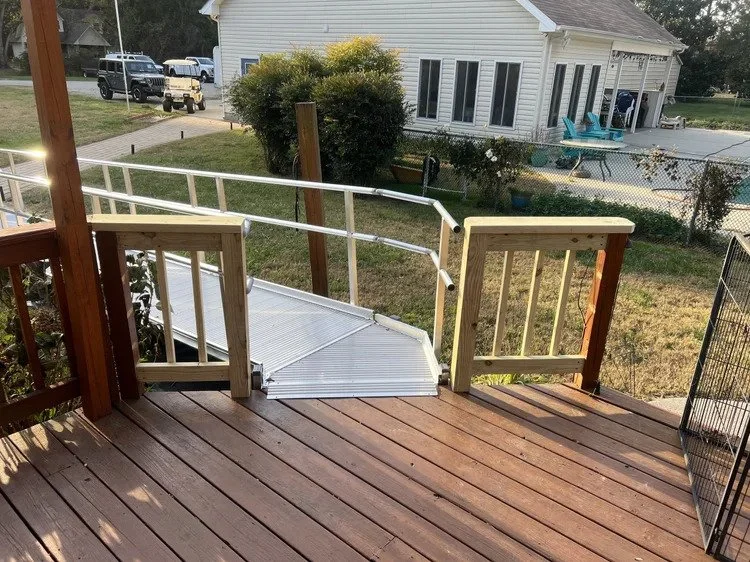
Ramps do not have motors or batteries, but that does not mean they are maintenance-free.
Outdoor ramps are exposed to weather throughout the year.
Rain, snow, ice, dirt, leaves, and changes in the surrounding ground can affect the condition of the ramp.
Loose hardware, damaged surfaces, rust, or changes in the foundation can create problems over time.
The surface should remain clear and provide appropriate traction.
Landings and connections to the home should also be checked periodically.
A ramp is part of an accessibility route, so keeping the entire route in good condition matters.
Vertical Platform Lifts Need Regular Inspection
Vertical platform lifts can make a significant difference for wheelchair users and people who have difficulty with stairs.
Like other mechanical equipment, they benefit from regular care.
The platform, controls, gates, safety mechanisms, and lifting system should be checked according to the manufacturer's maintenance schedule.
Outdoor platform lifts may require additional attention because they are exposed to weather.
Keeping the area around the lift clear is also important.
Branches, leaves, dirt, standing water, or other debris should not be allowed to interfere with the equipment.
Battery Care Is Often Overlooked
Many mobility systems rely on batteries, particularly stairlifts and certain patient lifts.
Battery performance can decline over time.
A battery that once held a strong charge may eventually begin to lose capacity.
This can be easy to miss because the equipment may continue to work for a while.
Following the manufacturer's recommendations for charging and battery replacement can help avoid unexpected interruptions.
If the equipment begins behaving differently or does not seem to hold a charge as well as it used to, it is worth having the battery and charging system checked.
Listen to Changes in Your Equipment
Homeowners often notice changes in mobility equipment before anyone else does.
You may hear a sound that was not there before.
The lift may seem slightly slower.
The movement may feel different.
A control may not respond as quickly.
These observations are useful.
You do not need to diagnose the problem yourself. In fact, trying to repair complicated mobility equipment without the appropriate training can create additional risks.
Instead, think of these changes as warning signs that the equipment may need professional attention.
Cleaning Is Part of Basic Care
Regular cleaning can also help keep mobility equipment in good condition.
Dust, dirt, hair, and debris can accumulate around equipment, particularly in busy areas of the home.
Keeping accessible surfaces clean can make the equipment more pleasant to use and can help prevent debris from interfering with certain components.
However, homeowners should always follow the manufacturer's cleaning instructions.
Not every cleaning product is appropriate for every material or component.
Electrical components in particular should be treated carefully.
Maintenance Can Help Extend Equipment Life
Most homeowners want their mobility equipment to last as long as possible.
Regular maintenance can support that goal.
When equipment is inspected and serviced appropriately, worn components can be identified and addressed.
This can help prevent minor issues from placing additional stress on other parts of the system.
Maintenance cannot guarantee that equipment will never fail, and every product has a finite service life.
Still, taking care of the equipment gives it a better chance of providing reliable service for the years it is designed to operate.
Following the Manufacturer's Maintenance Schedule
There is no single maintenance schedule that applies to every mobility product.
Different equipment has different requirements.
The manufacturer's instructions should therefore be the starting point.
Some equipment may require periodic professional inspections. Other systems may have specific recommendations for batteries, lubrication, cleaning, or component replacement.
Homeowners should keep the manuals and service information that came with their equipment.
If those documents are no longer available, an accessibility professional may be able to help determine what type of maintenance is appropriate for the particular system.
Professional Maintenance Has Its Place
There are certain things homeowners can do themselves, such as keeping equipment clean and watching for visible damage.
However, more complicated inspections and repairs should be handled by qualified professionals.
Mobility equipment can contain mechanical, electrical, and structural components that require specialized knowledge.
A professional technician can inspect areas that may not be obvious to the homeowner and determine whether adjustments or replacement parts are needed.
This is especially important for equipment that supports a person's weight.
Maintenance Records Can Be Useful
Keeping a record of inspections and repairs may seem unnecessary, but it can be helpful over time.
A simple record can show when the equipment was serviced, what was checked, and whether any components were replaced.
This information can help technicians understand the equipment's history during future service visits.
It can also make it easier for homeowners to keep track of upcoming maintenance.
For equipment that has been in the home for several years, those records can become particularly useful.
Caregivers Should Know What to Watch For
Family caregivers and professional caregivers often spend more time around mobility equipment than anyone else.
They may be the first to notice that something has changed.
Caregivers should know what normal operation looks and sounds like.
If the equipment behaves differently, that change should be reported rather than ignored.
This does not mean caregivers need to become technicians.
They simply need to feel comfortable speaking up when something seems unusual.
That communication can help problems get addressed sooner.
Maintenance Should Be Part of the Accessibility Plan
When families plan for accessibility, the conversation often focuses on purchasing and installing equipment.
Maintenance should be part of that conversation from the beginning.
Before choosing a system, homeowners can ask about its maintenance requirements, expected service needs, and available support.
Knowing what ongoing care will involve makes it easier to plan for the future.
It also helps families understand that the purchase of mobility equipment is not necessarily a one-time expense.
Like a vehicle, HVAC system, or other important household equipment, accessibility equipment needs appropriate care to continue performing well.
Don't Wait Until Something Stops Working
One of the most common mistakes homeowners can make is waiting until equipment completely fails before calling for service.
A complete failure can be especially inconvenient when the equipment is essential for daily mobility.
Imagine relying on a stairlift every day and suddenly being unable to use it.
For someone who depends on a patient lift for transfers, an unexpected problem can create an immediate challenge for the caregiver.
Regular maintenance provides an opportunity to address concerns before they become emergencies.
It is much easier to schedule routine service than to suddenly find yourself without an important accessibility system.
Maintenance Can Provide Peace of Mind
There is also a personal benefit to regular maintenance.
When you know that your equipment is being properly cared for, you do not have to spend as much time wondering whether it will work when you need it.
That confidence can be particularly valuable for people who rely on mobility equipment every day.
Families can feel more comfortable knowing that the equipment supporting their loved one has been checked and maintained appropriately.
For caregivers, that can remove one more source of uncertainty from an already busy routine.
The Home Environment Matters
Maintenance is not limited to the equipment itself.
The surrounding environment can also affect how well a mobility system works.
Furniture can be moved into the path of a stairlift.
Objects can accumulate around a patient lift.
Leaves and debris can collect around an outdoor platform lift.
A ramp can become slippery or obstructed.
Keeping the surrounding area clear is therefore part of maintaining an accessible home.
It is worth looking at the entire path the person uses, not just the equipment.
Knowing When to Call for Service
Homeowners should contact a qualified professional when they notice something unusual or when the manufacturer's recommended service is due.
Visible damage is an obvious reason to call.
So are changes in movement, unusual noises, repeated stopping, problems with controls, battery issues, or anything else that makes the equipment feel different from normal.
If you are unsure whether something requires professional attention, it is better to ask.
A quick inspection may provide reassurance or identify a problem before it becomes more serious.
Maintenance Supports Long-Term Independence
For many people, mobility equipment is about more than convenience.
It can be part of their ability to remain in their own home.
Being able to use the stairs, enter and leave the house, or complete transfers safely can make it possible to continue everyday routines with less assistance.
Maintaining that equipment helps protect the independence it was purchased to provide.
A stairlift that works reliably can keep multiple floors of a home accessible.
A properly maintained ramp can continue providing an accessible entrance.
A well-maintained patient lift can support caregivers with daily transfers.
The equipment has a purpose, and maintenance helps preserve that purpose.
Conclusion
Regular maintenance is an important part of owning mobility equipment. Whether your home has a stairlift, patient lift, wheelchair ramp, vertical platform lift, or another accessibility solution, routine care can help support safe operation and reliable performance.
Maintenance is not simply about fixing problems after they occur. It is about paying attention to the equipment, following the manufacturer's recommendations, addressing unusual changes, and having qualified professionals inspect the system when needed.
For families who rely on mobility equipment every day, that care can make a real difference. It can help reduce unexpected interruptions, support the equipment's useful life, and give users and caregivers greater confidence in their accessibility system.
At KGC, the focus is on helping homeowners find mobility solutions that fit their homes and everyday needs. From choosing the right equipment to installation and ongoing service, having the right support can make accessibility easier to manage over the long term.
