
What Happens During a Professional Stairlift Service Appointment?
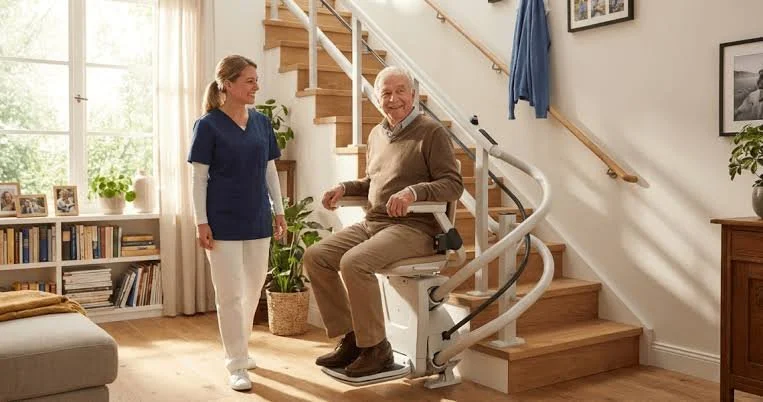
If you have a stairlift in your home, you probably use it without giving much thought to everything happening behind the scenes. You sit down, fasten the seat belt, operate the control, and the chair carries you smoothly between floors. When everything works as expected, there is usually no reason to think about the motor, batteries, sensors, rail, or other components that make the system work.
That can change quickly when the stairlift starts making an unusual sound, stops unexpectedly, moves differently, or simply does not seem to be performing the way it used to.
This is where professional servicing becomes important.
A stairlift service appointment is not simply a quick check to see if the chair goes up and down the stairs. A qualified technician will generally look at the equipment as a complete system. They may inspect the rail and carriage, examine the seat and controls, check the battery and charging system, test safety features, look for signs of wear, and run the stairlift through its normal travel path.
The exact process depends on the manufacturer, model, age, installation, and reason for the service. A routine maintenance appointment may be different from a visit for a specific repair.
For homeowners, caregivers, and family members, understanding what happens during a service appointment can make the process much less intimidating. It also helps you understand why professional servicing is useful even when the stairlift appears to be working normally.
The Appointment Usually Starts With a Conversation
Before the technician starts working on the stairlift, they may ask you a few questions about how it has been operating.
This part of the appointment can be more useful than it might seem.
The person who uses the stairlift every day may have noticed small changes that are not immediately obvious during a short inspection. Maybe the chair has started making a clicking sound near the top of the stairs. Perhaps it occasionally stops and then works again after a few seconds. The battery may not seem to last as long as it once did.
Those details give the technician a starting point.
You should mention anything that has changed, even if the stairlift is still usable. If the problem only happens occasionally, explain when it usually happens. If the lift behaves differently when traveling up compared with traveling down, mention that as well.
You do not need to know what component is causing the problem. Describing what you are experiencing is enough.
For example, saying, “It has started making a grinding noise about halfway up the stairs,” is more useful than simply saying, “Something seems wrong.”
The technician can then pay particular attention to that part of the journey.
The Technician Inspects the Stairlift Installation
Once they understand what you have been experiencing, the technician will typically begin with an overall inspection.
They may examine the stairlift from top to bottom, looking at the rail, carriage, seat, footrest, armrests, controls, charging points, and other visible components.
The condition of the installation matters because the stairlift needs to work as a complete system. A problem does not always originate from the part where the symptom is noticed.
The technician may also look for obvious signs of damage, loose components, unusual wear, or anything that appears out of position.
The surrounding staircase can also be relevant. Furniture, objects, flooring changes, or other alterations near the stairs can sometimes affect how the equipment is used.
The purpose of this first inspection is to establish the overall condition of the system before more detailed testing begins.
The Rail Is Checked Carefully
The rail is one of the most important parts of a stairlift because it provides the path along which the carriage travels.
During a service appointment, the technician may inspect the rail for signs of damage, wear, obstruction, or other conditions that could affect operation.
Straight stairlifts generally have a relatively straightforward travel path, while curved stairlifts can follow bends, corners, and changes in direction. Regardless of the design, the rail needs to provide a suitable path for the carriage to travel.
The technician may also operate the stairlift along the rail to observe how it behaves.
If the lift moves smoothly through most of the staircase but begins hesitating or making noise in one particular area, that information can help identify where additional attention may be needed.
The rail itself is not something homeowners should attempt to modify or repair without professional guidance. Its position and relationship with the carriage are important to proper operation.
The Carriage and Drive System Are Examined
The carriage is the part of the stairlift that moves along the rail and supports the seat.
Inside and around the carriage are mechanical and electrical components responsible for moving the stairlift.
During servicing, the technician may examine these components for signs of wear or other issues that could affect performance.
They may listen to the motor while the stairlift is operating. A change in motor noise can sometimes indicate that something needs attention, particularly when it is accompanied by slower movement, hesitation, or vibration.
The technician may also pay attention to how the stairlift starts and stops.
A healthy system should provide controlled movement. If the chair suddenly jerks, hesitates, or behaves differently from normal, the technician can investigate further.
The exact inspection procedure will vary between stairlift manufacturers and models. Professional servicing should follow the appropriate procedures for the specific equipment.
The Stairlift Is Operated During the Inspection
A stairlift service cannot always be completed by looking at the equipment while it is stationary.
The technician will generally need to see it operate.
They may run the chair from one end of the rail to the other while listening to the motor and observing the movement.
This gives them an opportunity to identify things that may not be visible when the stairlift is sitting still.
For example, the technician may notice that the stairlift moves smoothly at the bottom but becomes louder as it approaches the upper landing. They may observe a slight hesitation at a particular point or notice that the stopping position is different from what is expected.
If you have noticed something specific, show the technician when and where it happens if it is safe to do so.
Your firsthand observations combined with the technician's inspection can provide a much clearer picture of the issue.
The Battery and Charging System Are Checked
Battery condition is an important part of stairlift servicing.
Many stairlifts use rechargeable batteries, allowing the equipment to operate without relying entirely on household power while the chair is traveling.
Like other rechargeable batteries, stairlift batteries eventually lose capacity. Frequent use, age, charging conditions, and the specific equipment can all affect battery performance.
During a service visit, the technician may inspect the batteries and charging system to determine whether they are functioning properly.
You should mention if the stairlift has recently needed charging more often or if it seems to lose power faster than it used to.
It is also worth mentioning if the stairlift does not seem to charge consistently when parked at its charging point.
A battery problem is not always caused by the battery itself. The charging system and electrical connections may also need to be examined.
Professional testing can help determine where the actual problem is instead of simply replacing a battery without understanding why it failed.
Safety Sensors Are Tested
Safety systems are a major part of a stairlift, which is why they receive attention during professional servicing.
Depending on the model, a stairlift may have sensors designed to detect obstructions or other conditions that should cause the equipment to stop or prevent movement.
A technician may test these safety features according to the manufacturer's procedures.
This is an important distinction between simply using a stairlift and professionally servicing one.
A homeowner may know that the stairlift normally stops when something is in its path, but a technician can inspect and test the relevant safety system as part of the service process.
If a sensor is damaged, obstructed, or not responding as expected, it should be addressed.
Safety features should never be bypassed simply because they are causing the stairlift to stop. If a sensor appears to be malfunctioning, professional troubleshooting is the appropriate next step.
The Seat and Swivel Mechanism Are Inspected
The seat is another important part of the service appointment.
A stairlift is not only about getting from one floor to another. The user also needs to be able to sit down, remain securely positioned during travel, and get off the chair safely at the landing.
If the stairlift has a swivel seat, the technician may check that the mechanism operates correctly and securely.
They may also examine the seat for signs of wear or damage.
A seat that has become difficult to swivel may be more than an inconvenience. For someone with limited mobility or balance, the transfer onto or off the stairlift is an important part of using the equipment.
If the user has noticed that the seat feels loose, stiff, or different from before, this should be mentioned during the appointment.
The Seat Belt Is Checked
The seat belt may seem like a small component compared with the motor and rail, but it is an important part of the user's interaction with the stairlift.
A technician may inspect the belt and buckle for visible wear or damage and check that the mechanism functions properly.
If the belt has become difficult to fasten or release, or if it does not appear to be working as it should, let the technician know.
Do not attempt to work around a seat belt problem by using the stairlift without properly securing yourself.
If a safety-related component is not functioning correctly, professional attention is appropriate.
The Footrest Is Examined
The footrest also gets regular use and can experience wear over time.
The technician may check that it is secure and operating properly. Depending on the model, the footrest may also be connected to safety functions or folding mechanisms.
Objects, dirt, or other debris around the footrest can sometimes interfere with normal operation, so the technician may inspect this area carefully.
If the footrest has become loose, difficult to fold, or behaves differently than it normally does, mention it during the service appointment.
Something that seems minor can be useful information when evaluating the condition of the stairlift.
The Armrests and Other User Controls Are Checked
Armrests are used frequently, particularly when someone is sitting down or standing up from the stairlift.
The technician may check that they are secure and in good condition.
The controls are also examined.
Depending on the stairlift model, controls may be located on the armrest, chair, or elsewhere on the equipment. Some systems also have remote controls.
The technician may test the controls to make sure the stairlift responds correctly.
If you have experienced an intermittent control problem, explain exactly what happens. For example, perhaps the stairlift occasionally does not respond to the control immediately, or the remote works inconsistently.
Intermittent problems can be difficult to reproduce, so the information you provide can be particularly helpful.
Electrical Connections May Be Inspected
A stairlift combines mechanical and electrical systems, so electrical components may also be part of the inspection.
The technician may look for signs of damaged wiring, loose connections, corrosion, or other conditions that could affect operation.
This is one reason professional servicing is preferable to attempting an internal repair yourself.
If a stairlift has an electrical problem, opening covers or handling internal wiring without the appropriate training can create additional risks and may damage the equipment.
Homeowners can safely report what they observe, but electrical repairs should be left to qualified professionals familiar with the equipment.
The Technician Looks for Signs of Wear
Stairlifts can be used several times a day, every day.
That repeated use naturally puts wear on mechanical and user-facing components.
During a professional service, the technician can look for signs that parts are wearing and determine whether they require attention.
Not every worn component needs to be replaced immediately. The decision depends on the condition of the part, the manufacturer's recommendations, the effect on operation, and other factors.
A professional inspection gives you a better understanding of what is happening instead of waiting for a component to fail completely.
This can be particularly helpful with an older stairlift where several components may have accumulated years of regular use.
Cleaning and Lubrication May Be Performed
Depending on the stairlift model and its manufacturer's service requirements, certain parts may need cleaning or approved lubrication.
This should be done according to the equipment's specific maintenance instructions.
More lubrication is not necessarily better. Using the wrong product or applying it to a component that does not require lubrication can cause problems.
A professional technician knows which areas need attention and which should be left alone.
The technician may also point out areas that the homeowner can safely keep clean between professional service visits.
The Technician Checks the Top and Bottom Landings
Getting the stairlift to the top or bottom of the stairs is only part of the process.
The user also needs to be able to safely get on and off the chair.
During servicing, the technician may pay attention to the stairlift's stopping position and how it behaves at the upper and lower ends of the rail.
If the stairlift is stopping differently than it used to, mention that.
Changes in stopping behavior can be important because the user may rely on a particular position to transfer safely.
The technician may also consider the surrounding landing areas and whether anything has changed since the stairlift was originally installed.
Any Error Codes or Warning Lights Are Investigated
Modern stairlifts may provide audible alerts, indicator lights, or error messages when certain conditions occur.
The meaning of these alerts depends on the manufacturer and model.
During service, the technician may check the system for recorded or active faults and investigate any warnings that have appeared.
If you have seen a particular error code, write it down or take a photo if appropriate.
Even if the warning disappeared afterward, tell the technician about it.
A temporary warning can still provide useful information about something that occurred within the system.
If There Is a Problem, the Technician Diagnoses the Cause
When a technician finds a problem, the next step is determining what is actually causing it.
This is an important part of professional repair.
For example, if a stairlift is losing power, the battery may be responsible. But the charging system may also need to be examined.
If the stairlift is making a noise, the technician needs to determine whether the sound is coming from the motor, drive components, carriage, rail, or another part of the system.
Simply replacing the first component that seems suspicious is not always the right approach.
A proper diagnosis helps ensure that the repair addresses the underlying issue rather than temporarily masking the symptom.
Some Repairs Can Be Completed During the Visit
If a problem is identified, the technician may be able to repair it during the same appointment.
This depends on the nature of the problem and whether the necessary parts are available.
A simple adjustment may be handled immediately, while a more complicated repair may require replacement parts or another scheduled visit.
If a part needs to be replaced, the technician should explain what the component does and why replacement is recommended.
This gives the homeowner a clearer understanding of the work being performed.
The Stairlift Is Tested Again After Repairs
After service or repairs have been completed, the equipment should be tested again.
The technician may run the stairlift through its normal travel path and confirm that the original problem has been addressed.
Relevant controls and safety functions may also be checked again depending on the work performed.
This final testing is important because the technician needs to confirm that the equipment is operating as expected after adjustments or repairs.
A service appointment should not simply end when the replacement part is installed. The system needs to be evaluated as a whole.
The Technician May Explain What to Watch for Next
Before leaving, the technician may give you information about the condition of the stairlift and anything that should be monitored.
Perhaps the batteries are still functioning properly but showing signs of age. Maybe a particular component is beginning to wear but does not yet require replacement.
Understanding these observations can help you plan ahead.
It is also useful to ask questions if something is unclear.
You can ask what caused the problem, whether the repair is complete, whether anything should be monitored, and when the equipment should next be serviced according to the manufacturer's recommendations.
You do not need to understand every technical detail. The important thing is knowing what was checked and whether anything needs your attention.
How Long Does a Stairlift Service Appointment Take?
There is no standard amount of time for every service appointment.
A routine inspection may be relatively straightforward, while troubleshooting a complicated problem can take longer.
The type of stairlift also matters. A straight stairlift and a curved stairlift have different designs and travel paths, which can affect the service process.
The age and condition of the equipment can also make a difference.
If replacement parts are required, the appointment may involve additional time or a follow-up visit.
When scheduling service, explain why you are requesting the appointment and describe any problems you have noticed. Providing that information in advance can help the service provider understand what may be involved.
What Should You Do Before the Technician Arrives?
There is usually no complicated preparation required.
Make sure the technician can access the staircase and the stairlift.
If there are items stored near the stairs or landings, move anything that could interfere with access if you can do so safely.
More importantly, think about what you have noticed since the last time the stairlift was serviced.
Has the ride become rougher? Does it sound different? Has the battery been weaker? Has the chair stopped unexpectedly? Have any controls become difficult to use?
If more than one person uses the stairlift, ask whether they have noticed anything unusual as well.
These small observations can help the technician understand what is happening.
Why Professional Stairlift Servicing Matters
A stairlift is a specialized accessibility system, and its different components are designed to work together.
A service appointment allows a trained professional to evaluate those components rather than waiting for one of them to fail.
Regular servicing can also help identify wear before it develops into a larger operational problem.
That does not mean every service visit will uncover something that needs to be repaired. Sometimes the result is simply confirmation that the equipment is operating normally.
That information is valuable too.
For someone who depends on a stairlift to access bedrooms, bathrooms, living spaces, or other parts of the home, knowing the equipment has been properly inspected can be reassuring.
When Should You Schedule a Service Appointment?
You do not necessarily need to wait until the stairlift stops working.
A service appointment may be appropriate when you notice a change in performance, unusual sounds, battery issues, unexpected stops, control problems, or other concerns.
It is also worth following the maintenance recommendations provided for your particular stairlift.
If the equipment is older or heavily used, professional attention can be especially useful for monitoring wear and identifying components that may eventually need replacement.
The key is to pay attention to changes.
You use the stairlift regularly, so you are often the first person to notice when something does not feel quite right.
Don't Attempt Repairs That Require Specialized Knowledge
There are simple things homeowners can do, such as keeping the area around the stairlift clear and following the manufacturer's basic user-care instructions.
Mechanical and electrical repairs are different.
If the stairlift is making an unusual noise, repeatedly stopping, losing power, showing an error, or displaying another potentially serious problem, avoid opening the equipment or attempting to repair internal components yourself.
Trying to fix the problem without knowing exactly what is causing it can damage the system or create a safety issue.
A professional technician has the appropriate knowledge and equipment to diagnose the problem and determine what repair, if any, is needed.
A Professional Service Visit Is About the Whole System
One of the biggest benefits of professional stairlift servicing is that the technician can look at the equipment as a complete system.
The rail, carriage, motor, battery, charging system, seat, footrest, controls, safety features, and other components all have a role to play.
A problem in one area can sometimes affect another.
That is why simply replacing a part without diagnosing the underlying issue is not always the best solution.
A thorough service considers how the different components are working together and whether the equipment is operating as intended.
Keeping Your Stairlift Ready for Everyday Use
A stairlift is often installed because stairs have become difficult or unsafe to manage without assistance. Once installed, it becomes part of the daily routine.
That makes reliability important.
Professional servicing gives you an opportunity to have the equipment inspected before a small concern becomes a major inconvenience. It also gives you a chance to ask questions, understand the condition of the stairlift, and address repairs when they are needed.
If your stairlift is working normally, a service appointment may simply confirm that everything is in good working order. If something has changed, the technician can investigate the cause and recommend the appropriate solution.
Either way, professional service is an important part of caring for a stairlift over the long term.
Professional Stairlift Service From KGC
At KGC, we understand that a stairlift is an important part of how someone moves around their home. When the equipment is not performing the way it should, having a knowledgeable professional assess the system can make the situation much easier to understand.
Whether you need routine stairlift maintenance, troubleshooting, adjustments, or repair, KGC can help you determine what your equipment needs. Contact KGC today to discuss your stairlift and learn more about professional service options.
