
Stairlift Safety Features You Should Look For
A Moment That Changes How You See the Stairs
There is often a moment when stairs begin to feel different.
Not dangerous exactly. Not impossible. Just unpredictable.
Someone pauses halfway up, gripping the railing a little tighter than before. A caregiver walks closely behind, ready to steady them without making it obvious. Conversations shift subtly. Trips upstairs are planned instead of spontaneous. Laundry waits longer. Bedrooms become destinations rather than comfortable retreats.
The staircase itself has not changed. What changes is confidence.
Many families begin exploring stairlifts during this stage. Not because independence is gone, but because preserving independence suddenly feels important enough to plan for. And while design, comfort, and appearance matter, safety quickly becomes the heart of the decision.
A stairlift should never feel like a compromise. It should feel like reassurance built into your home.
Understanding safety features helps families choose equipment that protects both dignity and daily peace of mind.
Safety Is More Than Preventing Falls
When people first research stairlifts, they often focus on one question: Will this prevent someone from falling?
That is an important goal, but modern stairlift safety goes much deeper.
True safety means smooth movement that does not startle the rider. It means predictable operation that builds trust every day. It means features that quietly work in the background so neither the user nor the caregiver feels anxious during transfers.
Think about the difference between driving a car with basic brakes versus one equipped with advanced safety systems. Both can move forward, but only one actively protects you throughout the journey.
A well-designed stairlift works the same way. It anticipates risks instead of reacting to them.
The Foundation of Protection: Secure Seating Systems
The seat is where safety begins.
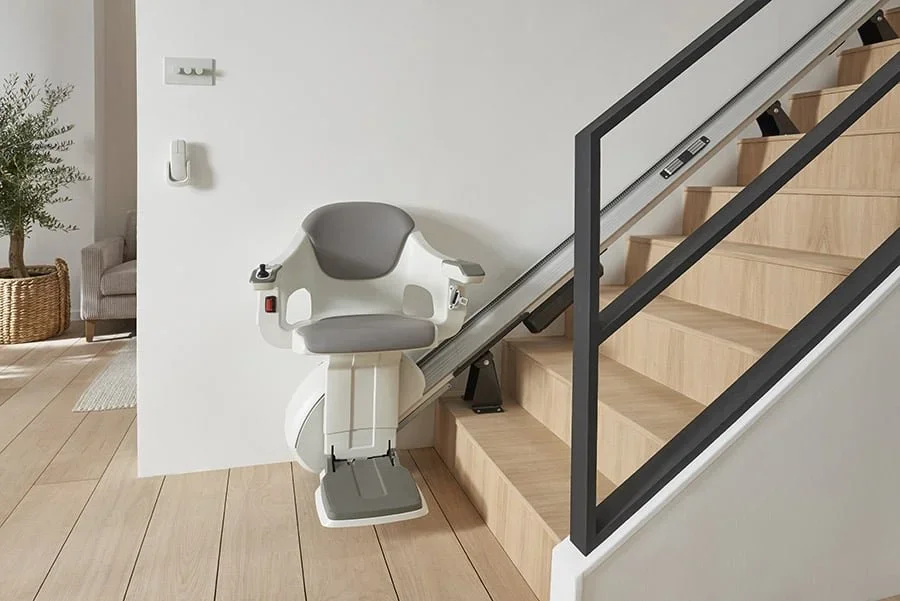
Modern stairlift chairs are engineered to provide stable support throughout the entire ride. The user should feel held comfortably rather than perched cautiously. Wide, ergonomic seats distribute weight evenly, helping reduce pressure and improving balance while seated.
One of the most important features is the seatbelt. It may seem simple, yet it plays a vital role. The belt prevents forward shifting during motion and provides reassurance for individuals who feel nervous about movement on stairs.
Many families discover that the seatbelt provides emotional safety as much as physical safety. Riders often relax once they realize they do not need to hold themselves rigidly in place.
Armrests add another layer of support. They offer balance when sitting down and standing up, moments that statistically carry more risk than the ride itself. Instead of relying on strength alone, the user has structured support guiding every transition.
Safety here feels less like restraint and more like gentle assistance.
Obstruction Sensors That Think Ahead
One of the most remarkable developments in stairlift technology is the use of obstruction sensors.
These sensors constantly scan the staircase during travel. If anything blocks the path, whether a dropped object, a pet, or even an unexpected foot placement, the stairlift automatically stops.
This feature transforms the staircase into a responsive environment.
Families often worry about grandchildren leaving toys on steps or pets resting halfway up the stairs. Obstruction detection removes that fear. The lift does not force its way forward. It pauses and waits safely.
The result is a system that behaves thoughtfully rather than mechanically.
It is similar to modern vehicles that detect obstacles before a driver reacts. The technology quietly prevents accidents long before they become emergencies.
Smooth Start and Stop Technology
Unexpected motion can be unsettling, especially for individuals managing balance challenges or muscle weakness.
Older lift designs sometimes started abruptly, causing riders to brace themselves instinctively. Today’s stairlifts incorporate soft-start and soft-stop technology that eliminates sudden jerks.
The lift accelerates gradually, travels steadily, and slows gently at the destination.
This smooth movement matters more than many people realize. Comfort directly affects safety. When riders feel relaxed instead of tense, they maintain better posture and stability.
Caregivers often notice the difference immediately. Transfers become calmer experiences rather than moments requiring constant supervision.
The ride begins to feel natural, almost like an elevator moving between floors.
Swivel Seats That Protect During Transfers
Interestingly, the most vulnerable moment is not while traveling on the stairs. It is getting on and off the lift.
Swivel seat technology addresses this exact challenge.
At the top of the staircase, the chair rotates away from the stairs toward the landing. This allows the user to stand up safely onto flat flooring instead of stepping directly onto a stair edge.
Some systems lock the swivel position automatically, ensuring the chair cannot move until it is securely aligned.
The effect is subtle but powerful. Instead of facing open stairs during a transfer, the rider exits into a stable, predictable space.
Caregivers frequently describe this feature as one of the biggest confidence builders in daily use.
Footrest Safety and Foldable Design
The footrest performs two essential roles.
First, it supports the rider’s legs, reducing strain and preventing feet from dragging against stairs. Proper positioning improves circulation and overall comfort during the ride.
Second, integrated safety sensors stop the lift if the footrest encounters an obstacle.
This prevents accidental contact with objects or steps and protects both the rider and the equipment.
When not in use, many footrests fold upward alongside the seat and armrests. This keeps the staircase clear for other household members, preserving shared living spaces without creating barriers.
A well-designed stairlift blends into the home rather than dominating it.
Battery Backup Systems That Work During Power Outages
One of the most reassuring modern safety features is battery backup operation.
Most stairlifts run on rechargeable batteries that continuously charge when parked at designated points on the rail. If household electricity fails, the lift continues functioning normally for multiple trips.
This feature becomes especially important during storms or unexpected outages.
Imagine being upstairs during a power failure without a safe way to descend. Battery systems eliminate that scenario entirely.
Families often say this feature transforms anxiety into confidence. The lift remains dependable regardless of external circumstances.
Independence does not depend on the electrical grid.
Call and Send Controls for Flexible Use
Safety also includes accessibility.
Wireless call and send controls allow users or caregivers to move the stairlift remotely. If the chair is parked upstairs, it can be called down without climbing the stairs. Likewise, it can be sent away after use to keep hallways clear.
According to discussions among mobility users, these controls are now standard features on many modern stairlifts, allowing easy positioning from either level of the home. (Reddit)
While simple in concept, this feature reduces unnecessary stair use, preventing risky situations before they occur.
The home adapts to the person, not the other way around.
Speed Governors and Weight Monitoring Systems
Behind the scenes, additional safety mechanisms constantly monitor operation.
Speed governors ensure the lift never travels faster than designed limits, even if mechanical issues arise. Overload protection systems prevent operation when weight limits are exceeded, safeguarding both equipment and rider.
These systems function invisibly. Most users never notice them working.
And that is precisely the point.
The safest technology is often the least noticeable because it prevents problems before anyone becomes aware of risk.
Emergency Stop and Manual Controls
Even with advanced automation, manual control remains essential.
Emergency stop buttons allow the rider or caregiver to halt movement instantly if something feels wrong. Manual lowering features may also be available, enabling controlled descent in rare technical situations.
These options provide psychological comfort. Knowing there is always a way to intervene reassures families that they remain in control.
Safety is not just automation. It is partnership between technology and human judgment.
Designing Safety Without Sacrificing Style
Many people hesitate to install mobility equipment because they fear it will make the home feel clinical.
Modern stairlifts challenge that assumption completely.
Manufacturers now prioritize aesthetics alongside engineering. Upholstery options, slim rail designs, and folding components allow lifts to blend naturally with home interiors.
Safety no longer looks institutional.
Instead, the stairlift becomes another thoughtfully chosen feature, much like custom lighting or ergonomic furniture. It supports living beautifully while maintaining practical function.
Families often realize that safety and style are not opposing goals. They are complementary ones.
Emotional Safety Matters Too
Physical safety features protect the body, but emotional safety protects independence.
A reliable stairlift reduces hesitation. Individuals move freely between floors without waiting for assistance. Daily routines return to normal rhythms. Privacy is restored in ways families may not expect.
Caregivers also experience relief.
Instead of worrying about missed steps or sudden slips, they gain confidence that the environment itself supports safe movement. Energy once spent on constant supervision can shift toward connection and companionship.
The technology quietly strengthens relationships by reducing stress.
Professional Installation: The Hidden Safety Feature
Even the most advanced stairlift depends on proper installation.
Professional installers evaluate stair structure, rail positioning, and user needs to ensure optimal performance. A correctly mounted rail distributes weight safely and guarantees smooth operation over time.
Installation teams also train families on safe use, demonstrating transfers, charging positions, and maintenance routines.
This education becomes part of the safety system itself.
When everyone understands how the lift works, confidence grows naturally.
Routine Maintenance Keeps Safety Reliable
Safety features are most effective when maintained consistently.
Regular inspections confirm sensors function correctly, batteries charge properly, and mechanical components remain aligned. Much like servicing a vehicle, routine care ensures long-term reliability.
Maintenance visits often reveal small adjustments that improve comfort and performance long before issues develop.
Families frequently describe these checkups as reassurance visits rather than repairs.
The goal is not fixing problems. It is preventing them.
Choosing Safety Based on Real Life, Not Fear
It is easy to become overwhelmed by technical specifications.
The better approach is imagining everyday scenarios.
How easy is it to sit down?Does the ride feel calm and predictable?Can the lift operate during a storm?Will caregivers feel less strain?
Safety features should answer real living needs rather than hypothetical worries.
When evaluated this way, the right stairlift becomes obvious. It aligns naturally with routines, habits, and personal comfort levels.
The best technology disappears into daily life, leaving only freedom behind.
Conclusion: Safety That Supports Independence with KGC
A stairlift is never just a piece of equipment. It is a bridge between levels of a home, between caution and confidence, between needing help and maintaining independence.
Understanding safety features empowers families to make informed decisions rooted in dignity rather than limitation. From obstruction sensors and swivel seats to battery backup systems and smooth ride technology, each feature works together to create an environment where movement feels natural again.
At KGC, mobility solutions are never one-size-fits-all. Every home, every staircase, and every individual story is different. KGC approaches accessibility with compassion, customization, and careful attention to both safety and style, ensuring that equipment enhances life instead of interrupting it.
If you are considering a stairlift or exploring safer mobility options at home, the next step is simply starting a conversation.
Visit the KGC Contact Page to speak with a specialist who can help design a solution tailored to your home, your needs, and your vision for independent living.
