
How VPLs Support Wheelchair Users in Multi Level Homes
Introduction
The moment that stays with me happened in a hallway that connected two parts of a home. It was not a dramatic space. Just a short set of steps separating the living room from the rest of the house. But for the person I was with, those steps might as well have been a wall.
They rolled forward, stopped, and looked up at the change in level. Then they looked around the room they loved but could no longer access freely. Finally, they said something quietly that carried more weight than the steps themselves.
I don’t mind using a wheelchair. I mind feeling stuck.
That feeling of being stuck is what many wheelchair users experience in multi level homes. Not because the home is wrong, but because access has not kept pace with life. Vertical platform lifts change that experience in a way that feels both practical and deeply human. They do more than move a wheelchair up and down. They reconnect spaces, routines, and independence.
This article explores how vertical platform lifts support wheelchair users in multi level homes. It looks at daily life, emotional wellbeing, design considerations, and long term independence, all through the lens of living fully at home without unnecessary barriers.
The Challenge of Multi Level Homes for Wheelchair Users
Multi level homes are common. Split level designs, raised entrances, sunken living rooms, and second floor bedrooms all create separation. For someone using a wheelchair, that separation often becomes exclusion.
Wheelchair users may adapt by limiting themselves to one level of the home. Bedrooms move downstairs. Activities shift. Parts of the home quietly disappear from daily life. While these adaptations can work temporarily, they often shrink independence over time.
Vertical platform lifts address this challenge directly. They provide a safe, reliable way to move between levels without forcing the home to be redefined around limitation.
Why Ramps Are Not Always the Answer Indoors
Ramps are valuable accessibility tools, but inside multi level homes, they are often impractical. To meet safe slope guidelines, ramps require significant horizontal space. In interior environments, that space rarely exists without major renovation.
Long interior ramps can disrupt floor plans, block pathways, and make homes feel crowded or institutional. For wheelchair users who want to preserve the character and comfort of their home, this can be discouraging.
Vertical platform lifts use vertical space instead of horizontal space. This allows access without overwhelming the home’s layout.
How VPLs Restore Full Home Access
One of the most powerful benefits of a vertical platform lift is restored access to the entire home. Living rooms, kitchens, bedrooms, offices, and personal spaces become reachable again.
This access is not just about convenience. It is about identity. Homes reflect who we are. When wheelchair users regain access to all areas of their home, they reclaim routines, memories, and autonomy.
A VPL reconnects the home into one continuous space rather than separate zones of access and restriction.
Supporting Independence Without Assistance
Many wheelchair users rely on others to navigate stairs or level changes when no lift is available. This reliance can feel frustrating, even when help is given lovingly.
Vertical platform lifts allow wheelchair users to move independently. They can decide when to go upstairs or downstairs without waiting or asking. This autonomy has a profound impact on confidence and self esteem.
Independence is not about doing everything alone. It is about having control over one’s own movement.
Seamless Movement Between Daily Activities
Daily life involves movement between spaces. Cooking, resting, working, socializing. When these activities are split across levels, access becomes essential.
A VPL allows wheelchair users to move seamlessly between daily activities. There is no need to plan around assistance or avoid certain times of day. Movement becomes routine again.
This ease supports a more natural rhythm of living.
Safety and Stability During Vertical Travel
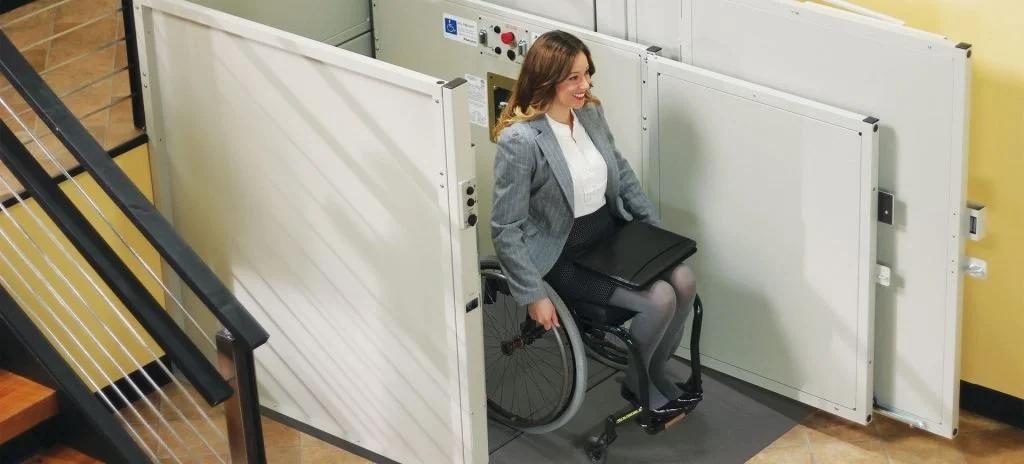
Safety is paramount when moving a wheelchair between levels. Vertical platform lifts are designed with stable platforms, secure gates, and smooth motion to protect users.
The platform supports the wheelchair fully. Gates prevent movement during travel. Smooth start and stop features reduce jarring motion.
These safety elements work together to create a calm, predictable experience that builds trust over time.
Supporting Different Wheelchair Types
Wheelchair users are not all the same. Manual wheelchairs, power wheelchairs, scooters, and customized mobility devices vary in size and weight.
Vertical platform lifts can be selected and configured to accommodate these differences. Platform size, weight capacity, and control placement are chosen to match the user’s equipment and preferences.
This customization ensures that the lift supports real life needs rather than forcing compromise.
Energy Conservation and Reduced Fatigue
Using a wheelchair already requires energy. Navigating around barriers or relying on assistance can increase fatigue significantly.
Vertical platform lifts reduce physical and emotional exertion. Wheelchair users do not need to transfer out of their chair or navigate alternative routes. They simply roll onto the platform and move.
Conserving energy allows more engagement with meaningful activities.
Emotional Impact of Regaining Vertical Access
The emotional impact of a VPL often surprises families. Wheelchair users describe feeling whole again in their home. They talk about relief, confidence, and a renewed sense of belonging.
Being able to access a bedroom, join family upstairs, or reach a favorite room without help changes how people feel about their space.
This emotional shift is as important as the physical access itself.
Integrating VPLs Into Existing Home Design
Modern vertical platform lifts are designed to integrate into homes thoughtfully. They can be placed near stairs, along walls, or in discreet areas that minimize visual impact.
Design choices such as finishes, enclosures, and placement help the lift feel like part of the home rather than an afterthought.
A well integrated VPL preserves comfort and familiarity.
Indoor Versus Outdoor Access Points
In multi level homes, VPLs may be installed indoors, outdoors, or both. Indoor lifts support movement between floors. Outdoor lifts support entry into the home.
In some cases, both are needed to create full accessibility. Planning holistically ensures that access is seamless from the moment someone arrives home.
Consistency across access points supports confidence.
Supporting Aging in Place for Wheelchair Users
Many wheelchair users want to remain in their homes long term. Multi level layouts often make this goal feel uncertain.
Vertical platform lifts make aging in place more achievable. They adapt the home to changing mobility needs rather than forcing relocation.
This stability supports long term independence and emotional wellbeing.
Reducing Risk of Injury
Without proper access, wheelchair users may attempt unsafe transfers or rely on makeshift solutions. These situations increase the risk of injury.
Vertical platform lifts provide a safe alternative that reduces risk and supports proper positioning.
Preventing injury protects both the individual and caregivers.
Supporting Caregivers Without Replacing Independence
While VPLs support independence, they also reduce caregiver strain. Caregivers no longer need to assist with navigating stairs or level changes.
This balance allows caregivers to focus on support rather than physical lifting, preserving relationships and reducing burnout.
Shared safety benefits everyone.
Planning for Changing Needs Over Time
Mobility needs may evolve. Strength, endurance, or equipment may change.
Vertical platform lifts offer adaptability. Systems can be adjusted or upgraded as needs change, providing long term value.
Planning ahead reduces future disruption.
Noise, Privacy, and Comfort
Modern VPLs operate quietly, supporting privacy and comfort. Movement does not draw attention or disrupt the household.
This discretion helps the lift blend into daily life.
Training and Familiarity
Using a VPL is intuitive, but proper training ensures confidence. Users learn how to operate controls, enter and exit safely, and understand emergency features.
Familiarity builds trust and independence.
Real Life Reflections From Wheelchair Users
I once spoke with a wheelchair user who said their VPL gave them their house back. They no longer felt confined to one floor. Another shared that they stopped feeling like a guest in their own home.
These reflections highlight how access transforms experience.
Comparing VPLs to Other Accessibility Solutions
While stairlifts support seated users, VPLs are uniquely suited for wheelchair users. They allow full mobility device access without transfers.
This distinction makes VPLs especially valuable in multi level homes.
The Long Term Value of Vertical Access
Vertical access is not a luxury. It is a foundation of independence.
Investing in a VPL supports daily life, emotional wellbeing, and long term stability.
Conclusion
Vertical platform lifts play a vital role in supporting wheelchair users in multi level homes. They restore access, preserve independence, and reconnect spaces that might otherwise feel out of reach. By providing safe, reliable vertical movement, VPLs allow wheelchair users to live fully in the homes they love.
At KGC, we believe accessibility should adapt to real lives and real homes. Our approach to vertical platform lifts focuses on thoughtful design, safety, and customization so wheelchair users can move confidently and independently every day. If you are exploring options for a multi level home, our team is here to help you find a solution that truly fits.
You can reach our team through the KGC Contact Page.
