
How to Choose the Right Ramp Material: Wood, Aluminum, or Concrete?
Introduction
The decision came up quietly, the way important choices often do. Someone I care about stood on the front porch, looking at the steps that had always been part of the house’s charm. They were solid, well built, and familiar. But now they represented something else. A pause. A calculation. A moment of uncertainty before every entry and exit.
We need a ramp, they said. But I don’t know what it should be made of. I don’t want it to feel wrong.
That feeling is more common than people admit. Choosing a ramp is not just about function. It is about how the home feels. How it looks. How it holds your life. The material you choose shapes all of that. It affects safety, maintenance, appearance, and even how emotionally comfortable the solution feels.
Wood, aluminum, and concrete are the most common ramp materials. Each offers real benefits. Each comes with tradeoffs. And none of them are purely technical choices. They are lifestyle choices.
This article explores how to choose the right ramp material by looking beyond specifications and into real life experience. It considers how each material behaves over time, how it feels to live with, and what kind of relationship it creates between the ramp and the home.
Why Material Choice Feels So Important
Ramps are visible. They are not hidden behind walls or tucked into utility spaces. They greet you every day. They shape how visitors arrive. They become part of the home’s personality.
Because of that visibility, material choice carries emotional weight. A ramp can feel like a natural extension of the home or like an awkward attachment. It can feel permanent or temporary. Warm or industrial. Subtle or obvious.
The right material does more than support mobility. It supports dignity and comfort.
Wood Ramps and the Feeling of Home
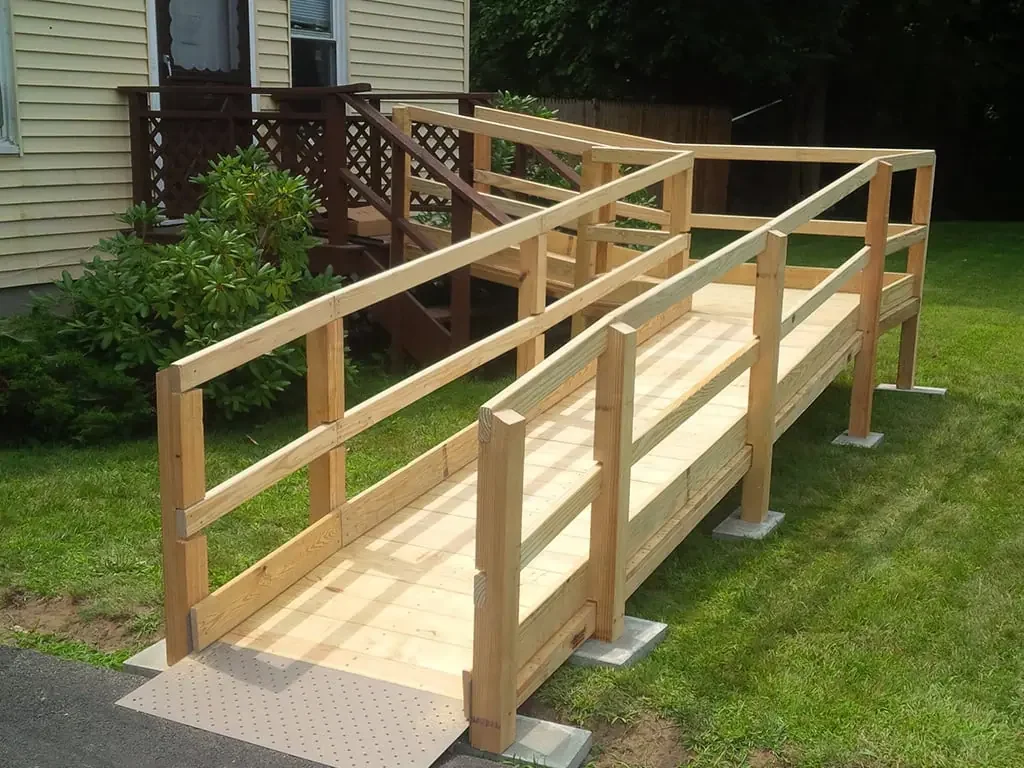
Wood is often the first material people imagine when they think about ramps. It feels familiar. Warm. Organic. It blends easily with traditional home designs and natural landscaping.
Wood ramps can be customized extensively. They can match existing decks, porches, or railings. They can be painted or stained to align with the home’s color palette.
Emotionally, wood feels inviting. It rarely looks medical. It feels like part of the house rather than an added device.
The Reality of Living With Wood
Living with a wood ramp requires ongoing care. Wood is affected by weather, moisture, and temperature. Over time, it can warp, crack, or become slippery if not maintained.
Regular sealing, painting, and inspection are necessary to keep wood safe and stable. In climates with heavy rain or snow, this upkeep becomes especially important.
Wood rewards attention, but it demands it too.
When Wood Makes the Most Sense
Wood ramps work well for homeowners who value aesthetics and are willing to maintain them. They suit permanent installations where the ramp is meant to become part of the home’s architecture.
They also work well when the ramp needs to match existing wood structures like decks or porches.
For many families, wood feels emotionally right even if it requires more effort.
Aluminum Ramps and Modern Practicality
Aluminum ramps represent a different philosophy. They prioritize function, durability, and low maintenance.
Aluminum does not rot, warp, or absorb moisture. It resists corrosion and handles extreme weather well. It remains stable across seasons with minimal upkeep.
Visually, aluminum ramps have a more utilitarian appearance. They are sleek, clean, and clearly engineered.
The Emotional Experience of Aluminum
Some people worry that aluminum ramps will make their home feel industrial or clinical. Modern designs have softened this perception significantly.
Today’s aluminum ramps use neutral finishes and modular designs that feel more residential than older models.
Emotionally, aluminum ramps often feel reassuring. They communicate reliability and safety.
Living With Aluminum Day to Day
Aluminum ramps require very little maintenance. Occasional cleaning and inspection are usually enough.
They offer consistent traction, built in safety features, and predictable performance.
For people who do not want to worry about upkeep, aluminum feels liberating.
When Aluminum Is the Right Choice
Aluminum ramps are ideal for modular or temporary installations. They suit renters, families with changing needs, or anyone who values flexibility.
They are also excellent for outdoor use in harsh climates where wood would struggle.
For many, aluminum feels like the most practical solution.
Concrete Ramps and the Feeling of Permanence
Concrete ramps feel solid in every sense of the word. They are heavy, durable, and unmistakably permanent.
Concrete becomes part of the structure itself. It does not feel like an addition. It feels like it has always been there.
Emotionally, concrete communicates stability and commitment.
The Reality of Concrete Living
Concrete ramps require minimal maintenance. They resist weather, support heavy loads, and last for decades.
However, they are not easily changed or removed. Once poured, they define the entryway.
This permanence can feel comforting or restrictive depending on the homeowner’s perspective.
When Concrete Makes Sense
Concrete ramps work best for long term homes where accessibility needs are stable and permanent.
They suit homeowners who want a seamless, built in solution that blends with masonry or modern architecture.
Concrete is for those who are certain.
Comparing the Emotional Impact
Wood feels warm and adaptable but asks for care.
Aluminum feels reliable and flexible but looks engineered.
Concrete feels solid and permanent but resists change.
Choosing between them is as much about emotional comfort as technical performance.
The right material supports not only movement, but peace of mind.
Climate and Environmental Factors
Climate plays a major role in material choice. In wet or snowy regions, aluminum and concrete outperform wood in safety and longevity.
In mild climates, wood becomes more manageable and appealing.
Environment shapes experience more than people expect.
Safety Across Materials
All three materials can be safe when designed and installed correctly. The key is proper slope, surface traction, and handrail placement.
No material automatically guarantees safety. Professional design does.
Safety is about execution, not just material.
Maintenance as a Lifestyle Choice
Some people enjoy maintaining their home. They like repainting, sealing, and adjusting.
Others want to set it and forget it.
Wood suits the first group. Aluminum and concrete suit the second.
There is no wrong preference. Only honest ones.
Real Life Stories Behind the Materials
I once spoke with a family who chose wood because they wanted their ramp to feel like part of their garden. Years later, they still loved the look and accepted the upkeep as part of ownership.
Another homeowner switched from wood to aluminum after getting tired of constant maintenance. They said the relief was immediate.
A third family built a concrete ramp when they knew they would never move. They described it as reclaiming their home for the long term.
Different lives create different right answers.
Visual Integration With the Home
Material affects how the ramp visually integrates with the home.
Wood blends naturally with traditional designs.
Aluminum fits modern or minimalist aesthetics.
Concrete complements contemporary or industrial styles.
Matching material to home personality creates harmony.
The Role of Professional Guidance
Choosing a ramp material benefits from professional insight. Experts consider slope, load requirements, weather exposure, and long term use.
They help families avoid choices based purely on appearance or assumptions.
Guidance prevents regret.
Flexibility Versus Commitment
Wood and aluminum offer flexibility. They can be modified, extended, or removed.
Concrete offers commitment. It becomes part of the property’s identity.
Understanding your own comfort with change helps guide the decision.
The Deeper Question Behind Material Choice
Ultimately, choosing a ramp material is about how you want to live.
Do you want warmth or durability?
Adaptability or permanence?
Hands on care or minimal maintenance?
The material reflects values, not just needs.
Conclusion
Choosing between wood, aluminum, and concrete is not simply a technical decision. It is an emotional and lifestyle choice. Wood offers warmth and visual harmony but requires care. Aluminum provides durability and flexibility with minimal maintenance. Concrete delivers permanence and stability for long term living. The right material is the one that supports both physical safety and emotional comfort.
At KGC, we believe ramp solutions should feel as supportive as they are functional. Our approach focuses on understanding each home, each family, and each future so the chosen material truly fits the life being lived. Whether you are drawn to the warmth of wood, the reliability of aluminum, or the strength of concrete, our team is here to help you make a choice that feels right today and tomorrow.
You can reach our team through the KGC Contact Page.
