
How Ramps Improve Safety for People Using Walkers, Canes, or Strollers
Introduction
There is a moment that stays with me whenever I think about ramps and everyday safety. It happened on a quiet afternoon when someone close to me was leaving their home with a walker. The front steps were short, only a few of them, the kind most people barely notice. For years, those steps had been part of the rhythm of daily life. But that day, I noticed something different. They paused at the top step longer than usual. Their grip tightened. Their body leaned forward slightly, preparing for the careful choreography of getting down safely.
At the same time, a neighbor was pushing a stroller along the sidewalk. They stopped nearby, waiting patiently, watching with quiet concern. What struck me was how similar their situations really were. Both were navigating elevation changes. Both needed steady footing. Both needed predictability and control. And both were being challenged by something as ordinary as a few steps.
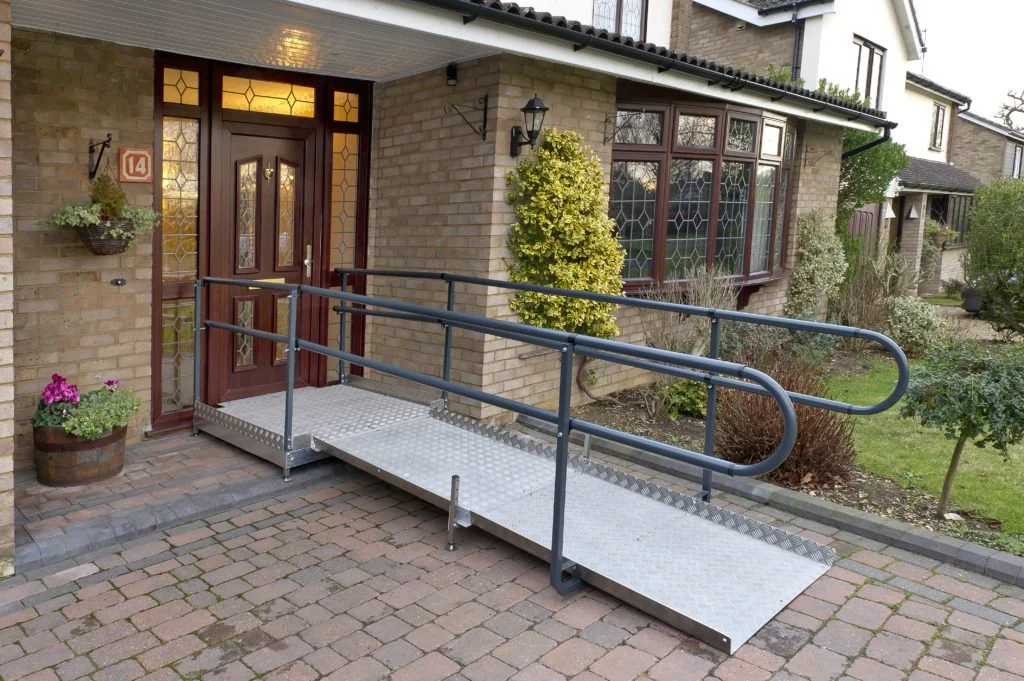
Later that week, a ramp was installed. Nothing extravagant. Just a gentle slope that replaced the abrupt change in height. The transformation was immediate. The walker moved smoothly. The stroller rolled without jolting. The hesitation disappeared. The tension eased. What once required careful planning became effortless again.
That experience made something clear to me. Ramps are not only for wheelchairs. They quietly and powerfully improve safety for anyone who needs stability, balance, or smooth movement. People using walkers. People using canes. Parents pushing strollers. Caregivers assisting loved ones. Ramps support all of these journeys in ways we often overlook.
This article explores how ramps improve safety for people using walkers, canes, or strollers. It looks beyond technical specifications and focuses on real life movement, real bodies, and real moments. It explains why ramps matter, how they protect against injury, and how thoughtful design supports dignity, independence, and confidence for everyone who uses them.
The Shared Challenge of Uneven Surfaces
Whether someone uses a walker, a cane, or a stroller, they all face the same basic challenge. Uneven surfaces disrupt balance and momentum. Steps, thresholds, curbs, and abrupt elevation changes require precise movement and coordination. For people with reduced mobility or stability, these transitions increase the risk of falls, strains, and sudden loss of control.
A walker provides support, but it requires all four points to remain stable. Steps break that stability. A cane offers balance assistance, but it relies on even ground to be effective. A stroller carries precious cargo, and any sudden tilt or jolt can be alarming or unsafe.
Ramps smooth these transitions. They replace abrupt changes with gradual movement. They allow the body to adjust naturally. They reduce the need for lifting, awkward angles, or sudden shifts in weight. In doing so, ramps create safer pathways for many different users, not just those with visible mobility aids.
Why Steps Are Especially Risky for Walkers
Walkers are designed to support weight evenly across a stable surface. When someone approaches steps with a walker, that stability disappears. The person must lift the walker, place it down carefully, then step forward while maintaining balance. Each movement requires coordination, strength, and focus. A small misstep can lead to a fall.
Steps also demand alternating weight shifts. The person must rely on one leg while lifting the other, often while holding onto the walker for support. This motion can strain joints and muscles. It increases the risk of losing balance, especially if the person has limited strength, joint pain, or fatigue.
A ramp eliminates the need for lifting the walker entirely. The user can maintain continuous contact with the ground. The walker rolls or slides smoothly. The body stays aligned. The movement feels natural rather than forced.
This continuity is what makes ramps so powerful for walker users. They allow movement without interruption, which dramatically improves safety.
How Ramps Support Cane Users Differently
Cane users often have more mobility than walker users, but they rely heavily on balance. A cane provides a point of contact that helps stabilize the body. But its effectiveness depends on even ground. Steps introduce unpredictable angles and distances that require precise placement of both foot and cane.
Descending steps with a cane is particularly challenging. The user must control their downward momentum while maintaining balance on a single point of support. If the cane slips or the step height is misjudged, the risk of falling increases significantly.
Ramps offer a gradual incline or decline that allows cane users to move at their own pace. They can maintain consistent contact with the ground. The cane stays planted securely. The user can adjust their speed without sudden shifts.
For cane users, ramps reduce anxiety. They turn a potentially intimidating descent into a manageable, confident movement. That sense of control is essential for safety and emotional comfort.
Strollers and the Hidden Safety Risks of Steps
Strollers are often overlooked in conversations about accessibility, but they face many of the same challenges as mobility devices. Steps require lifting the stroller, tilting it, or navigating awkward angles. Parents and caregivers must manage both the stroller and the child inside, often while balancing their own weight.
Lifting a stroller down steps puts strain on the caregiver’s back, shoulders, and arms. It increases the risk of dropping the stroller or losing grip. Even small steps can feel hazardous when carrying a child.
Ramps eliminate the need for lifting. They allow strollers to roll smoothly. The caregiver can maintain control and stability. The child experiences a gentle ride rather than a jarring movement.
In this way, ramps improve safety not only for the person pushing the stroller, but also for the child inside. They create a calmer, more predictable experience for everyone involved.
The Role of Slope in Safety
The slope of a ramp is one of the most important factors in safety. A gentle slope allows users to move comfortably without excessive effort. A steep slope, even on a ramp, can recreate many of the same dangers as steps.
For walker users, a steep ramp requires pushing uphill with force, which can strain the arms and shoulders. For cane users, it demands careful balance and control, especially when descending. For strollers, a steep slope increases the risk of runaway movement.
A properly designed ramp uses a gradual incline that supports control and stability. It allows users to pause if needed. It prevents sudden acceleration. It reduces physical strain.
Safety is not just about having a ramp. It is about having the right ramp.
How Ramps Reduce Fall Risk
Falls are one of the most common causes of injury for people using mobility aids. Many falls happen during transitions, such as stepping up or down. Ramps significantly reduce these risks by smoothing transitions and eliminating sudden height changes.
With a ramp, the user maintains continuous contact with the ground. There is no moment where balance is lost during a step. The body remains aligned. The movement feels predictable.
For caregivers assisting someone with a walker or stroller, ramps also reduce fall risk. They eliminate the need to lift or support weight awkwardly. The caregiver can focus on guiding rather than catching or stabilizing.
This reduction in fall risk is one of the most significant safety benefits of ramps.
Ramps and Joint Protection
Movement on steps places repeated stress on joints, especially knees, hips, and ankles. For people with arthritis, joint replacements, or chronic pain, this stress can be significant. Each step requires bending, lifting, and weight shifting that can aggravate discomfort.
Ramps distribute movement more evenly. They allow the joints to move through a smaller range of motion. The body does not need to lift itself vertically. This reduces strain and supports long term joint health.
For people using walkers or canes, this can mean the difference between moving comfortably and moving with pain. For caregivers pushing strollers, it can protect their backs and shoulders from repeated lifting.
Predictability and Confidence
Safety is not only physical. It is also emotional. When someone feels uncertain about a movement, their body tenses. Their movements become hesitant. Hesitation increases the risk of missteps and falls.
Ramps provide predictability. Users know what to expect. They can see the path ahead. They can control their pace. This predictability builds confidence.
When confidence increases, movement becomes smoother. The body relaxes. Balance improves. Safety follows naturally.
For parents pushing strollers, predictability means less anxiety. For walker and cane users, it means freedom to move without fear.
The Importance of Surface Texture
The surface of a ramp plays a crucial role in safety. A smooth surface can become slippery when wet or icy. Textured surfaces provide traction that supports stability for all users.
For walkers, traction prevents slipping as weight is applied. For canes, it ensures the tip grips securely. For strollers, it prevents wheels from sliding unexpectedly.
A well designed ramp balances traction with ease of movement. It should feel stable without being difficult to roll across. This balance is essential for safety and comfort.
Weather and Everyday Safety
Weather affects everyone, but it has a greater impact on those using mobility aids or strollers. Rain, snow, frost, and fallen leaves can turn even gentle slopes into hazards if the ramp is not designed and maintained properly.
Ramps that are weather resistant, well drained, and textured remain usable in changing conditions. They reduce the risk of slipping and sliding. They support year round safety.
For walker and cane users, this means they do not have to avoid going out due to weather. For parents with strollers, it means everyday routines can continue without added stress.
Ramps in Public and Private Spaces
Ramps improve safety not only at home, but also in public spaces. Sidewalk ramps, building entrances, parks, and schools all benefit from thoughtful ramp design. When ramps are present and properly built, communities become more inclusive and safer for everyone.
Parents with strollers, individuals with temporary injuries, delivery workers with carts, and older adults with canes all benefit from smooth, gradual transitions. Accessibility supports the entire community.
Real Life Moments That Show the Difference
I once watched a person with a cane approach a building entrance that had both steps and a ramp. They chose the ramp without hesitation. Their movement was steady and relaxed. Later, a parent arrived with a stroller and did the same. The ramp quietly served both needs without drawing attention.
In another setting, a home without a ramp required a caregiver to help someone with a walker down the steps. Each movement was slow and tense. After a ramp was installed, the person began moving independently again. The caregiver stepped back, watching with relief as confidence returned.
These moments illustrate how ramps quietly transform daily life. They reduce dependence. They restore choice. They improve safety in ways that ripple outward.
Supporting Independence Without Labels
One of the most beautiful aspects of ramps is that they support independence without singling anyone out. A ramp does not announce who needs help. It simply exists as a pathway that anyone can use.
For someone using a cane, this subtlety matters. For a parent with a stroller, it feels natural. For a walker user, it preserves dignity. Accessibility that blends into everyday life supports inclusion rather than separation.
Planning Ramps for Changing Needs
Mobility needs evolve. Someone who uses a cane today may use a walker tomorrow. A family with a stroller today may care for an aging parent in the future. Ramps provide flexibility. They adapt to changing circumstances without requiring major renovations.
Planning for ramps is planning for life’s transitions. It is a forward thinking approach to safety and comfort.
Why Professional Design Matters
While ramps may appear simple, safe ramp design requires understanding slope, width, surface texture, drainage, and user movement. Professional design ensures that all these elements work together.
A professionally designed ramp feels effortless. It supports different users without compromise. It remains safe over time.
DIY solutions often miss these nuances, creating risks rather than reducing them.
The Broader Impact on Daily Life
When ramps are present, daily life becomes easier in countless small ways. Groceries move smoothly. Strollers roll effortlessly. Walkers glide. Canes remain stable. Caregivers feel less strain. Confidence grows.
These small improvements add up to a significant enhancement in quality of life.
Conclusion
Ramps improve safety for people using walkers, canes, or strollers by transforming abrupt, risky transitions into smooth, predictable pathways. They reduce fall risk. They protect joints. They support balance. They ease caregiver strain. And they restore confidence and independence in everyday movement.
At KGC, we believe ramps are not just accessibility features. They are expressions of care, inclusion, and thoughtful design. When built correctly, ramps quietly support a wide range of needs without drawing attention or creating barriers. If you are considering a ramp for your home or want to improve safety for those you care about, our team is here to help you create a solution that supports dignity and everyday freedom.
You can reach our team through the KGC Contact Page.
