
How Long Should a Ramp Be? Understanding the Math
Introduction
The tape measure snapped back with a sharp sound, and someone I care about let out a slow breath. We had just measured the height from the porch to the ground. It did not look like much. Just a few feet. Nothing dramatic. But the conversation that followed felt unexpectedly complicated.
So how long does the ramp need to be? they asked. It’s only three feet high. That shouldn’t be a big deal, right?
That moment captures one of the most misunderstood parts of ramp design. Elevation may look small, but the math behind safe slope changes everything. A short rise can translate into a surprisingly long ramp. And while that length may initially feel excessive, it is often the difference between independence and exhaustion.
Understanding ramp length is not about memorizing formulas. It is about understanding why the math exists in the first place. When people grasp the reasoning behind ramp length, they stop seeing it as overbuilding and start seeing it as protection.
This article walks through how ramp length is calculated, why those numbers matter deeply, and how proper planning ensures safety, dignity, and long term usability.
Why Ramp Length Is About More Than Distance
At first glance, ramp length seems like a simple measurement. How high is the entry? Multiply by something. Build that length.
But the truth is that ramp length represents effort. It represents the amount of force required to move upward safely and the amount of control required when moving downward.
The longer the ramp, the gentler the slope. The gentler the slope, the safer and more comfortable the movement.
Length is not excess. It is protection.
The Guiding Principle Behind Ramp Math
The most widely recognized guideline for residential accessibility follows a ratio often described as one inch of rise for every twelve inches of ramp length.
In practical terms, this means that for every inch the ramp must climb vertically, it should extend at least one foot horizontally.
This ratio is not arbitrary. It reflects decades of experience with mobility equipment, balance challenges, and caregiver support.
It ensures that the ramp feels gradual rather than steep.
Turning Height Into Length
Imagine a porch that sits thirty inches above ground level. At first glance, that height might seem modest.
Using the common ratio, thirty inches of vertical rise requires approximately thirty feet of ramp length.
That number often surprises homeowners. Thirty feet feels long. But when visualized as a gentle slope rather than a steep incline, it makes sense.
Gentle slopes require space.
Why Shortcuts Create Steep Risks
It is tempting to reduce ramp length to save yard space or construction cost. But shortening the ramp increases the incline.
A steeper ramp demands greater strength when ascending and more braking control when descending.
Over time, steep ramps lead to fatigue, hesitation, and increased fall risk.
The math is unforgiving. Cutting length increases risk.
The Experience of a Properly Sized Ramp
I once observed someone using a ramp built to recommended proportions. Their movement was steady and calm. They did not lean heavily on handrails. They did not pause halfway to catch their breath.
Later, they used a steeper ramp elsewhere. The difference was immediate. Effort increased. Balance required constant adjustment.
The length of the ramp had changed their experience entirely.
Landings and Rest Areas
Ramp math does not stop at total length. Long ramps require landings where users can pause, reposition, and rest.
These flat sections provide both physical relief and psychological reassurance.
Breaking a long ramp into segments makes it feel manageable rather than overwhelming.
Length should be thoughtful, not intimidating.
Space Planning and Creative Layout
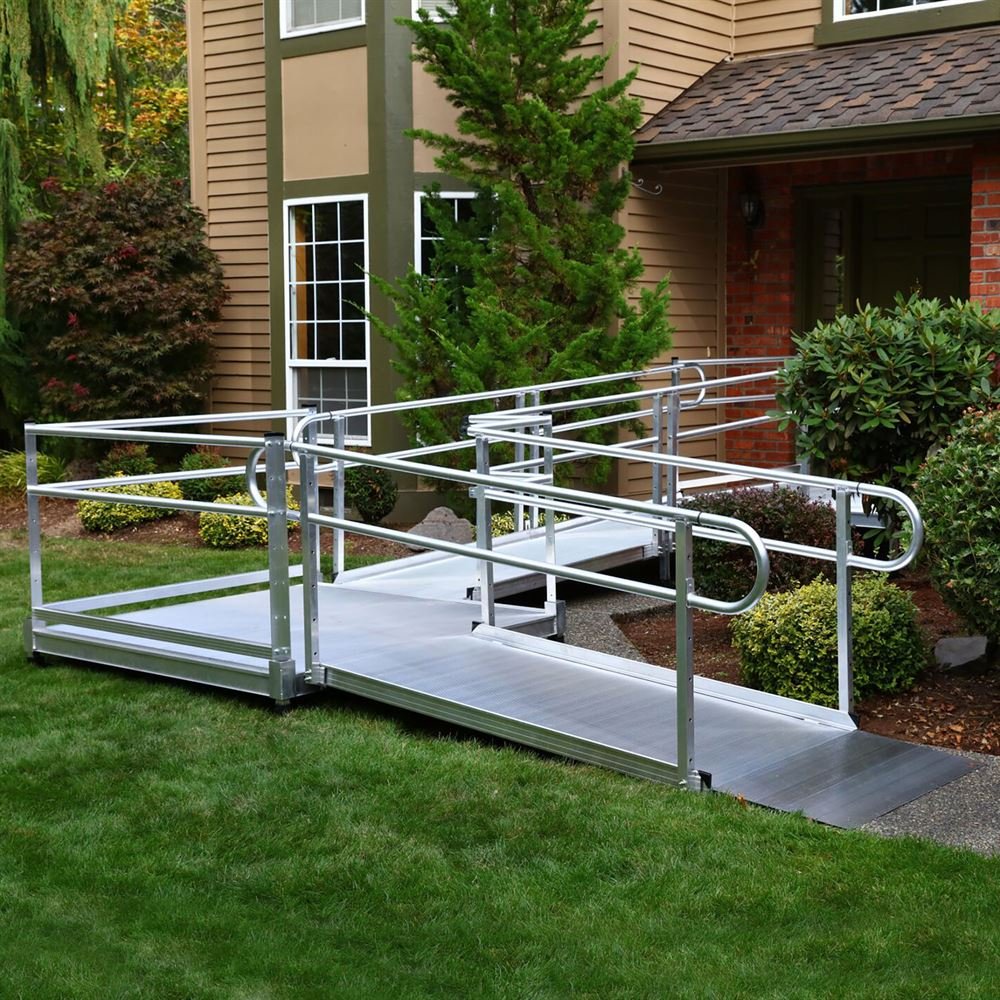
Thirty feet of ramp does not necessarily mean a straight line across the yard. Switchbacks and gentle turns allow ramps to fit within limited spaces.
Creative design integrates ramps into landscaping, preserving yard aesthetics while maintaining safe slope.
Math guides design, but design solves spatial challenges.
Considering Who Will Use the Ramp
Ramp length must reflect the user’s mobility and strength. Someone pushing a manual wheelchair independently requires a gentler slope than someone assisted by a powered device.
Families should think beyond current strength and consider long term comfort.
Building for today and tomorrow prevents regret.
The Role of Surface Material
While length determines slope, surface material affects traction. Even properly sized ramps require textured surfaces for safety.
Length and traction work together to create stability.
Ignoring one weakens the other.
Weather and Ramp Math
Weather amplifies the importance of proper length. Rain, snow, or ice reduce friction.
A ramp that feels manageable in dry weather may become difficult in wet conditions if too steep.
Gentle slopes offer greater margin for safety during environmental stress.
Emotional Reaction to Long Ramps
Homeowners often react emotionally to the required length. It can feel excessive or intrusive.
Understanding the reasoning behind the numbers transforms that reaction. Instead of seeing wasted space, families begin to see protection and foresight.
Perspective reshapes acceptance.
Compliance Versus Comfort
Building codes establish minimum standards, but comfort sometimes requires going beyond minimum ratios.
When space allows, even gentler slopes enhance usability.
Compliance ensures safety. Comfort ensures confidence.
Professional Assessment Makes the Difference
Accurately measuring vertical rise and translating it into safe ramp length requires precision.
Professionals consider entry thresholds, slope transitions, and landing placement.
Expert guidance ensures that math becomes usable reality.
Real Life Reflections
I once met a homeowner who initially resisted building a long ramp. After installation, they admitted that the gentle incline changed how they felt about leaving home.
Another family shortened a ramp against advice and later rebuilt it after daily frustration.
Experience reinforces what guidelines anticipate.
Ramps as Long Term Infrastructure
Ramps should not be temporary improvisations. They are infrastructure for independence.
Investing in proper length supports years of reliable use.
Infrastructure deserves thoughtful planning.
Seeing the Numbers Differently
When someone hears that a three foot rise requires thirty feet of ramp, it can feel overwhelming.
But when they imagine climbing a gentle hill rather than scaling a steep incline, the logic becomes clear.
Math is simply the language of safety.
Conclusion
Determining how long a ramp should be begins with understanding the relationship between rise and run. Using the widely recognized ratio of one inch of rise for every twelve inches of length ensures that ramps remain gentle, safe, and comfortable to use. While required lengths may initially seem extensive, they exist to protect independence, reduce fatigue, and prevent injury. Thoughtful planning transforms ramp math from frustration into confidence.
At KGC, we believe ramp design should combine precise calculation with compassionate understanding. Our approach ensures that every ramp supports long term safety while integrating seamlessly into the home. If you are measuring your entry and wondering how the numbers translate into real life design, our team is here to guide you with clarity and care.
You can reach our team through the KGC Contact Page.
