
Designing an Attractive, Functional Ramp That Fits Your Home’s Style
Introduction
I remember standing on a front porch one afternoon with someone I care deeply about, both of us quietly taking in the view of their home. It was a house filled with stories. The porch columns had been painted by hand years ago. The siding still held the warmth of countless summers. Every detail reflected care and pride. But just below our feet were the steps that had slowly become a source of hesitation.
They had agreed a ramp was needed. Safety was no longer negotiable. Independence mattered too much. Yet there was a pause in their voice when they said, I just don’t want it to look like an afterthought. I don’t want my home to stop feeling like mine.
That sentence has stayed with me.
Accessibility should never require someone to give up the identity of their home. A ramp should not feel like a compromise between safety and beauty. It should feel intentional, welcoming, and seamlessly woven into the architecture that already exists. When designed thoughtfully, a ramp can enhance a home rather than detract from it. It can reflect the same care and style as the rest of the space while quietly doing the important work of keeping people safe.
This article explores how to design an attractive, functional ramp that truly fits your home’s style. It is about blending accessibility with aesthetics, practicality with personality, and safety with dignity. It is about honoring both the needs of the people who live in the home and the character of the home itself.
Why Appearance Matters Just as Much as Function
For many families, the hesitation around installing a ramp has little to do with safety and everything to do with how it will look. Homes are deeply personal spaces. They reflect taste, memory, and identity. The idea of adding something that feels institutional or temporary can feel unsettling.
Appearance matters because it affects how someone feels when they come home. A ramp that clashes with the home’s style can feel like a constant reminder of loss or limitation. A ramp that blends naturally into the architecture, however, feels like a continuation of the home’s story rather than an interruption.
When design and function work together, accessibility feels empowering rather than intrusive.
Starting With the Home’s Architectural Language
Every home speaks a visual language. Some are traditional, with symmetrical lines and classic materials. Others are modern, with clean edges and minimalist features. Some are rustic, cozy, or historic. Designing a ramp that fits your home begins with listening to that language.
Look at the materials already present. Wood grain, brick, stone, metal, or composite finishes all provide clues. Notice the colors. The trim. The railing style. The shape of the porch or entryway. A well designed ramp borrows from these existing elements so it feels intentional.
For example, a home with wooden decking and natural tones may benefit from a wood or composite ramp that matches the grain and stain of the porch. A modern home may call for sleek metal railings and clean lines. A brick home might incorporate masonry elements or complementary textures.
The goal is harmony, not imitation. The ramp should belong, not compete.
Choosing the Right Materials for Both Beauty and Durability
Material choice is one of the most important decisions in ramp design. It affects appearance, longevity, maintenance, and safety. The best material choices balance visual appeal with practical performance.
Wood offers warmth and traditional charm. It can be stained or painted to match existing structures. When treated and maintained properly, it blends beautifully with porches and decks. However, wood requires ongoing care and weather protection to maintain its appearance and safety.
Composite materials offer a refined look with less maintenance. They resist moisture, warping, and fading. Many composite options mimic the appearance of wood while offering greater durability. This makes them a popular choice for homeowners who want beauty without frequent upkeep.
Aluminum provides a clean, contemporary aesthetic. It is lightweight, strong, and resistant to rust. Modern aluminum ramps often feature textured finishes and customizable colors that integrate well with various home styles.
Concrete offers permanence and strength. When finished thoughtfully, it can look elegant rather than utilitarian. Decorative finishes, subtle textures, and integrated landscaping can transform concrete into a visually pleasing option.
The best choice depends on climate, maintenance preferences, and the home’s existing materials.
Integrating the Ramp Into the Landscape
A ramp does not exist in isolation. It interacts with the yard, garden, walkway, and surrounding environment. Thoughtful integration into the landscape can make a ramp feel like a natural pathway rather than an add on.
Gentle curves rather than rigid straight lines can soften the visual impact. Plantings alongside the ramp can create warmth and continuity. Low shrubs, flowers, or decorative grasses can frame the ramp without obstructing movement.
Lighting plays a crucial role as well. Soft, well placed lighting improves safety while enhancing curb appeal. Path lights, recessed lighting, or subtle rail lighting can make the ramp inviting during evening hours.
Landscaping transforms a ramp from a functional structure into part of the home’s outdoor experience.
Designing Railings That Feel Intentional
Railings are essential for safety, but they also contribute significantly to the ramp’s appearance. A railing should feel like it belongs to the home, not like an afterthought.
Matching railing styles to existing porch or deck railings creates visual continuity. If the home features traditional balusters, similar shapes can be incorporated. If the home has minimalist lines, simple horizontal or vertical rails may feel more appropriate.
Color matters. Railings painted or finished to match trim or architectural accents blend seamlessly. Texture matters too. Smooth finishes feel modern. Subtle detailing feels classic.
A well designed railing provides support without dominating the visual space.
The Role of Proportion and Scale
One of the reasons ramps sometimes look out of place is because their scale feels mismatched to the home. A ramp that is too bulky can overwhelm the entryway. A ramp that is too narrow may feel awkward or unsafe.
Proportion matters. The width, length, and height of the ramp should feel balanced in relation to the house. Gentle slopes and extended pathways often look more graceful than short, steep ones. Landings that align with doorways or porches create visual flow.
When proportions are right, the ramp feels like it was always meant to be there.
Hiding Function in Plain Sight
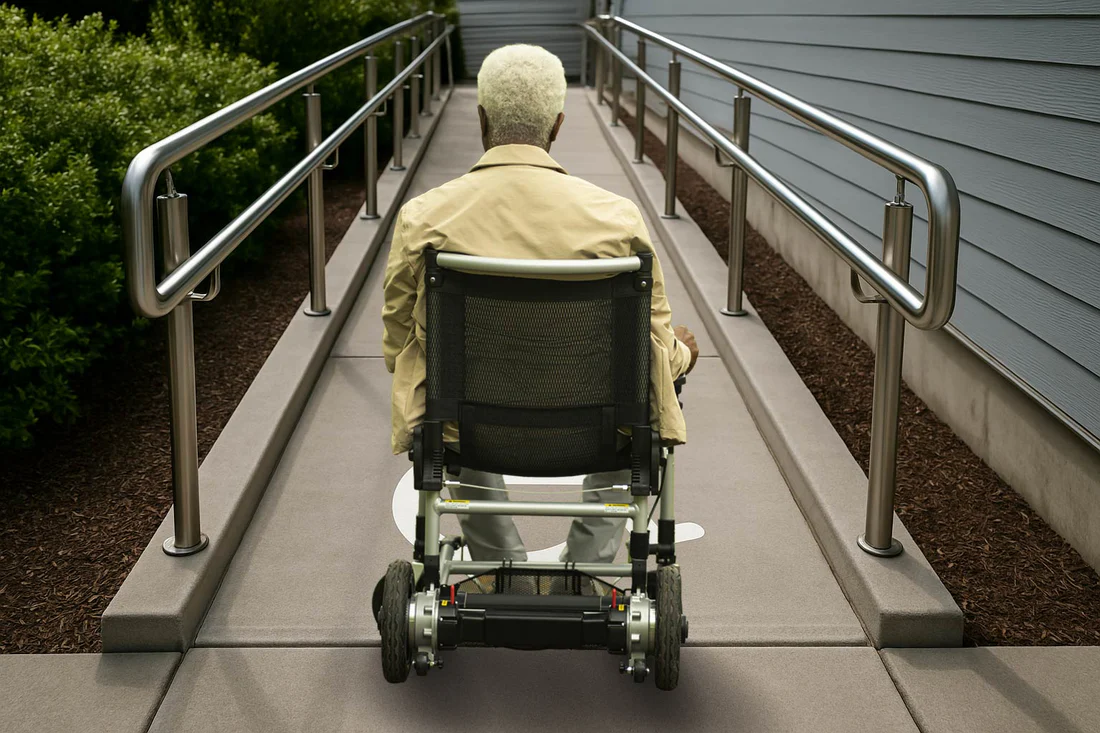
The most successful ramp designs often hide their function in plain sight. They look like walkways, decks, or garden paths rather than medical equipment.
This can be achieved by extending the ramp into a broader pathway that doubles as a front walk. It can be achieved by matching deck materials so the ramp appears as an extension of the porch. It can be achieved by integrating seating, planters, or architectural details that draw the eye naturally.
When people see the ramp and think walkway rather than accommodation, the design has succeeded.
Balancing Code Requirements With Visual Appeal
Accessibility guidelines and local building codes exist for safety, and they must be respected. However, meeting requirements does not mean sacrificing beauty.
Slope ratios, landing sizes, and handrail heights can be incorporated thoughtfully. Landings can become small outdoor spaces rather than purely functional platforms. Gentle slopes can enhance visual elegance. Railings can be designed with style while still meeting safety standards.
Working with professionals who understand both code and design ensures that the ramp is safe and attractive.
Addressing Concerns About Permanence
Some homeowners worry that installing a ramp signals permanence. They may fear it changes how others perceive their home or themselves. Design plays a powerful role in addressing these concerns.
An attractive ramp feels like a design choice rather than a necessity. It communicates intention and care rather than limitation. Even if the ramp is permanent, it does not need to feel heavy or final.
For those who prefer flexibility, modular systems can also be designed attractively, with finishes and configurations that align with the home’s style.
How Design Supports Emotional Wellbeing
Design affects how people feel in their spaces. An unattractive or awkward ramp can become a daily emotional burden. An attractive, thoughtfully designed ramp can foster pride, confidence, and comfort.
When someone feels good about how their home looks, they are more likely to invite others in, spend time outdoors, and remain socially connected. Design supports dignity as much as safety does.
A ramp should never feel like a symbol of loss. It should feel like a bridge to continued living.
Real Life Examples of Beautiful Ramp Design
I once visited a home where the ramp curved gently through a garden before reaching the front door. It was built from composite materials that matched the porch decking perfectly. Planters lined the sides, filled with flowers that changed with the seasons. Most visitors did not even realize it was a ramp at first glance.
In another home, a modern aluminum ramp extended from a side entrance with clean lines and subtle lighting. The finish matched the window frames and trim. It looked intentional and elegant. The homeowner spoke proudly about it, not apologetically.
These homes demonstrated that accessibility and beauty are not opposing goals. They are partners when design is done with care.
Considering Interior Ramps With Style
While most people think of exterior ramps, interior ramps can also be designed attractively. Small changes in floor height, sunken living rooms, or threshold transitions can benefit from subtle ramping.
Interior ramps can be finished with flooring that matches surrounding spaces. Gentle slopes can be integrated into hallways or open floor plans. Lighting and color choices can make these transitions feel seamless.
Interior ramp design is about subtlety and flow.
Working With Designers and Accessibility Experts
Designing an attractive ramp requires both creative vision and technical expertise. Professionals who specialize in accessibility understand how to balance safety requirements with aesthetic goals.
They listen to the homeowner’s preferences. They study the home’s architecture. They propose solutions that fit both practical needs and visual expectations. They help avoid common pitfalls that lead to awkward or out of place designs.
This collaboration often results in ramps that exceed expectations.
Maintenance and Long Term Appearance
A ramp should look good not just on installation day but for years to come. Material choice, finish quality, and weather protection all influence long term appearance.
Designing with maintenance in mind ensures that the ramp remains attractive without becoming a burden. Durable materials, proper drainage, and thoughtful finishes preserve both function and beauty.
Long term thinking protects the investment and the experience.
The Importance of Personal Input
No two homes are the same, and no two people have the same relationship with their space. Personal input is essential. Preferences around color, texture, and layout should guide design decisions.
When homeowners feel heard and involved, the final result feels meaningful. The ramp becomes part of the home’s identity rather than something imposed upon it.
Accessibility as an Expression of Care
Designing a beautiful ramp is an expression of care. It says that safety matters, but so does pride. It says that independence is valued without sacrificing personality. It says that accessibility can be elegant, thoughtful, and affirming.
This mindset transforms the entire process.
Conclusion
Designing an attractive, functional ramp that fits your home’s style is about more than construction. It is about honoring the home, the people who live there, and the life they want to continue living. When design and accessibility work together, ramps become seamless extensions of the home rather than interruptions.
A well designed ramp blends materials, proportions, landscaping, and architectural details into a cohesive whole. It supports safety while preserving beauty. It enhances confidence rather than diminishing it.
At KGC, we believe accessibility solutions should reflect the same care and intention as every other part of your home. Our approach to ramp design centers on function, style, and dignity, ensuring that safety enhancements feel like natural, welcome additions. If you are considering a ramp and want it to truly fit your home’s style, our team is here to help you create a solution that feels right in every way.
You can reach our team through the KGC Contact Page.
