
VPLs for Businesses: Meeting ADA Standards Without Major Construction
Introduction
The conversation started in a quiet lobby just after closing time. The chairs were stacked. The lights were dimmed. A business owner stood near the entrance, looking at a short set of steps that had never seemed problematic before. They had been there for years. Customers came and went. The business thrived.
But that evening, after a call from a potential client who asked about accessibility and then politely declined when the answer was unclear, those steps felt different. They felt heavier. More permanent.
I want everyone to be able to walk through that door, they said. I just don’t know how to do it without tearing the place apart.
That concern is shared by countless business owners. Many commercial spaces were built before accessibility standards were widely enforced. Retrofitting them can feel daunting, expensive, and disruptive. The fear of major construction often leads to delay, even when the desire to be inclusive is strong.
Vertical platform lifts offer a powerful alternative. They allow businesses to meet ADA standards without major structural changes, preserving both the integrity of the space and the continuity of operations. This article explores how VPLs help businesses achieve accessibility in a way that is practical, respectful, and aligned with real world constraints.
Why Accessibility Matters in Business Spaces
Accessibility is often discussed in terms of compliance, but for many business owners, it begins with values. Businesses exist to serve people. When barriers prevent someone from entering, participating, or engaging, that mission is interrupted.
Meeting ADA standards is not just about avoiding penalties. It is about creating spaces where everyone feels welcome and respected. It is about expanding reach rather than limiting it. It is about signaling that inclusion is intentional, not accidental.
For businesses, accessibility is both an ethical commitment and a practical advantage.
The Challenge of Retrofitting Older Buildings
Many commercial buildings were not designed with modern accessibility standards in mind. Raised entrances, split level interiors, and narrow footprints are common. Adding ramps that meet slope requirements can require significant space that simply does not exist.
Major construction projects can disrupt operations, impact customers, and strain budgets. For small businesses especially, closing doors even temporarily can be devastating.
Vertical platform lifts address these challenges by providing access vertically rather than horizontally. They solve elevation changes without requiring large scale reconstruction.
Understanding ADA Requirements in Commercial Settings
ADA standards require that businesses provide accessible routes into and throughout their spaces when feasible. This includes accommodating individuals who use wheelchairs, walkers, or have mobility limitations.
For changes in elevation, solutions must be safe, usable, and compliant. While ramps are one option, they are not always practical. Vertical platform lifts are recognized as an acceptable means of providing access when ramps are not feasible.
Understanding this flexibility allows business owners to explore solutions that fit their space rather than forcing their space to fit a single solution.
How VPLs Provide Access Without Major Construction
Vertical platform lifts are compact systems that move people between levels using a vertical path. Because they do not rely on long sloped surfaces, they require far less space than ramps.
In many cases, a VPL can be installed adjacent to existing stairs or within a small footprint near an entrance. This minimizes disruption to the building’s layout and reduces the need for demolition or structural alteration.
For businesses, this means faster installation, less downtime, and a smoother transition to accessibility compliance.
Preserving Business Operations During Installation
One of the greatest concerns business owners have is interruption. Construction noise, blocked entrances, and temporary closures can affect revenue and customer trust.
VPL installations are typically far less disruptive than large construction projects. With proper planning, installation can often occur while the business remains operational or during off hours.
This ability to maintain continuity is a major reason businesses choose VPLs over more invasive modifications.
Outdoor VPLs for Storefront Access
Many businesses face accessibility challenges at exterior entrances. Steps leading to storefronts, porches, or raised sidewalks can create barriers.
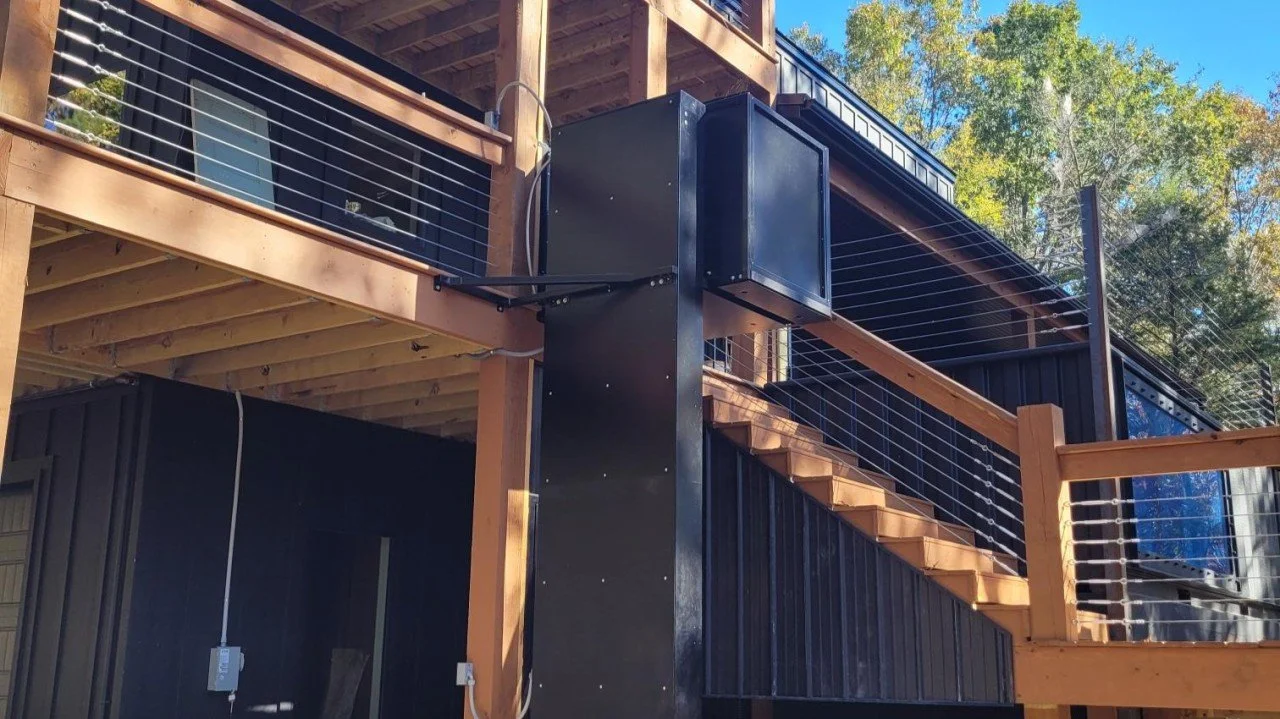
Outdoor VPLs are designed to withstand weather while providing reliable access. They can be installed at entrances without altering the facade significantly.
For businesses concerned about curb appeal, modern VPLs can be integrated thoughtfully, preserving the look and character of the storefront.
Indoor VPLs for Split Level Spaces
Inside commercial spaces, split levels are common. Restaurants, offices, and retail stores often have raised seating areas, sunken floors, or mezzanines.
Installing ramps indoors can consume valuable floor space and disrupt flow. Vertical platform lifts offer a compact solution that preserves usable space while ensuring access.
This allows businesses to maintain their layout and functionality while meeting accessibility requirements.
Safety and Reliability in High Traffic Environments
Business environments differ from homes in one important way. Traffic. VPLs used in commercial settings must be reliable, durable, and safe for frequent use.
Commercial grade VPLs are designed for repeated daily operation. Safety features such as secure gates, non slip platforms, smooth motion, and emergency controls protect users and operators alike.
Reliability builds trust, not just for users but for staff and management.
Supporting Independence for Customers and Employees
Accessibility is not only about customers. Employees with mobility challenges also benefit from accessible workplaces.
VPLs support independence by allowing individuals to move through the space without assistance. This autonomy fosters dignity and inclusion.
When employees and customers can navigate a space independently, the environment becomes truly accessible.
Reducing Liability and Risk
Inaccessible spaces can expose businesses to legal risk and liability. More importantly, they can expose individuals to unsafe conditions.
By providing a compliant and safe means of access, VPLs reduce risk. They demonstrate proactive effort to meet standards and protect everyone who enters the space.
Safety and compliance go hand in hand.
Flexibility for Changing Business Needs
Businesses evolve. Layouts change. Tenants move. VPLs offer flexibility that permanent construction may not.
In some cases, VPLs can be relocated or adapted if the space changes. This flexibility is especially valuable for leased properties where permanent alterations may be restricted.
Adaptability supports long term planning.
Cost Efficiency Compared to Major Construction
While any accessibility solution involves investment, VPLs often cost significantly less than major structural renovations. They reduce the need for demolition, extensive labor, and prolonged downtime.
For many businesses, the cost of a VPL is far outweighed by the value of expanded access, compliance, and customer reach.
Cost efficiency supports timely action rather than indefinite delay.
Improving Customer Experience
Accessibility affects customer experience in subtle ways. When access is smooth and intuitive, customers feel welcomed rather than accommodated.
A VPL that integrates seamlessly into the space allows customers to enter, move, and participate without drawing attention to their mobility needs.
Positive experiences lead to repeat visits and positive word of mouth.
Aligning Accessibility With Brand Values
Many businesses pride themselves on inclusivity, community, and service. Accessibility solutions should reflect those values.
Choosing a thoughtful, well designed VPL signals that inclusion is a priority. It communicates respect without fanfare.
Brand alignment matters to customers and employees alike.
Training Staff and Creating Confidence
Installing a VPL also involves ensuring staff understand how it works and how to assist if needed. Training builds confidence and ensures smooth operation.
When staff feel comfortable with accessibility features, they can support customers calmly and respectfully.
Preparedness enhances the overall environment.
Real Life Business Reflections
I once spoke with a café owner who delayed accessibility improvements for years because they feared major construction. When they installed a VPL, they were surprised by how quickly it became part of daily operations.
Another business owner shared that installing a VPL allowed them to hire an employee they otherwise would not have been able to accommodate. The lift changed not just access, but opportunity.
These stories highlight the ripple effect of accessible design.
Planning Ahead for Compliance
Proactive planning helps businesses avoid rushed decisions. Assessing accessibility needs before complaints or enforcement allows for thoughtful solutions.
VPLs offer a way to meet standards confidently without waiting for a crisis.
Preparation supports sustainability.
Working With Accessibility Professionals
Professional assessment ensures that VPLs are installed correctly and meet ADA requirements. Experts evaluate space, usage, and safety needs to design appropriate solutions.
Professional guidance simplifies compliance and reduces uncertainty.
Accessibility as a Business Advantage
Accessible businesses serve more people. They reach broader audiences. They build stronger communities.
VPLs help businesses remove barriers without sacrificing identity or operations. They turn accessibility from an obligation into an opportunity.
Conclusion
Vertical platform lifts provide businesses with a practical, respectful way to meet ADA standards without major construction. They solve elevation challenges efficiently, preserve space, and minimize disruption. Most importantly, they open doors to customers and employees who might otherwise be excluded.
At KGC, we understand the realities business owners face when balancing accessibility, operations, and budget. Our approach to commercial vertical platform lifts focuses on compliance, safety, and thoughtful integration so businesses can move forward with confidence.
If you are exploring accessibility solutions for your business and want guidance that respects both your space and your goals, our team is here to help.
You can reach our team through the KGC Contact Page.
