
Straight vs. Curved Stairlifts: Which One Fits Your Home Best?
Introduction
There is a moment many of us remember quietly, even if we never describe it out loud. It is the moment when someone we care about pauses at the bottom of the stairs a little longer than usual. It may happen in the middle of a normal day when nothing dramatic is going on, but the pause feels heavier than the rest of the moment. I once watched someone I love stand at the edge of the first step, looking upward with a familiar expression that blended hesitation, determination, and a hint of worry. It was not fear. It was not a loss of confidence. It was more like their body was letting them know that the stairs no longer felt as automatic as they used to.
That realization stayed with me long after the moment passed. It sat with me at dinner. It echoed lightly in my thoughts while folding laundry. It did not come with panic or sadness. Instead, it came with clarity. Something needed to change so that this person could continue moving freely and confidently throughout the entire home. The stairs were not an obstacle created by age or limitation. They were simply an architectural feature that no longer reflected their mobility needs.
This is the same experience many families share when they begin exploring stairlifts. They are not just looking for equipment. They are trying to rebuild comfort, dignity, and independence inside the place that matters most to them. They want a home that supports their confidence, not one that requires them to adapt to challenges that feel unnecessary or frustrating. Stairlifts provide something meaningful. They turn a stressful part of the home into something safe, predictable, and reassuring.
Once you step into the world of stairlifts, one of the first choices you face is the difference between straight and curved designs. While it may sound like a simple technical detail at first, it is a decision shaped by the home’s architecture, the user’s comfort, and the daily rhythms of the household. Understanding the difference is not complicated once you break it down. It simply requires looking at your staircase with new eyes and considering what type of support will truly help your loved one feel fully at home again.
This guide walks you through the real life, practical, emotional, and functional differences between straight and curved stairlifts so you can choose the one that fits your home best.
Why This Decision Matters
It is tempting to think of stairlifts as just another accessibility tool, but families quickly discover that they represent something much more personal. Stairs often become the most difficult part of a home when mobility changes. The stairs are not just a path from one floor to another. They separate bedrooms from common spaces. They separate morning routines from evening ones. They separate independence from needing someone else to assist.
A stairlift bridges that gap in a powerful way. It restores the ability to move freely from floor to floor and removes the sense of being confined to one level. It removes anxiety for both the person using it and the people who care about them. Many families describe feeling relief long before the installation even begins because the decision itself brings hope, clarity, and reassurance.
But for the stairlift to truly feel comforting, it must fit the home properly. That is why understanding the difference between straight and curved stairlifts is essential. Once you understand how the design interacts with your staircase, the choice becomes much easier, and the result feels aligned with your daily life instead of interrupting it.
Understanding Straight Stairlifts
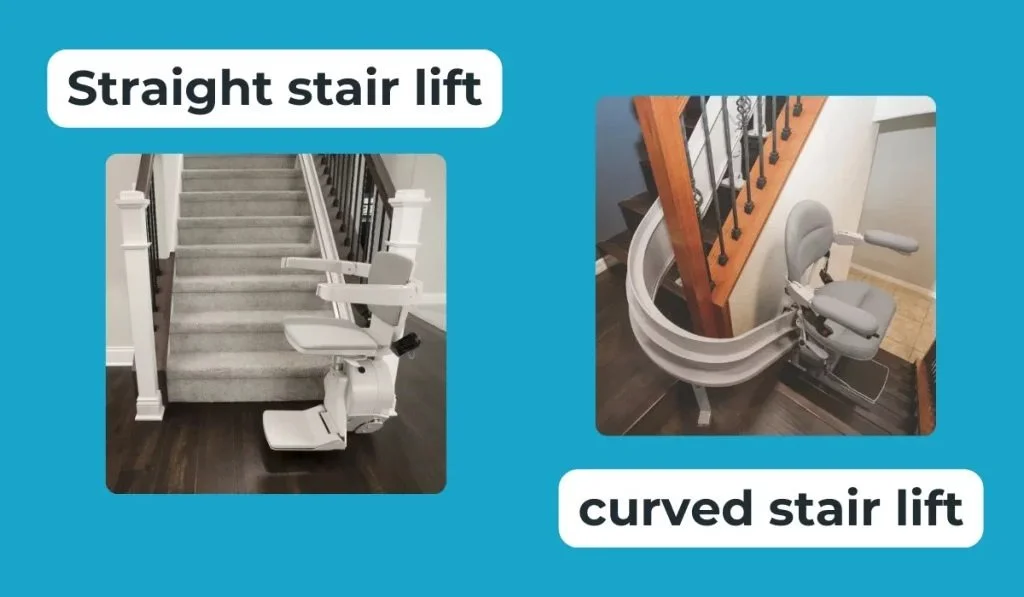
Straight stairlifts are exactly what they sound like. They are designed for staircases that go directly from one floor to the next in a single, uninterrupted line. There are no turns, landings, sharp angles, or changes in direction. Many modern homes have this type of staircase, especially newer builds where the floor plan favors clean lines and efficiency.
The beauty of a straight stairlift is its simplicity. It moves up and down a single rail that follows the natural line of the staircase. The path is predictable, smooth, and efficient. Families often describe it as riding along a quiet track that feels both secure and intuitive. Because the design is straightforward, installation tends to be quicker, and the cost is often more budget friendly.
Despite its simplicity, a straight stairlift still offers meaningful options. Seats can fold to maximize hallway space. Swivel features at the top landing allow a comfortable and safe exit. Some models include upgraded padding or power footrests for individuals who want a little more comfort. Even though it is the simpler option, it is still adaptable and customizable to a person’s needs.
Straight stairlifts are ideal for people who want something reliable, easy to use, and functional without requiring custom engineering. They do exactly what they are designed to do and they do it well. If your staircase is truly straight, this is often the most efficient and effective solution.
Understanding Curved Stairlifts
Curved stairlifts serve a different purpose. They are built for staircases with landings, bends, directional changes, or uniquely shaped architectural structures. Some staircases curve in a gentle arc. Others have a 90 degree turn halfway up. Some have multiple landings separated by two separate flights of stairs. Many older homes have elaborate or beautifully crafted staircases that twist in elegant or unusual ways.
These staircases cannot safely accommodate a straight stairlift. This is where curved stairlifts shine. They are custom designed to match the exact shape, angle, and rise of your staircase. No two curved stairlifts are identical because no two staircases are identical. The rail is crafted specifically for your home and built to follow the staircase with precision.
Many families assume a curved staircase limits their options, but in reality, a curved stairlift is incredibly flexible. It can wrap around corners, climb multiple sections, and even extend past the first or last step to create a more comfortable entry point. The customization is not only functional. It is also aesthetic. A curved stairlift often blends beautifully into the home because the rail is shaped thoughtfully and intentionally.
For someone who values seamless movement or who has mobility challenges that require stable, predictable support around turns, a curved lift provides an extraordinary sense of safety. It ensures that each stage of the ride feels natural, steady, and comfortable. A curved stairlift is often chosen by families who want a design that fits perfectly into the home rather than forcing the home to adapt.
Real Stories That Bring the Differences to Life
One family I worked with had a staircase that curved gently like a ribbon. It was part of the home’s original structure, built decades earlier with a level of craftsmanship that made the staircase feel almost like a centerpiece. But beauty often comes with complexity. The gentle curve required a shift in balance that made walking the stairs increasingly challenging. The person who lived there often paused at the turn, gripping the railing a little tighter each time.
At first, the family hoped a straight stairlift might work because they expected it to be simpler. But the curve made it unsafe. A curved stairlift was not just the better option. It was the only safe option. When it was installed, it followed the shape of the curve so elegantly that it looked like it had always been part of the home. The staircase kept its charm. The person who used it kept their independence.
Another family lived in a home with a perfectly straight staircase. They had heard that curved stairlifts were more advanced and initially thought that meant they were better. But after walking the space together, it was clear that a straight lift was exactly what they needed. Their priority was ease and installation speed, and the straight model matched their goals perfectly. It restored access to the upper level without delay.
These experiences show that neither option is universally better. The right choice depends entirely on the staircase itself and the needs of the person using the lift.
How to Examine Your Staircase with New Awareness
Most people walk past their staircase many times a day without ever really noticing its shape or style. When considering a stairlift, the staircase becomes a central part of the decision process. Families often discover features they had never paid attention to before.
Some stairs look straight until you study them closely and notice a slight angle near the top. Some have railings that flare outward or doorways that narrow the entry space. Some staircases have steps that become tighter or narrower near the landing. A curved stairlift might be necessary even for stairs that appear mostly straight if these features affect safety or movement.
Professional assessments bring clarity to this situation. Experts are trained to see the details that matter. They notice the distance between the top landing and the nearest doorway. They observe how someone steps onto the first stair. They examine the turning radius at landings. They look at lighting, headroom, and spacing. They evaluate not just the staircase but the entire movement pattern of the home.
Families often feel reassured when they learn they do not need to figure these details out alone. Someone who understands accessibility both structurally and personally can guide the decision with confidence.
What Riding Each Type of Stairlift Feels Like
Using a stairlift is a sensory experience, and the two types offer slightly different feelings. Straight stairlifts tend to provide a steady, continuous movement that feels like gliding along a single track. There are no transitions or speed adjustments, and the ride is typically a bit quicker.
Curved stairlifts follow the natural shape of the staircase, adjusting speed slightly around bends to prioritize safety and comfort. Many riders describe this movement as smooth and reassuring. The careful pace adds a sense of control and attentiveness that makes the experience feel safe.
Both types prioritize stability. Both include features like secure seating, gentle speed, obstruction sensors, and comfortable swivel options. The differences come down to the shape of the staircase and the type of support the user needs.
Why Costs Differ and Why It Makes Sense
Families often ask why curved stairlifts cost more. The reason is customization and craftsmanship. A straight stairlift arrives in standardized sections and fits most straight staircases easily. A curved stairlift is fabricated specifically for your staircase. It requires digital mapping, precision engineering, and tailored assembly. The investment reflects the safety and personal fit that come with customization.
Once families understand this, they often feel more confident about their choice. The goal is not to choose the cheapest option. The goal is to choose the safest one that truly fits the home.
Choosing the Stairlift That Supports Emotional and Physical Confidence
The right stairlift protects more than physical safety. It protects dignity and independence. Families choose stairlifts not because someone is incapable but because they want to maintain comfort and confidence in their daily routines. A good stairlift blends into the home and becomes a helpful extension of it. It should feel like a supportive tool, not an intrusive medical device.
When you choose a stairlift based on the unique needs of the staircase and the user, the result is a space that feels natural and reassuring. This choice brings peace of mind not just to the person who uses the lift but to the entire household.
Why Professional Guidance Helps You Make the Best Decision
Researching stairlifts on your own can feel overwhelming, especially when trying to compare technical details that do not always translate easily into everyday living. This is why professional guidance matters so much. A stairlift is a long term part of the home. The installation should support comfort, strength, safety, and confidence.
Professionals consider how the lift fits into hallways, how it affects foot traffic, how it interacts with doors, and how it accommodates different mobility needs. They look at the home holistically and make recommendations based on lived experience as well as technical understanding.
When families feel supported and informed, the decision becomes simpler and the outcome feels right.
Conclusion
Straight and curved stairlifts both offer essential support for safer and more confident mobility throughout the home. A straight lift fits staircases with a simple and direct path. A curved lift supports staircases with landings, turns, and unique architectural features. The best choice is the one that fits the home naturally and supports the user with comfort and reliability.
At KGC, we believe in solutions that honor dignity and independence. We take time to understand the specific needs of each family and each home, offering stairlifts that strengthen safety while keeping style and comfort at the forefront. Our team is committed to providing clear guidance, personalized recommendations, and dependable installation that supports your daily life.
If you are ready to explore which stairlift fits your home best, we are here to help. You can connect with us directly through the KGC Contact Page..
