
Lightweight vs. Heavy-Duty Mobility Ramps
Choosing the Right Ramp Means Looking Beyond Portability
When most people begin shopping for a mobility ramp, they often focus on finding one that fits the available space or works within their budget. While those considerations are important, one of the biggest decisions involves something many people overlook: whether a lightweight or heavy-duty ramp is the better choice.
At first glance, both types of ramps may appear to serve the same purpose. They provide a safe way to overcome steps, raised entrances, and other changes in elevation, making homes and buildings more accessible. However, the way they are designed, the amount of weight they support, how they are used, and where they perform best can vary significantly.
Choosing the wrong type of ramp can affect more than convenience. It can influence everyday comfort, long-term durability, ease of transportation, and overall safety. The right choice depends on the individual using the ramp, the mobility equipment involved, how often the ramp will be used, and whether accessibility is needed in one location or many.
Understanding the differences between lightweight and heavy-duty mobility ramps allows homeowners, caregivers, and individuals with mobility challenges to make informed decisions that support independence while creating safer environments.
Understanding Lightweight Mobility Ramps
Lightweight mobility ramps are designed with portability and convenience in mind.
They are commonly made from materials such as aluminum, allowing them to remain strong while being easier to lift, carry, fold, and transport.
Many lightweight ramps are used for temporary accessibility needs.
Families may bring them on vacations, use them when visiting relatives, or keep them available for occasional use at locations where permanent accessibility features are not available.
Some models fold into compact sizes, making them easier to store in a vehicle or closet when not in use.
Their portability makes them a practical choice for individuals whose accessibility needs extend beyond their own home.
Understanding Heavy-Duty Mobility Ramps
Heavy-duty mobility ramps are built to provide dependable performance during frequent or continuous use.
These ramps are engineered to support higher weight capacities and accommodate larger mobility devices, including many powered wheelchairs and mobility scooters.
Rather than prioritizing portability, heavy-duty ramps emphasize stability, durability, and long-term reliability.
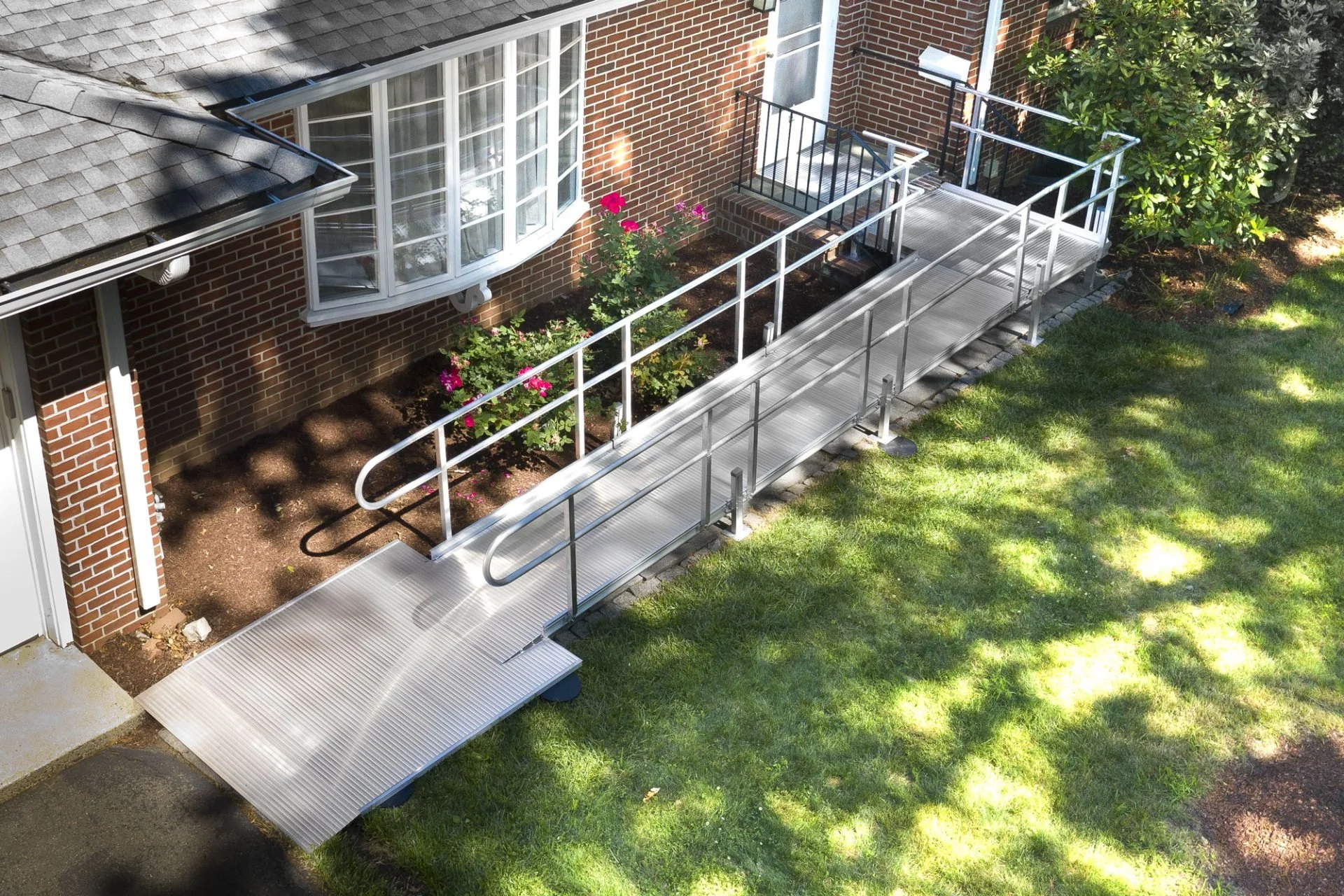
Many are installed as permanent or modular accessibility solutions at residential and commercial properties where daily use is expected.
Because they are designed for demanding environments, heavy-duty ramps often include reinforced construction, wider walking surfaces, and additional structural support.
They provide dependable accessibility while minimizing movement or flex during everyday use.
Considering Weight Capacity
One of the most important differences between lightweight and heavy-duty ramps is the amount of weight they are designed to support.
Weight capacity includes more than the individual using the ramp.
It also includes the wheelchair, scooter, walker, caregiver assistance, and any items being transported.
Powered mobility devices can weigh considerably more than manual wheelchairs.
Choosing a ramp with an appropriate weight capacity helps ensure dependable performance while maintaining safe operation over time.
Accessibility professionals evaluate both current and anticipated future mobility needs before recommending the most suitable ramp.
Planning ahead helps prevent situations where a ramp may eventually become inadequate as equipment or mobility requirements change.
Thinking About Everyday Use
Frequency of use is another key consideration.
A lightweight ramp may perform exceptionally well when used occasionally for travel or temporary accessibility.
However, if the ramp will serve as the primary entrance to a home and support daily movement, a heavy-duty system often provides greater stability and long-term value.
Imagine using the same ramp several times every day throughout the year.
Repeated use naturally places greater demands on the structure.
A ramp designed specifically for continuous service can provide additional confidence while requiring less concern about long-term wear.
Matching the ramp to its intended use helps maximize both safety and durability.
Portability Versus Permanence
One of the greatest strengths of lightweight ramps is their portability.
Families who travel frequently appreciate being able to take accessibility with them.
Whether visiting relatives, staying in hotels, or attending community events, portable ramps help overcome temporary barriers without requiring permanent modifications.
Heavy-duty ramps serve a different purpose.
Instead of moving from place to place, they become dependable parts of the property itself.
Because they remain securely installed, users can rely on them every day without needing to position or store the ramp after each use.
The choice often depends on whether flexibility or permanence better supports the individual's lifestyle.
Installation Considerations
Lightweight ramps generally require minimal setup.
Many simply unfold and are placed securely against the surface they are intended to bridge.
This simplicity makes them convenient for temporary situations.
Heavy-duty ramps usually involve professional installation.
Whether modular or permanently constructed, these systems require careful planning to ensure proper slope, structural support, drainage, and safe integration with the property's layout.
Although installation requires more preparation, the result is an accessibility solution designed for dependable long-term use.
Maintenance Expectations
Both lightweight and heavy-duty ramps benefit from routine care.
Portable ramps should be inspected regularly for damage caused by transportation, folding mechanisms, or repeated handling.
Keeping hinges, locking systems, and walking surfaces in good condition helps ensure reliable operation.
Heavy-duty ramps typically require periodic inspections of structural components, handrails, fasteners, and walking surfaces.
Routine maintenance allows small issues to be addressed before they affect safety.
Regardless of the type of ramp, regular care contributes to longer service life and greater peace of mind.
Choosing the Right Material
Both lightweight and heavy-duty ramps are available in a variety of materials.
Aluminum remains one of the most common choices because it offers an excellent balance of strength, corrosion resistance, and relatively low maintenance.
Heavy-duty systems may also incorporate steel, concrete, composite materials, or other durable construction depending on the application's specific requirements.
Material selection should always reflect the intended environment, expected usage, and long-term accessibility goals.
Choosing quality materials helps ensure reliable performance throughout changing weather conditions and everyday use.
Planning for the Future
Accessibility needs often evolve gradually.
Someone using a walker today may eventually transition to a wheelchair or powered mobility device.
Families may welcome additional members with mobility challenges, or caregivers may become more involved in providing daily assistance.
Thinking beyond immediate needs allows homeowners to choose ramps that continue supporting accessibility well into the future.
In many cases, selecting a slightly more robust solution today helps avoid costly replacements later.
Long-term planning creates greater flexibility while supporting lasting independence.
Professional Guidance Makes the Difference
With so many mobility ramp options available, choosing the right one can feel overwhelming.
Accessibility professionals simplify the process by evaluating the individual's mobility equipment, physical environment, daily routines, and long-term goals.
Rather than recommending a product based solely on specifications, they focus on how the ramp will function in real life.
This personalized approach helps ensure the selected ramp provides both safety and comfort while fitting naturally into the property.
Professional guidance often transforms a complicated decision into a confident investment.
Accessibility Should Fit Your Lifestyle
The best mobility ramp is not necessarily the lightest or the strongest.
It is the one that supports the way you live.
Some families value portability because they frequently travel or need accessibility in multiple locations.
Others benefit most from a permanent, heavy-duty solution that provides dependable access every day.
Understanding how the ramp will be used allows homeowners to choose an option that improves mobility without creating unnecessary compromises.
Accessibility works best when it adapts to the individual rather than asking the individual to adapt to it.
Conclusion
Both lightweight and heavy-duty mobility ramps play an important role in improving accessibility, but each is designed for different needs. Lightweight ramps offer convenience, portability, and flexibility for temporary or travel use, while heavy-duty ramps provide the strength, stability, and durability needed for frequent daily access at home or commercial properties. Choosing the right solution depends on your mobility equipment, lifestyle, property, and long-term accessibility goals.
At KGC, every accessibility solution is carefully tailored to the individual and the environment where it will be used. Whether you need a portable mobility ramp for greater flexibility or a heavy-duty ramp designed for dependable everyday access, KGC provides expert guidance and customized solutions that prioritize safety, comfort, and independence.
If you're ready to find the mobility ramp that's right for your home or lifestyle, visit the KGC Contact Page to connect with a KGC specialist and explore your accessibility options.
