
How Quiet Are Vertical Platform Lifts? What to Expect
Introduction
The question came up in a moment that felt surprisingly intimate. Someone I care about stood in the hallway, looking at the spot where a vertical platform lift might soon be installed. The house was quiet. You could hear the hum of the refrigerator, the faint tick of a clock in another room.
They turned to me and said, I just don’t want it to feel like I’m living next to a machine.
That fear is more common than people admit. Noise shapes how we experience our homes. It affects how calm a space feels, how private conversations seem, and even how relaxed we are in our own routines. The idea of introducing a mechanical system into that environment can stir worries about constant buzzing, clanking, or something that announces itself every time it moves.
For families considering vertical platform lifts, the question of noise is not superficial. It is deeply tied to dignity, comfort, and whether accessibility will truly feel like support rather than disruption.
This article explores how quiet vertical platform lifts really are, what influences their sound, and how modern design prioritizes smooth, low profile operation that blends into daily life rather than interrupting it.
Why Noise Feels So Important in Accessibility Decisions
Noise is not just about volume. It is about control. Sounds that feel unpredictable or intrusive can create anxiety, especially for people already navigating changes in mobility or independence.
In a home, noise becomes part of emotional safety. We associate quiet with rest, privacy, and normalcy. Anything that feels loud or mechanical can challenge that sense of home.
So when people ask about how quiet a vertical platform lift is, they are really asking something deeper. Will this still feel like my space?
How Vertical Platform Lifts Are Designed to Sound
Vertical platform lifts are not industrial machines. They are residential mobility systems designed specifically for quiet environments.
They operate using electric or hydraulic mechanisms engineered for smooth, steady movement. The motors are enclosed in sound dampening housings. The travel speed is moderate, not aggressive, which reduces vibration and mechanical strain.
Everything about their design prioritizes comfort over power.
Comparing VPL Sound to Everyday Household Noise
Most people who install a vertical platform lift describe the sound as similar to a dishwasher running in another room or a quiet washing machine cycle.
It is present, but not sharp. Noticeable if you are listening for it, but easy to ignore during normal conversation, television, or daily activity.
In many homes, the lift becomes part of the background soundscape rather than a focal point.
Indoor Versus Outdoor Sound Experience
Indoor vertical platform lifts tend to feel even quieter because they operate in controlled spaces. Walls absorb sound. Flooring reduces vibration. The environment is predictable.
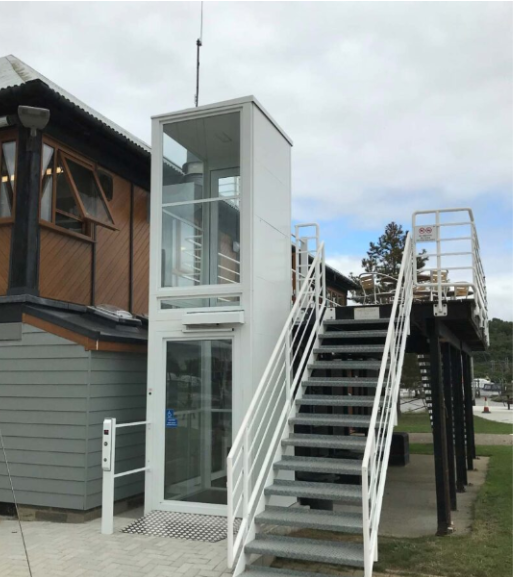
Outdoor lifts may sound slightly more noticeable because they operate in open air, where sound travels differently. However, environmental noise often masks lift operation. Wind, traffic, birds, and neighborhood sounds blend naturally with the lift’s movement.
In both cases, modern VPLs are designed to avoid sharp or startling noise.
The Role of Smooth Motion in Quiet Operation
One of the most important factors in how quiet a lift feels is how it starts and stops.
Modern vertical platform lifts use soft start and soft stop technology. This means the platform accelerates gradually and decelerates gently. There are no sudden jerks, drops, or jolts.
Smooth motion reduces vibration, and reduced vibration means reduced noise. It also creates a calmer emotional experience for the user.
Track and Guide System Precision
The guide system that keeps the platform aligned is engineered for precision. When alignment is correct, there is minimal friction and no rattling.
Professional installation is critical here. A well aligned system moves cleanly and quietly. Poor alignment can introduce unnecessary noise even in high quality equipment.
Quiet operation is not just about the lift itself. It is about how carefully it is installed.
Motor Technology and Sound Dampening
Modern VPL motors are significantly quieter than older generations. Advances in engineering have reduced mechanical noise and improved energy efficiency at the same time.
Internal insulation and vibration dampeners absorb sound before it reaches the surrounding environment. This prevents noise from echoing through the home.
Technology has changed how mobility equipment feels.
How Maintenance Affects Noise Over Time
Noise levels are closely tied to maintenance. A well maintained lift stays quiet for years. A neglected one may begin to sound different.
Dust, debris, or misalignment can increase friction. Worn components may introduce vibration.
Routine professional maintenance keeps movement smooth and sound low.
Psychological Perception of Sound
It is also important to acknowledge perception. When people feel anxious about noise, they often notice it more.
Once users become familiar with the lift’s normal sound, their sensitivity decreases. The brain stops interpreting the noise as a threat or disruption.
Familiarity turns sound into background.
Noise During Entry and Exit
Most noise occurs during movement, not during entry or exit. Gates close softly. Controls respond quietly.
There is no slamming or mechanical clicking in well designed systems. These details matter for preserving a calm atmosphere.
Quiet transitions are part of dignified design.
Nighttime and Shared Living Concerns
Many families worry about nighttime use. Will the lift wake someone up?
In most homes, vertical platform lifts are quiet enough to operate during early mornings or late evenings without disturbing others. The sound is steady and low, not sudden or sharp.
This reliability supports independence at any hour.
Comparing VPLs to Home Elevators
Home elevators often involve enclosed shafts, doors, and larger motors. These elements can amplify sound.
Vertical platform lifts are simpler systems. They use smaller motors and open designs that allow sound to dissipate rather than echo.
For noise sensitive households, this difference can be significant.
Outdoor Weather and Sound
Weather does not significantly increase lift noise, but it can change how sound is perceived.
Rain, wind, or ambient outdoor noise often mask lift operation. In quiet conditions, the lift may be more noticeable, but still far from disruptive.
Environmental context always matters.
Real Life Reflections From VPL Users
I once spoke with someone who delayed installation because they feared constant noise. After a week of use, they admitted they barely noticed the lift anymore.
Another family shared that the lift sounded softer than their ceiling fan.
These reflections are common and reassuring.
Quiet as a Feature of Dignity
Quiet operation is not just technical. It is emotional.
When mobility equipment moves quietly, it does not announce limitation. It allows people to move without drawing attention or feeling observed.
This subtlety preserves dignity in daily life.
Questions to Ask About Noise Before Installation
When evaluating a vertical platform lift, it is reasonable to ask about motor type, maintenance schedules, and sound expectations.
Reputable providers can explain what to expect realistically rather than making vague promises.
Transparency builds trust.
Long Term Sound Experience
Over time, most users stop thinking about sound entirely. The lift becomes just another part of the home.
This is the best outcome. When accessibility blends into daily life, it has done its job.
Conclusion
Vertical platform lifts are far quieter than many people expect. Designed for residential environments, they operate with smooth motion, sound dampened motors, and thoughtful engineering that prioritizes comfort and privacy. Whether installed indoors or outdoors, modern VPLs support accessibility without disrupting the calm of the home.
At KGC, we believe mobility solutions should feel supportive, not intrusive. Our approach to vertical platform lifts focuses on quiet, reliable operation that respects both the physical and emotional space of the home. If you are concerned about noise or want to experience what modern VPLs truly sound like, our team is here to help you explore your options with confidence.
You can reach our team through the KGC Contact Page.
