
Common Stairlift Misconceptions And the Truth Behind Them
Introduction
The first time the word stairlift came up, the room went quiet. Someone I care about was sitting on the couch, staring at the stairs across the room. They were not looking at the steps themselves. They were looking at what those steps represented.
I don’t want one of those, they said. I’m not ready for that.
What they were really saying was not about the equipment. It was about fear. Fear of being labeled. Fear of losing independence. Fear that something permanent and visible would change how they felt about their home and themselves.
Stairlifts carry more emotional weight than most people realize. Along with that weight comes a long list of misconceptions. Some are outdated. Some are based on images from decades ago. Others come from stories that do not reflect how modern stairlifts actually work.
This article explores the most common misconceptions about stairlifts and gently reveals the truth behind them. It is written for families and individuals who want to make thoughtful decisions rooted in dignity, comfort, and real life experience rather than fear or myth.
Misconception One Stairlifts Are Only for People Who Cannot Walk at All
One of the most widespread beliefs is that stairlifts are only for people who can no longer walk. This could not be further from the truth.
Many people who use stairlifts can walk just fine on level ground. The challenge comes from stairs. Balance. Endurance. Joint pain. Or simply the unpredictability of how the body feels from day to day.
A stairlift is not about inability. It is about reducing risk and conserving energy. It allows people to continue walking where they feel comfortable while having support where it is needed most.
Misconception Two Installing a Stairlift Means Giving Up Independence
Some people worry that accepting a stairlift means surrendering independence. In reality, it often restores it.
Before a stairlift, people may avoid stairs, rely on others, or restrict their movement. After installation, they can move freely between levels on their own terms.
Independence is not about doing everything the hard way. It is about having control over how you live.
Misconception Three Stairlifts Are Ugly and Make Homes Look Medical
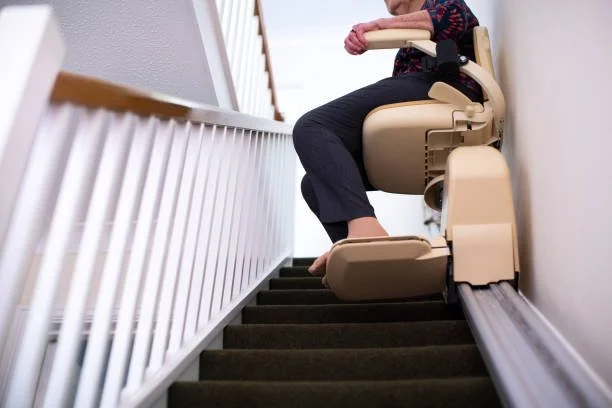
This misconception is rooted in outdated images. Early stairlifts were bulky and visually intrusive. Modern stairlifts are designed with home aesthetics in mind.
Sleek lines, neutral colors, foldable components, and custom fit tracks allow stairlifts to blend into the home rather than dominate it.
Many people are surprised by how subtle a modern stairlift can be once installed.
Misconception Four Stairlifts Damage the Stairs
Another common fear is that stairlifts permanently damage staircases. In most cases, stairlifts are mounted to the stair treads, not the wall.
This means they can be removed later with minimal impact. Small screw holes can be filled and refinished. The staircase itself remains structurally intact.
This reversibility provides peace of mind for homeowners thinking about the future.
Misconception Five They Are Loud and Disruptive
People often imagine stairlifts as noisy machines that announce every movement. Modern stairlifts are designed to operate quietly.
Smooth motors, gentle movement, and sound dampening features keep noise to a minimum. Most users describe the sound as similar to a quiet appliance in another room.
This quiet operation supports privacy and comfort.
Misconception Six Stairlifts Are Slow and Inconvenient
While stairlifts are not designed to rush, they are designed to be efficient. They move at a steady, safe pace that feels comfortable.
For many users, the convenience of safe, effortless movement far outweighs the few seconds it takes to travel.
Speed is less important than reliability.
Misconception Seven They Are Only for a Short Time
Some people think stairlifts are temporary solutions. In reality, many people use them for years.
As mobility needs change, the stairlift remains a consistent support. It adapts to daily life rather than expiring when circumstances shift.
Longevity is one of its strengths.
Misconception Eight You Cannot Use the Stairs Once a Stairlift Is Installed
A stairlift does not block the stairs. The seat and footrest fold up when not in use, leaving plenty of space for others to walk.
In shared households, people continue to use the stairs normally while the stairlift remains available when needed.
Flexibility is built into the design.
Misconception Nine Stairlifts Are Only for Older Adults
Mobility challenges do not belong to any single age group. Injuries, conditions, or temporary changes can affect people at many stages of life.
Stairlifts support anyone who finds stairs challenging, whether that challenge is temporary or long term.
They are tools for movement, not markers of age.
Misconception Ten Installing One Means You Are Declining
Perhaps the most painful misconception is that needing a stairlift means something is ending. In truth, it often means something is continuing.
It means staying in your home. Continuing routines. Preserving independence. Protecting safety.
A stairlift supports living rather than limiting it.
The Truth Behind All of These Misconceptions
At their core, these misconceptions stem from fear. Fear of change. Fear of loss. Fear of being seen differently.
Modern stairlifts are not symbols of decline. They are symbols of adaptation. They allow people to live fully in spaces they love without unnecessary risk.
Understanding this truth transforms how stairlifts are perceived.
Real Life Reflections
I once spoke with someone who resisted a stairlift for years. After installation, they said they wished they had done it sooner. They realized the lift did not change who they were. It simply made their life easier.
Another family shared that the stairlift brought peace back into the household. No more worrying about falls. No more constant reminders to be careful.
These stories reveal what statistics cannot.
How Perception Changes With Experience
Once a stairlift becomes part of daily life, it fades into the background. It becomes just another way to move around the house.
The fear disappears. What remains is ease.
Experience replaces assumption.
Why Talking About Misconceptions Matters
Misconceptions delay helpful decisions. They keep people struggling longer than necessary.
By addressing these beliefs openly, families can move forward with clarity rather than hesitation.
Knowledge supports confidence.
Conclusion
Stairlifts are often misunderstood. They are not signs of weakness, loss, or limitation. They are practical tools that restore access, protect safety, and preserve independence. The truth behind common misconceptions is simple. Stairlifts allow people to keep living in the homes they love with confidence and dignity.
At KGC, we understand the emotional side of mobility decisions. Our approach to stairlifts is rooted in respect, thoughtful design, and personal support so every solution feels right for the individual and the home. If you are considering a stairlift and have questions or concerns, our team is here to help you explore the truth behind the myths.
You can reach our team through the KGC Contact Page.
